Finding someone to wall mount a television in Melbourne is not hard. You will have several names inside five minutes, and most of them will quote you a number over the phone without asking a single question about your wall.
That is the problem. The quotes come back looking almost identical, and nothing in front of you explains why one is higher than another. This is a guide to reading them properly, and to the questions that separate an installer who has thought about your job from one who has not.
The short answer
- A firm price given before anyone knows what your wall is made of is a guess, and guesses get revised on the day.
- Ask what the fixings are going into. It is the single question that tells you most about who you are talking to.
- Make every quote itemise the same things, or you are not comparing them, you are comparing two numbers.
- Find out who does the electrical work before anyone starts, because that part is not negotiable.
- Ask for the insurance certificate rather than the word insured, and ask what happens if something is damaged.
Start with the wall, not the installer
Almost everything that makes one quote different from another comes back to the wall. Timber frame, steel stud, double brick, concrete, aerated block, plasterboard glued to masonry, or something tiled or clad over the top of any of those. Each takes different fixings, different tools and a different amount of time.
So a flat price quoted without asking either assumes the easiest case or will be adjusted on arrival. Neither is dishonest on its own. It becomes a problem when you chose them on a number that was never going to survive contact with your house.
You do not need to know the answer yourself. You need to notice whether they asked. For some idea beforehand, our guides to plasterboard, brick and concrete and tiled and stone walls cover what each one needs.
What a quote should actually itemise
A quote that is one line and one number cannot be compared with anything. Here is what should be broken out, because each of these is a real cost that somebody is either including or leaving for later.
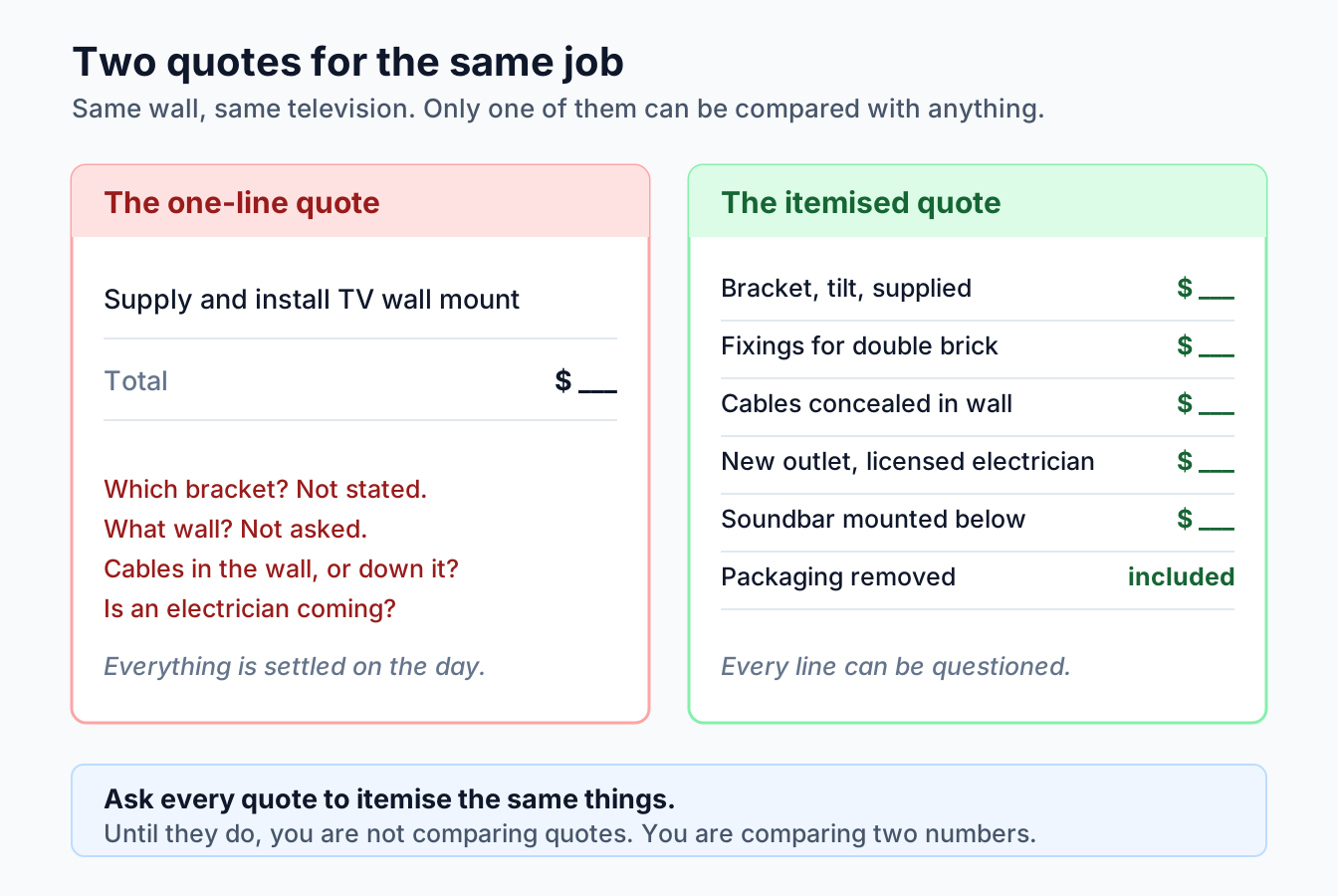
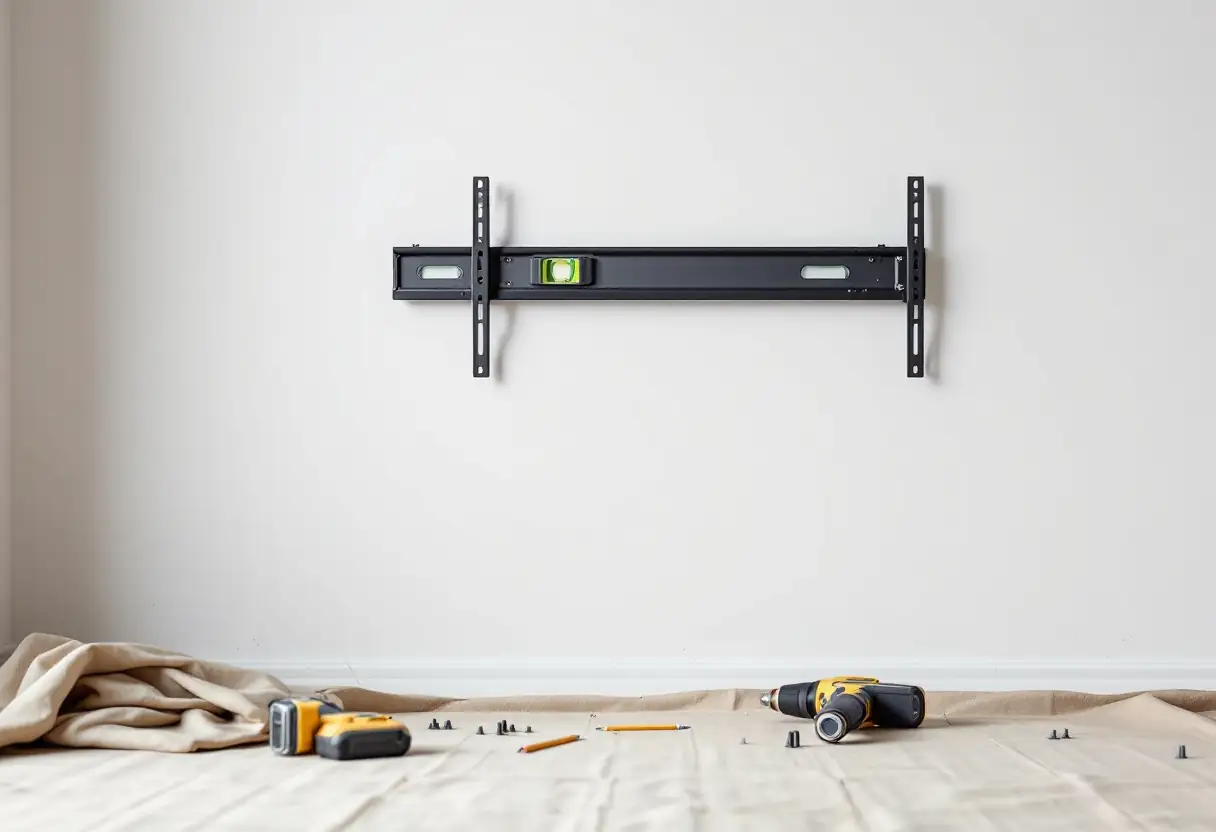
The bracket. Supplied by them or supplied by you, and if by them, which type. A fixed, tilt and full-motion mount are three different products at three different prices, and they are not interchangeable, as we set out in fixed, tilt and full-motion mounts. If you are supplying it, they should want to know the VESA pattern and the weight before they agree to hang anything off it.
The wall type and the fixings. Masonry anchors, coach screws into timber, fixings made for steel stud, or a backing plate. This is where a job quietly becomes more expensive, so it belongs in writing rather than in a conversation on the day.
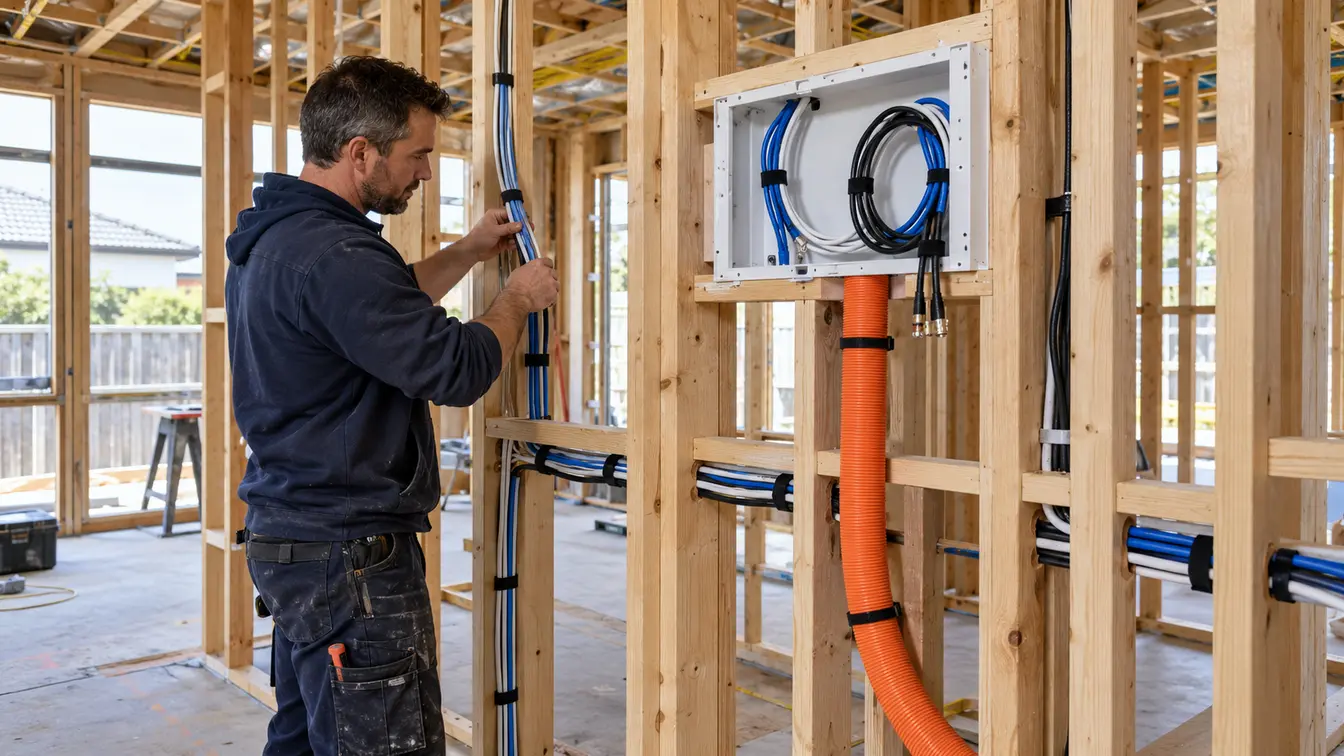
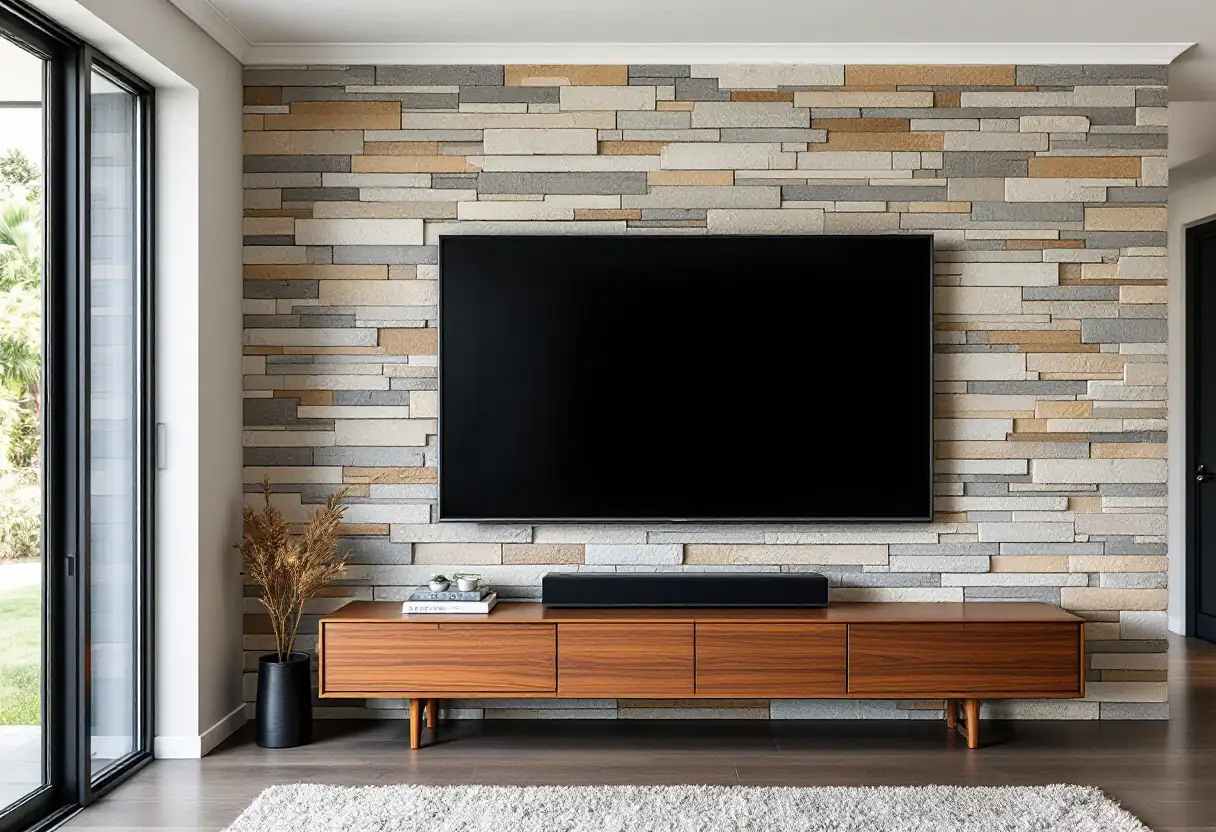
The cable concealment. There is a wide gap between cables dropped inside a plasterboard cavity, cables in a surface conduit painted to match, and cables simply hanging down the wall. All three are sometimes the right answer, and they are not the same job or the same price. Our guide to hiding cables covers what each looks like when it is finished.
Power. Whether a new outlet is going in behind the screen, and who is doing it.
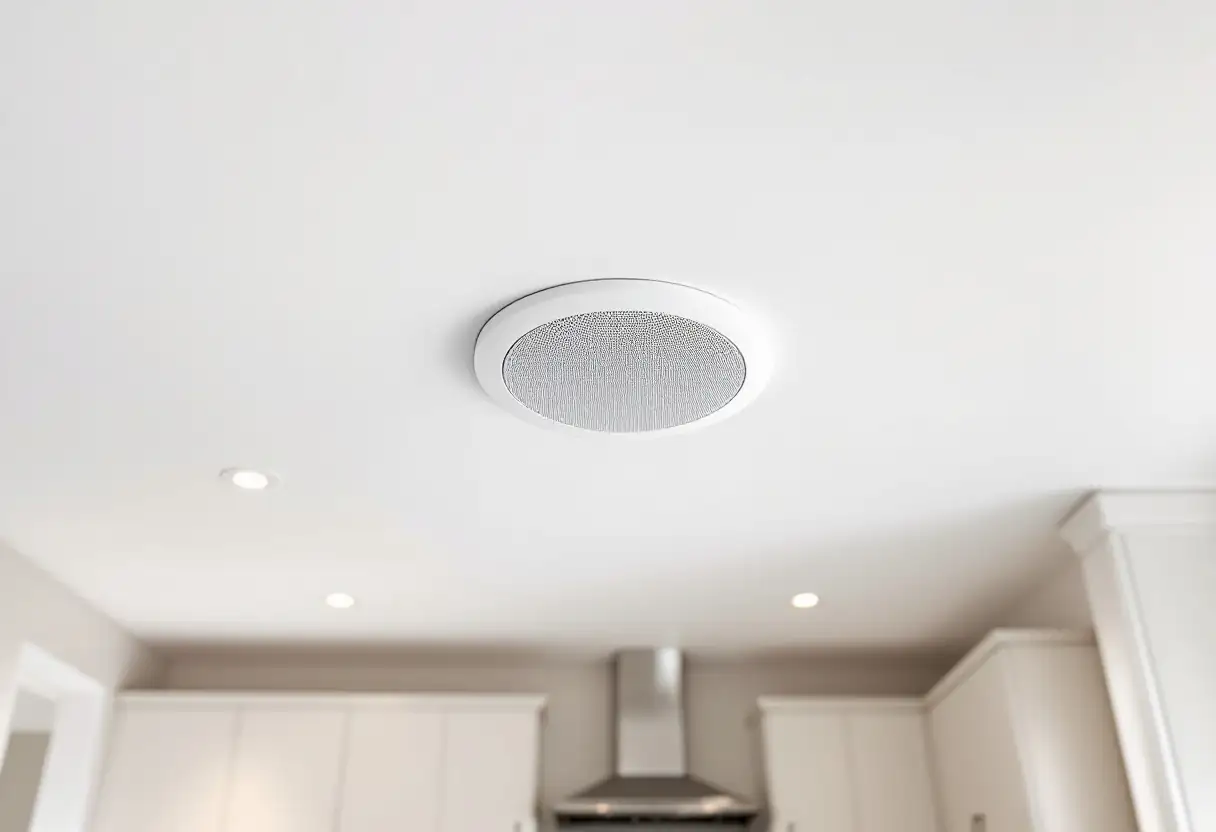
Anything else on the wall. A soundbar, a shelf, speakers. A bar under the screen changes the height decision, so it belongs in the quote rather than added afterwards.
The finish. Whether they take the packaging away, and what making good means if a hole ends up in the wrong place.
The questions worth asking
These take about a minute on the phone, and tell you more than any amount of browsing.
What will the fixings actually go into? The answer you want is a question back: what is the wall made of, or a plan to find out on arrival. An installer who does not care what is behind the plaster is telling you something.
Is the bracket included, and which one? A cheap quote with a bracket you have not seen is not a cheap quote yet. It is also the one component where the load rating gets quoted loosely, which we go through in what a weight limit really means.
How are the cables being concealed? Ask them to describe it rather than confirm it. If the answer is vague, you will get whatever is quickest.
Who does the electrical work? If a new power point is going in behind the screen, that is electrical work and it needs a licensed electrician. Energy Safe Victoria is clear that it is not a job to do yourself. What you should end up holding afterwards is covered in recessed power points behind a TV.
How many people are coming? On a large screen this matters more than anything else in the quote. A single installer wrestling an 85 inch panel onto a bracket is how screens get damaged. We go through what changes at that size in mounting a 75, 85 or 98 inch TV.
Where a cheap quote makes its money back
A very low headline price is not automatically a bad deal. It is usually a narrow one, and it is worth knowing where the edges are.
The bracket is excluded, or it is the cheapest fixed plate available. The price covers a timber-framed plasterboard wall and masonry is extra. Cables are surface-run unless you pay for concealment. A new outlet is not included. Large screens attract a surcharge mentioned on the day. Packaging stays with you.
Any one of those is reasonable enough if you know in advance. The issue is finding out once a technician is standing in your lounge room and the television is out of its box.
Three jobs that are not ordinary
Most installs are routine. These three are not, and are worth choosing for specifically.
Apartments. The wall question comes second here. The first is whether the wall is yours at all, which is a matter for your plan of subdivision and your owners corporation, and there are usually building access requirements on top. Somebody who has worked in apartments will raise all of that before they raise the bracket. We cover it in wall mounting a TV in a Melbourne apartment.
Above a fireplace. Heat, height and a chimney breast that is rarely made of what it appears to be. The right answer is sometimes no, and an installer willing to say so is worth more than one who is not. See mounting a TV above a fireplace.
Tile, stone and feature walls. The one wall where a mistake cannot be made good. Ask how they intend to get through the finish and what they will do if the bracket plate will not sit flat, which we go through in tiled, stone and feature walls.
If you are renting, there is a separate permission question that sits above all of this, and we work through it in wall mounting a TV in a rental.
Insurance, and what fully insured should mean
Nearly every listing says fully insured. Far fewer will send the certificate when you ask, and asking is entirely normal. A certificate of currency is a one page document naming the insurer, the cover and the expiry date, and any established business can produce one the same day.
Two more, because somebody is coming into your home: whether the person attending is an employee or a subcontractor, and whether they are police checked. Neither answer is automatically wrong. Both are reasonable to know in advance.
Then the awkward one, which is the useful one: what happens if something gets damaged. You are listening for a clear process rather than reassurance, because the answer tells you whether it has ever happened and whether it was handled.
For work at this scale, Consumer Affairs Victoria publishes a checklist for home improvements costing $10,000 or less, which is worth a look before you engage anyone for work around the house.
Reading reviews properly
Star ratings are close to useless here, because almost everybody in this trade sits around the same number. The text is where the information is.
Look for reviews describing a job like yours rather than a job in general. Brick, apartment, large screen, cables in the wall. Look for photographs of the finished wall rather than of a television, because anybody can hang a screen and the difference is in what you can see underneath it.
Most usefully, find a review where something went wrong and read how it was resolved. A business with no such review is not necessarily flawless. It may just be new.
Getting a price you can rely on
The honest position is that a straightforward job on a known wall can be quoted over the phone, and anything else cannot. An onsite quote costs half an hour and removes the part of this that goes wrong most often, which is a price agreed on assumptions that turn out to be untrue.
If you would rather decide whether to hire anybody at all, that is a different question, answered in DIY versus professional wall mounting. For offices, venues and retail spaces the criteria change again, and we cover those in commercial TV wall mounting.
Frequently asked questions
How much should TV wall mounting cost in Melbourne?
It depends on the wall, the bracket, the screen size and whether cables and power are part of it, which is why a single figure quoted without any of that information is not worth much. Get two or three quotes itemised the same way and the differences will explain themselves.
Should I supply my own bracket?
You can, and plenty of people do. Check the VESA pattern and the weight rating against your television first, and tell the installer what it is before the day so they can bring the right fixings.
Do I need an electrician as well?
Only if a new power outlet is going in behind the screen. That part is electrical work and must be done by a licensed electrician. If you are using the existing outlet and simply concealing the cables, no.
Is it worth paying more to have the cables hidden in the wall?
For most people yes, because it is the difference everyone actually notices, and it is far easier to do while the screen is going up than afterwards. Whether it is possible at all depends on the wall.
What should I ask before booking?
What the fixings go into, whether the bracket is included and which one, how the cables will be concealed, who does any electrical work, and how many people are attending. Five questions, one phone call.
How long does a TV wall mount take?
A straightforward screen on a timber-framed wall using an existing outlet is usually a short job. Masonry, concealed cabling, a new outlet, a soundbar or a large panel all add to it, which is another reason the quote should say what is included.
You are not really choosing between businesses. You are choosing between quotes, and most quotes are unreadable until you make them itemise the same things. Ask what the wall is, ask what is included, ask who does the electrical work, and ask for the insurance certificate. Whoever you end up with, those four answers will have told you what you needed to know. We wall mount televisions across Melbourne, Bayside and the Mornington Peninsula, we quote onsite so the price holds, and we would rather tell you a wall is a bad idea than find out halfway through. Have a look at our TV wall mounting page, book a free onsite quote, or book a job if you already know what you need.