What people actually want from whole-home audio is very simple. Music in the kitchen while they cook, the same music on the deck when they walk outside, and none of it requiring a decision.
What makes that harder than it sounds is not the speakers. It is that the system has to hold several rooms in step with each other, across a house built to stop signals travelling. Get the groundwork right and it disappears into the background, which is the whole point.
The short answer
- Multi-room audio means several zones playing independently or together, in sync, from one system.
- There are two ways to build it: self-powered wireless speakers on your network, or wired speakers run back to a central amplifier. Most homes end up with some of both.
- Bluetooth cannot do this properly. Anything genuinely multi-room runs over your network, not over Bluetooth.
- Your Wi-Fi is part of the system. In a double brick Melbourne house it is often the part that needs fixing first.
- If you are building or renovating, run the cable now even for rooms you are unsure about. It is the only moment it is cheap.
What multi-room audio actually is
A zone is a room, or part of one, that you can control on its own. Turn it on, set its volume, choose what it plays. Whole-home audio is just several zones under one system, with the ability to group them so two or more play the same thing at the same time.
That last part is the entire technical problem. Two rooms playing the same song a quarter of a second apart is worse than one room playing it, because you hear both from the hallway and it sounds like an echo. Keeping zones locked together is what separates a real multi-room system from a collection of speakers.
The two ways to build it
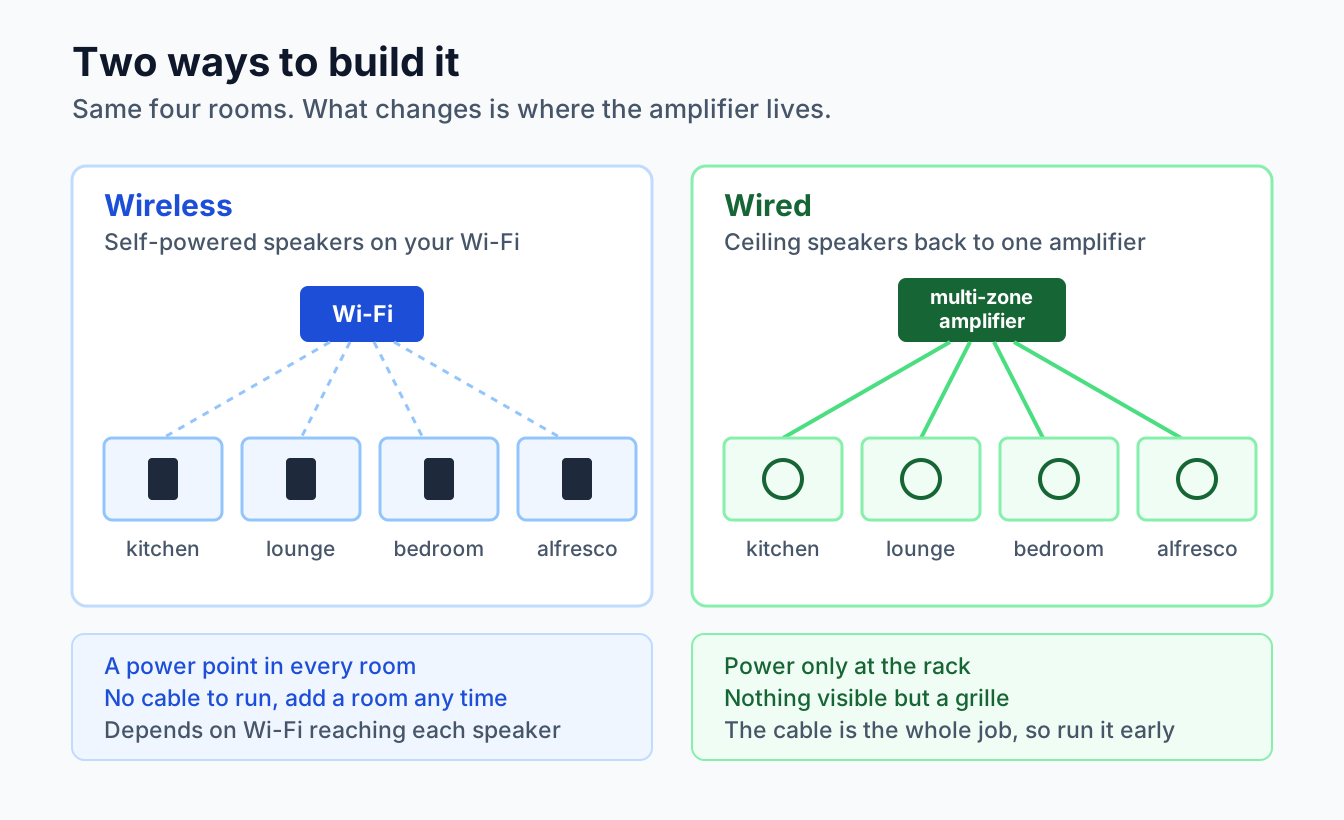
Wireless, self-powered speakers. Each speaker contains its own amplifier and joins your Wi-Fi. Sonos is the name most people know, and Denon HEOS and similar systems work the same way. You buy a room at a time, you can start with one, and there is no cabling to do.
The costs are real though. Every speaker needs a power point near where it sits, so the tidy answer in a kitchen is not always available. Each one is a visible object. And the system leans on your network, which in an established Melbourne house is a bigger assumption than it sounds.
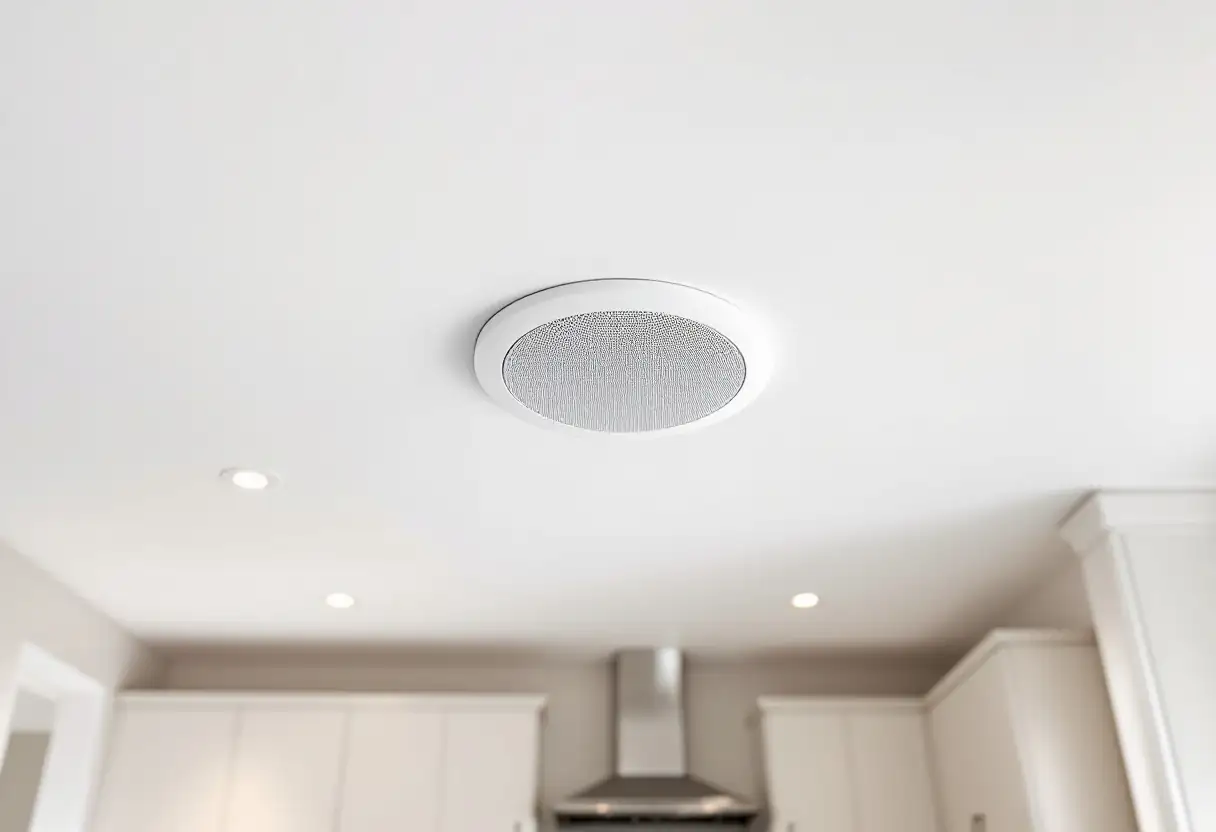
Wired, with a central amplifier. Speakers in the ceiling or wall in each room, with speaker cable running back to one multi-zone amplifier in a cupboard or rack. Nothing is visible in the rooms except a grille, nothing needs power except the rack, and the speakers themselves cannot drop off the network because they are not on it.
The catch is the cable. Mid-build or mid-renovation it is straightforward and inexpensive. In a finished double storey house with no ceiling access it can be the largest part of the job, and sometimes it is not worth the disruption.
Both, which is what most homes end up with. Ceiling speakers in the living areas and the alfresco where they are worth the effort, and a wireless speaker in the bedroom or study where it is not. A well-chosen platform will run both under one app, which is worth checking before you commit to either half.
Why Bluetooth is not an option here
This is worth being blunt about, because it is the most common misunderstanding we run into.
Bluetooth is a point to point link between one device and one speaker, designed for a phone and a headset rather than a house. Its range is short and walls shorten it further, it drops out when the phone leaves the room, and it cannot hold several speakers in sync because nothing in it was built to.
Multi-room systems work differently. The speakers sit on your network, they share a clock, and each one is told not just what to play but exactly when to play it. That is why they stay locked together across a house, and it is why the network matters so much.
Your Wi-Fi is part of the system
Installers who skip this are the reason people conclude that multi-room audio is unreliable. It usually is not the speakers.
Melbourne housing stock is unhelpful here. Double brick, brick with a rendered masonry skin, foil-backed insulation and steel framing all attenuate a wireless signal, and a single router in the study at the front of the house is not going to cover a back deck. The same walls we write about in mounting on brick and concrete are the ones your network has to get through.
What makes the difference in practice: assess coverage where the speakers will actually be, not from the couch; use a mesh system with a wired connection between its nodes rather than one relaying through the same walls; and give anything that can take a network cable one, which a speaker that never moves certainly can.
It is entirely reasonable to fix the network first and add the audio afterwards. It is a poor idea to do it the other way around.
Choosing a platform without painting yourself in
The platform matters more than the speakers, because it is the thing you cannot easily change later. Five questions worth asking before you buy anything.
Does it play what you actually listen to? Check your streaming service, your podcast app and your radio stations specifically rather than assuming.
Can you group rooms easily? Grouping should be two taps. If it is buried, nobody in the house will use it, and the whole feature is wasted.
What happens when the internet drops? A system that cannot play anything at all without the internet is a different proposition from one that will still play from a phone or a local source.
Can it take a wired zone? Even if you start wireless, a platform that also drives ceiling speakers through an amplifier leaves the door open.
Does it get on with what you already own? An existing amplifier, a turntable, a television. Pulling the television into the same system is often possible, but it brings the audio delay question with it, which we cover in HDMI ARC, eARC and optical.
Where the speakers go
Multi-room audio is not home cinema and the rules are not the same. In a theatre, speaker positions are dictated by one seating position, which we go through in home theatre speaker placement. Here there is no seat. People are moving around, and the aim is even coverage rather than a precise image.
So ceiling speakers spread across a room usually beat a single pair at one end. A large open plan kitchen and living area is often two zones rather than one, so the kitchen can play while the lounge does not. A stereo pair matters where somebody sits and listens, and matters much less in a hallway or bathroom.
Wet areas and outdoors need speakers actually rated for it. A bathroom is humid and an alfresco area in Melbourne gets weather from several directions, and an indoor speaker in either will not last. The same logic applies to screens outside, which we cover in installing a TV outdoors.
The rooms people forget until afterwards: the bathroom, the alfresco, the garage or workshop, and the study. None of them are expensive to include while the cable is going in. All of them are expensive to add later.
Power, cable and the parts that are not DIY
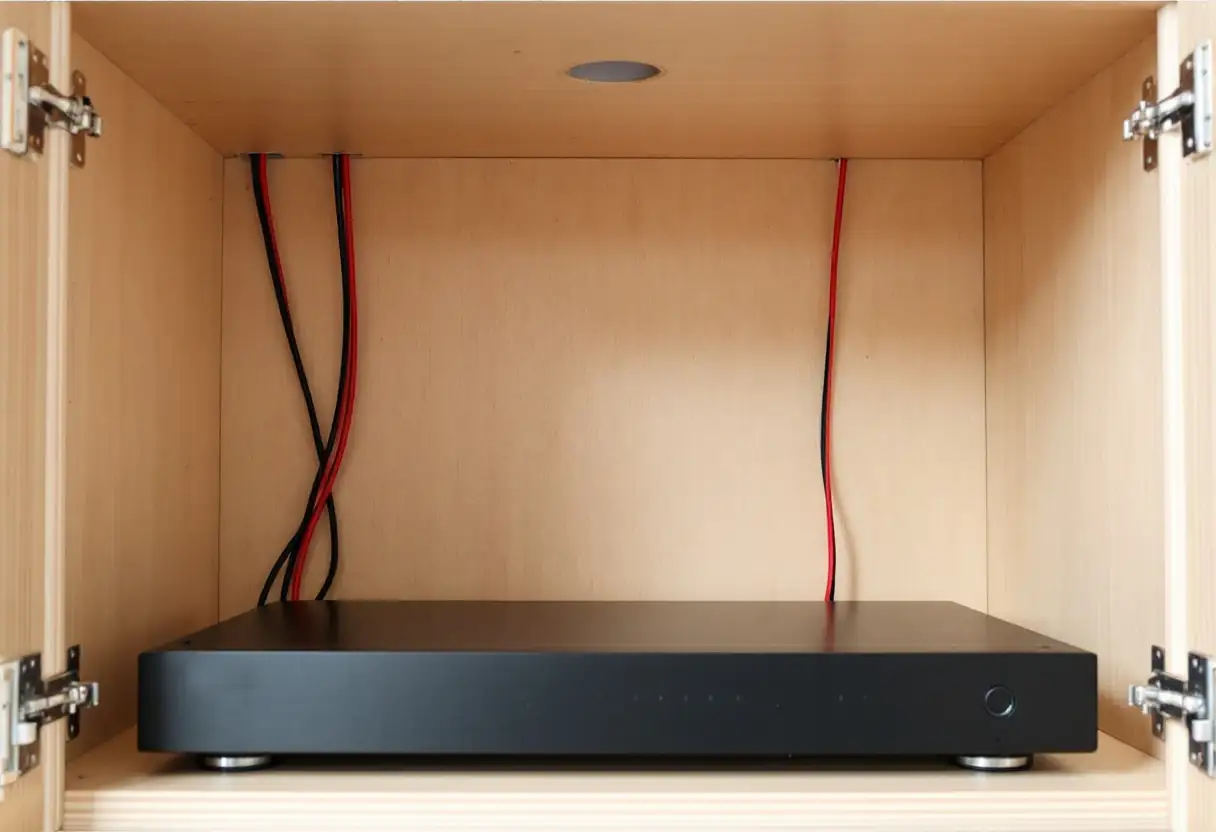
Speaker cable is low voltage and running it is not electrical work. Two things around it are.
The rack needs power, and if that means a new outlet in a cupboard, that is a licensed electrician's job. Energy Safe Victoria is clear that it is not a job to do yourself, and the certificate you should end up holding is the same one we describe in recessed power points behind a TV.
The other is the ceiling itself. Cutting a hole in it puts you into insulation, wiring and sometimes structure, and an amplifier in a sealed cupboard with no airflow will cook itself. Neither is difficult, but both are worth getting right the first time.
Apartments are their own case. The ceiling above you is frequently not yours, it may be fire rated, and the owners corporation will have a view about both. That question comes before any discussion of speakers, and we work through it in wall mounting a TV in a Melbourne apartment.
If you are building or renovating
This is the one piece of advice worth more than all the rest. Run the cable now.
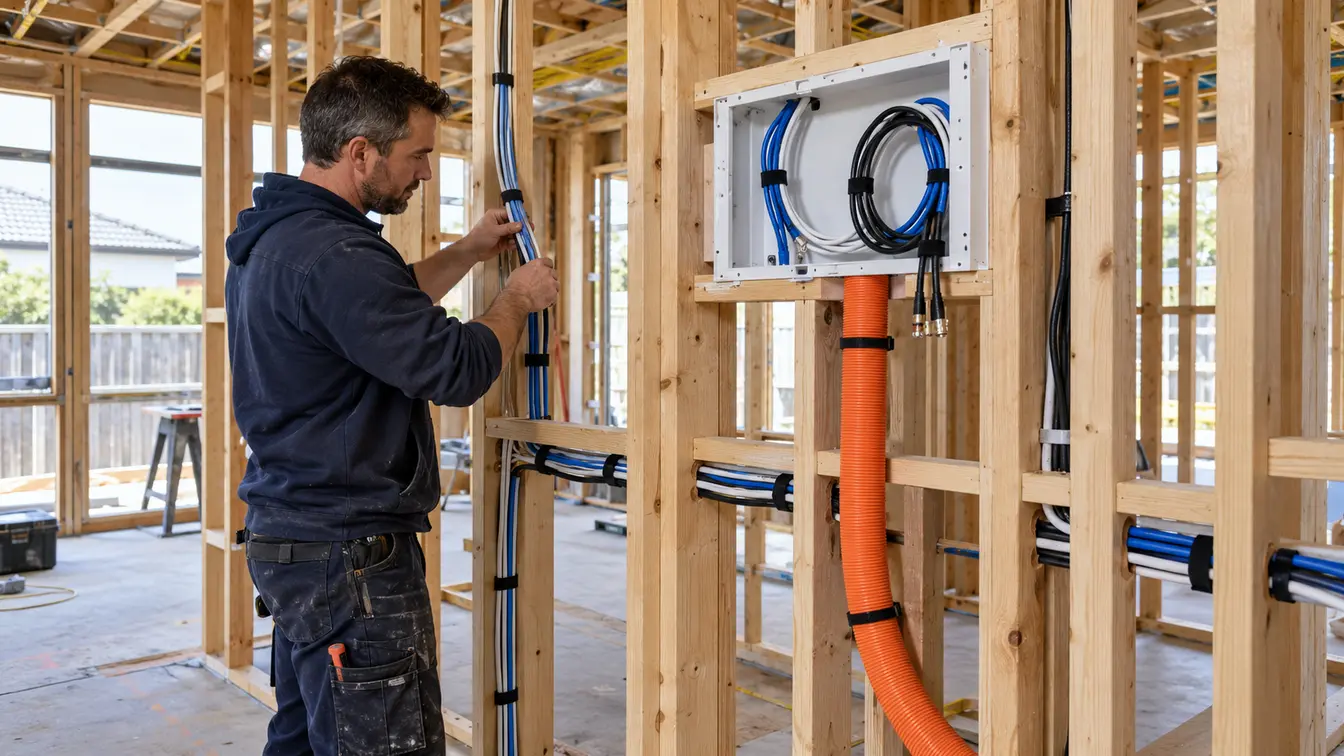
While the walls are open, speaker and network cable are close to the cheapest items on the site. Once the plaster is on, the same runs are a significant job. Run them to every room you might plausibly want, terminate them properly, and photograph the walls before they close so somebody can find them in five years.
You do not have to buy the amplifier or the speakers at the same time. The cable is what is hard to add, and the rest can follow whenever it suits. What to run in every other room while you are at it is in pre-wiring a new build. The same principle runs through our home theatre setup checklist, and if control and automation are part of the plan, smart home and home theatre integration covers where that is worth doing.
Frequently asked questions
What is multi-room audio?
A system where several rooms can play music independently or together in sync, controlled from one app. The zones share timing information over your network, which is what keeps them locked together rather than echoing.
Can I do whole-home audio without running cables?
Yes, with self-powered wireless speakers. Each one needs a power point and good Wi-Fi where it sits, and each is a visible object in the room. For a finished house it is usually the sensible route.
Why do my speakers echo between rooms?
They are not properly grouped, or they are not on a system that syncs them. Two Bluetooth speakers playing the same source will always drift, because Bluetooth was never designed to hold several devices in step.
Do I need new Wi-Fi for multi-room audio?
Often, yes, and it is better to find that out first. Coverage should be checked where the speakers will actually go, particularly in a double brick house or anywhere the signal has to reach outside.
Can I add ceiling speakers to a house that is already finished?
Usually in single storey homes with roof access, and it becomes harder upstairs in a double storey or anywhere with a concrete ceiling. It is worth having someone look in the roof space before you plan around it.
Can the TV be part of the same system?
Often, yes, so a movie can play through the living room speakers or music can follow you out of the room. How well it works depends on the platform and on how the television is connected.
Whole-home audio is one of the few things in this trade where the decision that matters is made long before anyone chooses a speaker. Wired or wireless, how many zones, and whether the network can carry it. Settle those three and the rest is straightforward. We install and configure multi-room systems across Melbourne, Bayside and the Mornington Peninsula, wired, wireless or both, and we will tell you if the network needs sorting before the speakers do. Have a look at our hi-fi installation page, book a free onsite quote, or book a job if you already know what you need.