Plenty of people mount their own television and it goes perfectly well. Plenty of others call us afterwards, and the pattern in those calls is consistent: the bracket was never the hard part. What decides it is the wall, the weight, and whether anything needs to go inside the wall.
Here is what the job actually involves, the three questions that settle it before you buy anything, what we get called out to repair, and the cases where doing it yourself is genuinely the right answer.
The short answer
- A modest screen, on a stud wall, with cables running to a cabinet below is a reasonable weekend job.
- Plasterboard with no stud behind the bracket is where DIY installs fail.
- Anything that puts power or cable inside the wall is not a DIY job in Victoria.
- Two people, always. Not one person and optimism.
- The cost of getting it wrong is the wall, the screen and the callout, not the bracket.
Three questions decide it
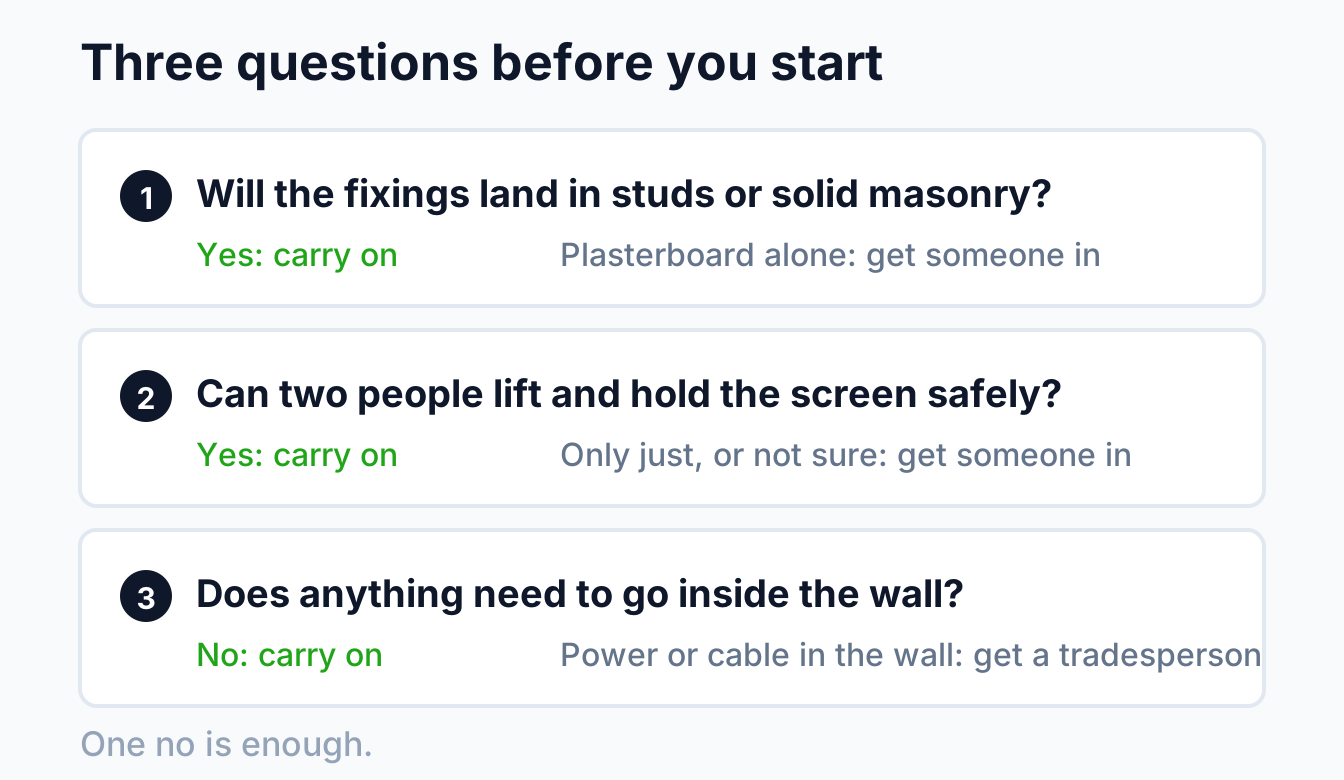
Will the fixings land in something solid? A bracket must be fixed into timber studs, steel studs with the right fixings, or masonry. Plasterboard alone will not hold a television, no matter what the anchors on the packet claim. If the studs do not line up with where the screen needs to sit, the answer is a timber batten spanning two studs, not a handful of hollow-wall anchors and hope.
Can two of you handle the screen? Weight is not what people think. A large panel is awkward more than heavy: wide, thin, front-loaded and easy to flex. Lifting one onto a bracket at head height while lining up two hooks you cannot see is a two-person job, and the second person is not optional. Past about 75 inches the count goes up again, which we cover in mounting a large TV.
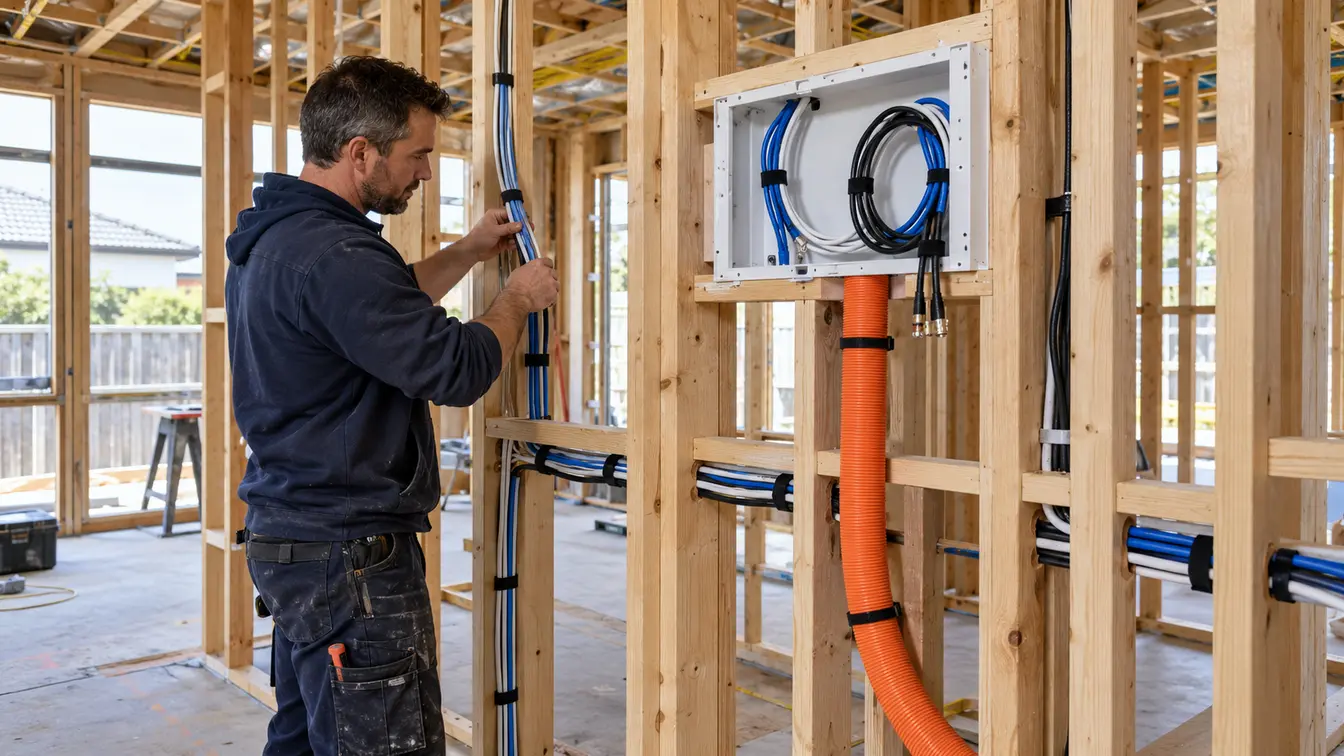
Does anything need to go inside the wall? If the plan is a flush screen with nothing visible, cable has to go into the cavity, and power has to be dealt with properly. That is the point where this stops being a DIY question.
What the job actually involves
In order, and none of it is complicated on its own.
- Settle the height first. Sit on the couch and work from your eye level rather than from what looks right while you are standing. This is the single most common regret, and our guide to what height a TV should be mounted at gives you the method.
- Find the studs, then confirm them. A stud finder gives you a reading; a fine pilot hole confirms it. Studs are usually 450 or 600mm apart, so once you have found two you can predict the rest.
- Work out what else is in there. Power cabling, water, gas and ducting all live inside walls, and a stud finder with a live-wire detector reduces the risk without removing it. Above a kitchen bench, near a bathroom or below a light switch, be more careful, not less.
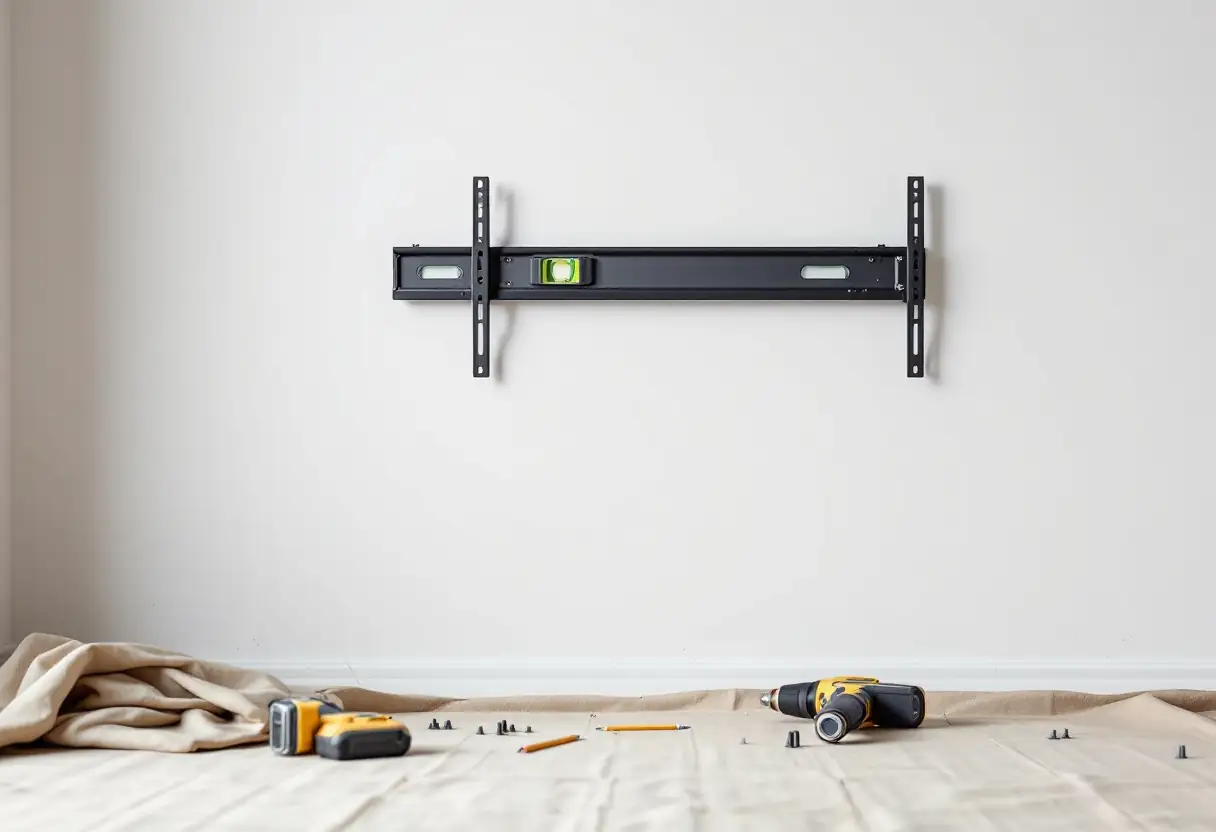
- Fix the bracket and check it level. Level it, then check it again after the bolts are tight. Brackets move as they pull in.
- Hang the screen and dress the cables. Test everything before the final tidy, because taking it back off the wall to plug in an HDMI lead is a special kind of annoying.
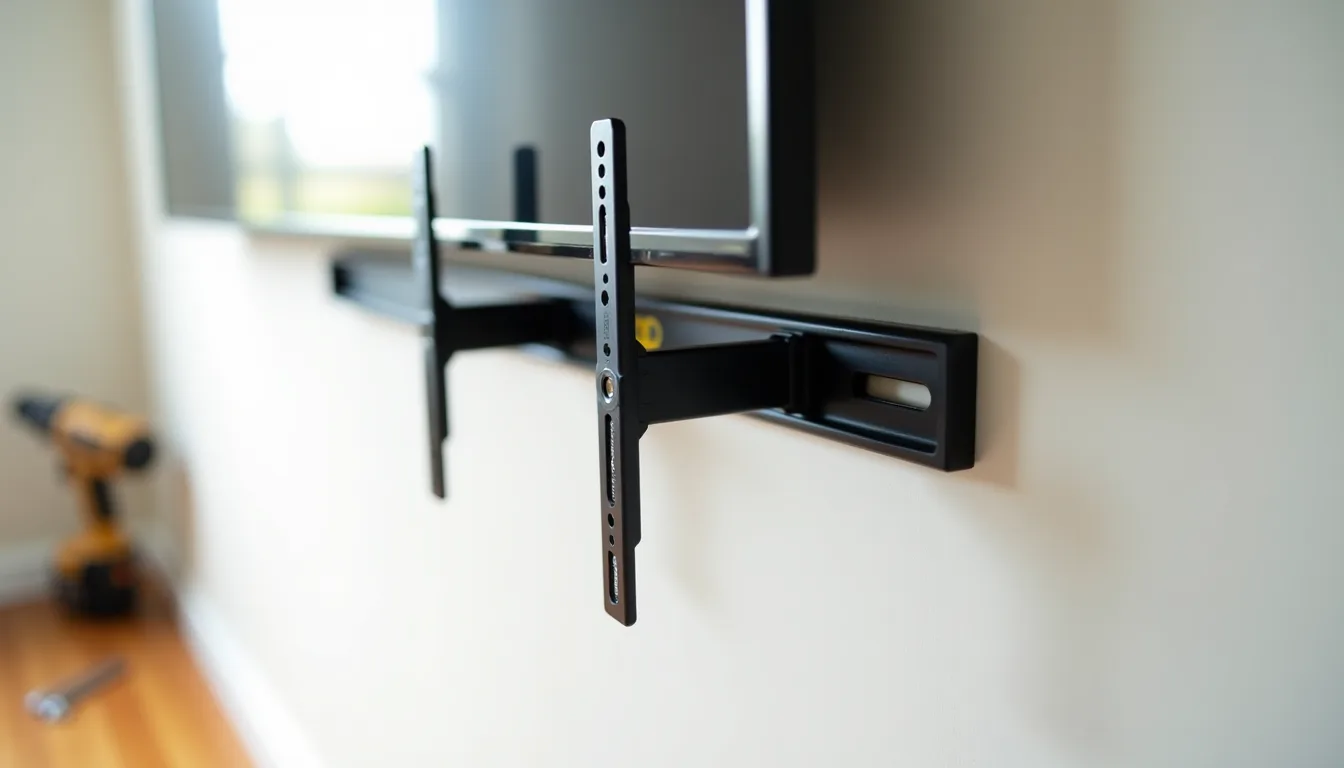
The bracket itself matters less than people expect, though it should match the job: our comparison of fixed, tilt and full-motion mounts covers which one you actually need.
Where it goes wrong
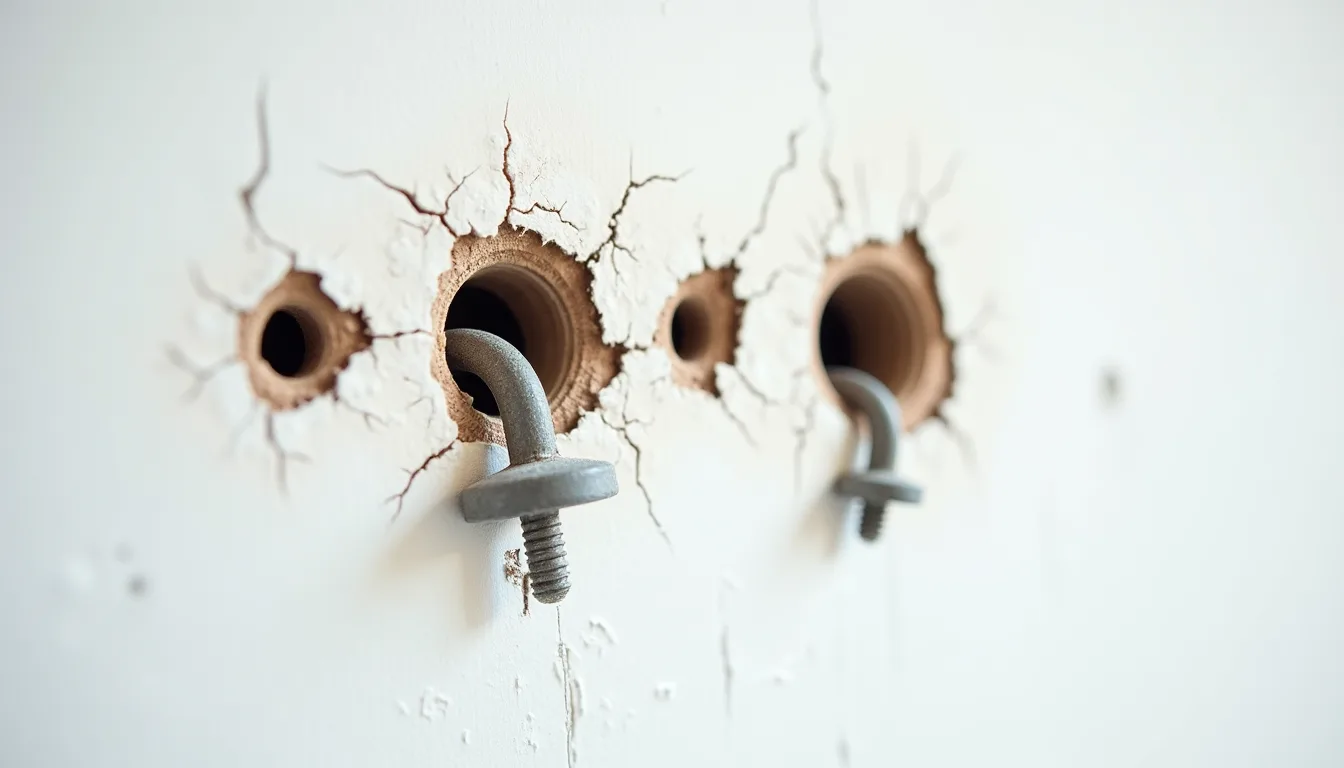
The failures we are called to are not exotic.
Anchors in plasterboard. The most common by a distance. It holds for a while, sometimes months, then the paper face of the sheet gives way and the whole thing comes down. Plasterboard is not a structural material, and a television hanging off it is a slow-motion accident.
Drilling into something. A power cable, a water pipe, occasionally a gas line. This turns a free afternoon into two trades and a wall repair.
Mounted too high. Not dangerous, just wrong, and you live with it for years or you patch the wall and start again.
Wrong bracket for the panel. A bracket rated by screen size rather than mass, or one whose arms foul the recessed section on the back of the screen. Weight varies more between panels than size suggests, which we go through in the comparison of panel types.
Cables done last. Deciding how to hide the cables after the screen is on the wall usually means either a visible trunking compromise or taking it all down again.
The line you cannot cross
One part of this is not a judgement call. Running a television's power lead inside the wall cavity is unlawful electrical work in Victoria, however tidy it looks. Energy Safe Victoria puts it plainly: "Electrical work isn't a DIY job."
The compliant version is straightforward and not expensive: a licensed electrician fits a recessed outlet in the wall behind the screen, and the television plugs into it. Signal cables (HDMI, antenna, speaker, network) can go in the cavity, and our guide to hiding TV cables when wall mounting covers how that is done properly and what you should receive afterwards.
What a mistake actually costs
This is the calculation people skip. The bracket is the cheapest part of the job, so saving the installation fee is only a saving if nothing goes wrong. That calculation is different again in a business, which we cover in commercial TV wall mounting.
If the screen comes off a plasterboard wall you are looking at a new television, a plasterer, a repaint, and a mount that still has to be done properly. If a drill finds a cable you are paying an electrician before anything else happens. If the height is wrong you either live with it or repair and repeat. None of those are catastrophic, but any one of them costs several times what the install would have.
Put another way: DIY is the cheaper option in the cases where it was always going to work.
When DIY is genuinely the right call
We are not precious about this. Do it yourself when the conditions are on your side: a screen you can comfortably manage between two people, a timber-stud wall where the studs land where you need them, a fixed or tilt bracket, cables running down to a cabinet directly below, and no power or cable going into the wall. That is a real weekend job and a satisfying one.
Call someone when the wall is brick veneer, double brick, plaster on lath or steel-framed; when the screen is large or expensive enough that dropping it matters; when the cables have to disappear; when a power point is needed behind the screen; when the mount is going above a fireplace; or when nobody in the house wants to be the second pair of hands. Our wall mounting guide goes deeper into what each wall type demands.
If you are doing it yourself
- Check the bracket's weight rating against the mass in your television's manual, not against the screen size on the box: one VESA interface standard spans a very wide range of sizes and loads.
- Mark and drill from a level line, not by eye.
- Use a pilot hole to confirm every stud before committing to a fixing.
- Get the leads plugged in and test the picture before you tidy anything.
- Keep the original stand and its screws, in a labelled bag, for when you move.
- If you get partway through and something feels wrong, stop. A half-drilled wall is a much cheaper problem than a fallen television.
Frequently asked questions
Can I mount a TV on plasterboard without hitting a stud?
Not safely for a television. Heavy-duty anchors have their uses, but a screen hanging on a lever arm applies a pull-out force those fixings are not meant to take. The proper answer is a batten across two studs.
How do I know what my TV weighs?
The manual and the manufacturer's specification page both list it, usually as the weight without the stand. Two panels of the same size can differ substantially.
Do I need a professional for a small bedroom TV?
Usually not. A small screen on a stud wall with a fixed bracket and a visible cable is the clearest DIY case there is.
What tools do I actually need?
A stud finder with a live-wire detector, a spirit level, a drill with the right bit for your wall, a socket set, a tape measure and a pencil. Plus a second person.
Can you fix a mount someone else installed?
Yes, and it is a decent share of what we do. Bring us in before the screen falls rather than after, if the choice is available.
The honest position is that this is a job a careful person can do, in the conditions where it is a job a careful person can do, and that the conditions decide, not confidence. If the answer comes back as pay someone, the next question is who, and we set out what to ask them in how to choose a TV wall mounting service. If you want it looked at before you drill, or you would rather it was simply done, we wall-mount screens across Melbourne and the Mornington Peninsula. Have a look at our TV wall mounting page, or book a free onsite quote.