There are three types of TV wall bracket, and the shop will happily sell you the dearest one. In practice most Melbourne homes are best served by the cheapest, and the expensive one solves a problem plenty of people do not actually have.
Here is what each type does, when it earns its keep, and the two numbers that matter more than the type you choose.
The short answer
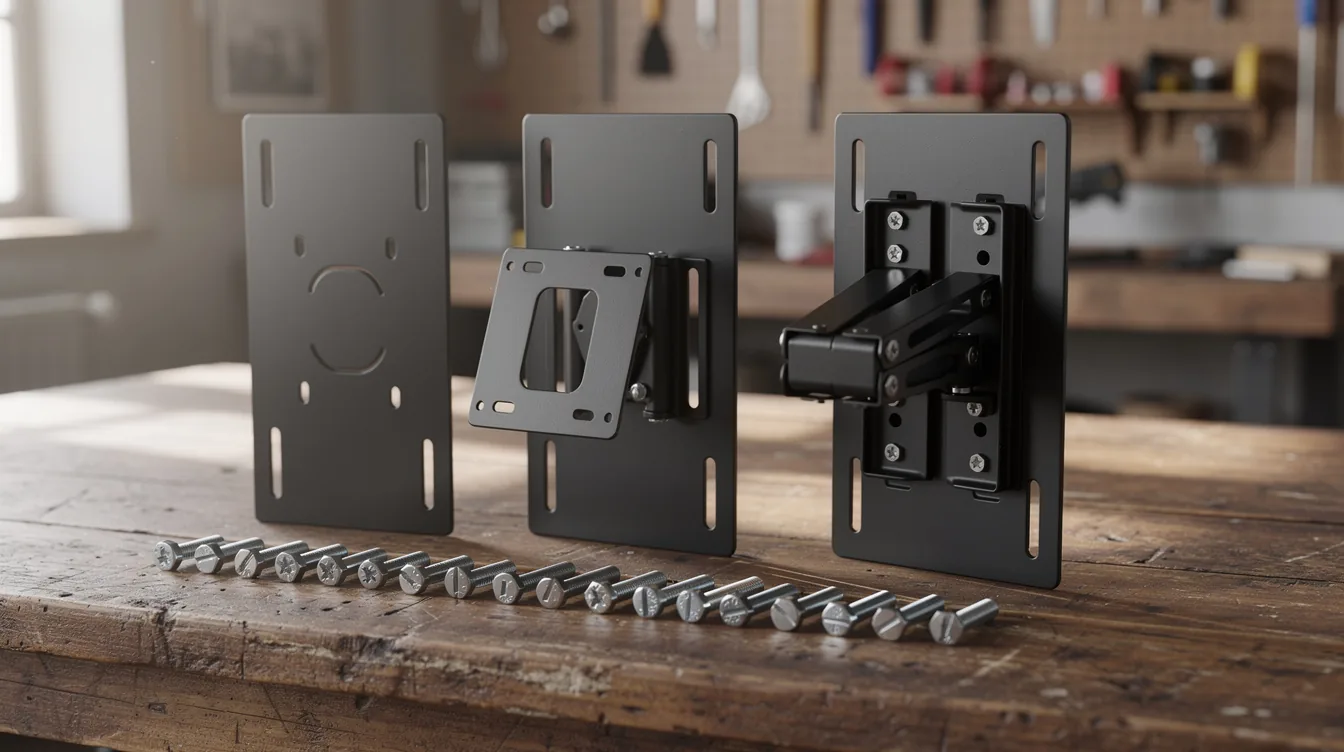
Fixed if the seating is in front of the TV and the wall is a good one. Tilt if the TV has to sit higher than you would like. Full-motion if you genuinely watch from more than one position (an open-plan kitchen and lounge, or a corner), and the wall can take it.
| Fixed | Tilt | Full-motion | |
|---|---|---|---|
| Sits off the wall | About 25 to 40mm | About 40 to 70mm | 60mm+ folded, 400mm+ extended |
| Adjustment | None | Downward angle | Extend, swivel, usually tilt |
| Best for | Seating straight in front | A TV mounted high | Watching from two or more spots |
| Load on the wall | Lowest | Low | Highest, because of leverage |
| Hiding cables | Easiest | Easy | Hardest. The loom has to move |
| Cost | Lowest | Middle | Highest |
Fixed: the default, and usually the right one
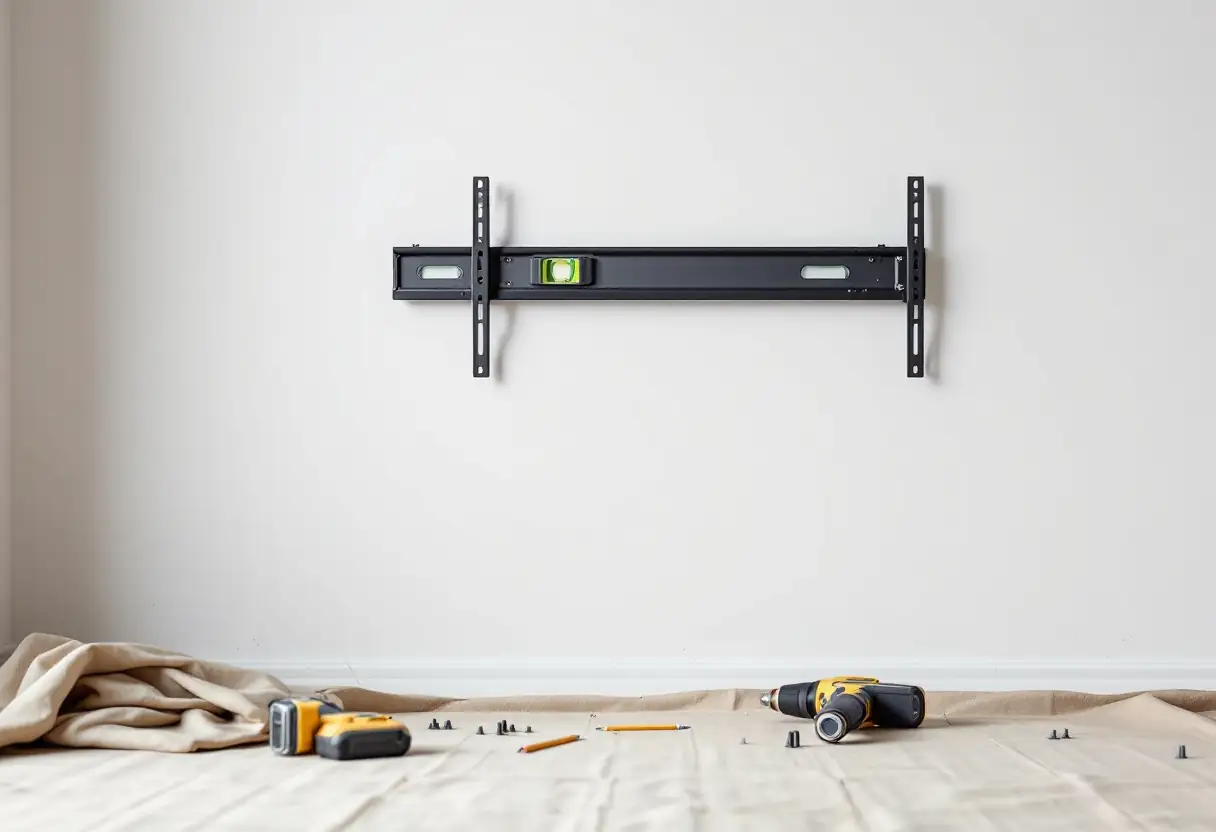
A fixed bracket holds the screen flat against the wall, roughly 25 to 40mm off it. It gives the cleanest look, there is nothing to work loose or sag over the years, it is the cheapest of the three, and it makes cable concealment easiest because the gap behind the TV never changes.
The one real catch is access. You cannot reach behind a fixed TV, so everything has to be plugged in before the final fix, with enough slack left to pull the screen forward if you ever need to. Anyone who has tried to add an HDMI lead to an already-mounted 75-inch knows why that matters.
Tilt: for a TV that sits high. With one caveat
A tilting bracket gives you a few degrees of downward angle. It is the right answer above a fireplace, in a bedroom viewed from a low bed, or anywhere the TV has ended up above eye level.
Here is the caveat, and it is worth being straight about it. Tilt corrects the angle. It does not correct the height. Angling the screen down cuts the reflection off the ceiling and improves the off-axis picture, but if the TV is too high you are still looking up at it and your neck will still know by the end of a film. Tilt makes a compromise less bad; it does not make it good. Where there is any choice in the matter we would rather solve the height, which we cover in our guide to TV mounting height.
Full-motion: the one people over-buy
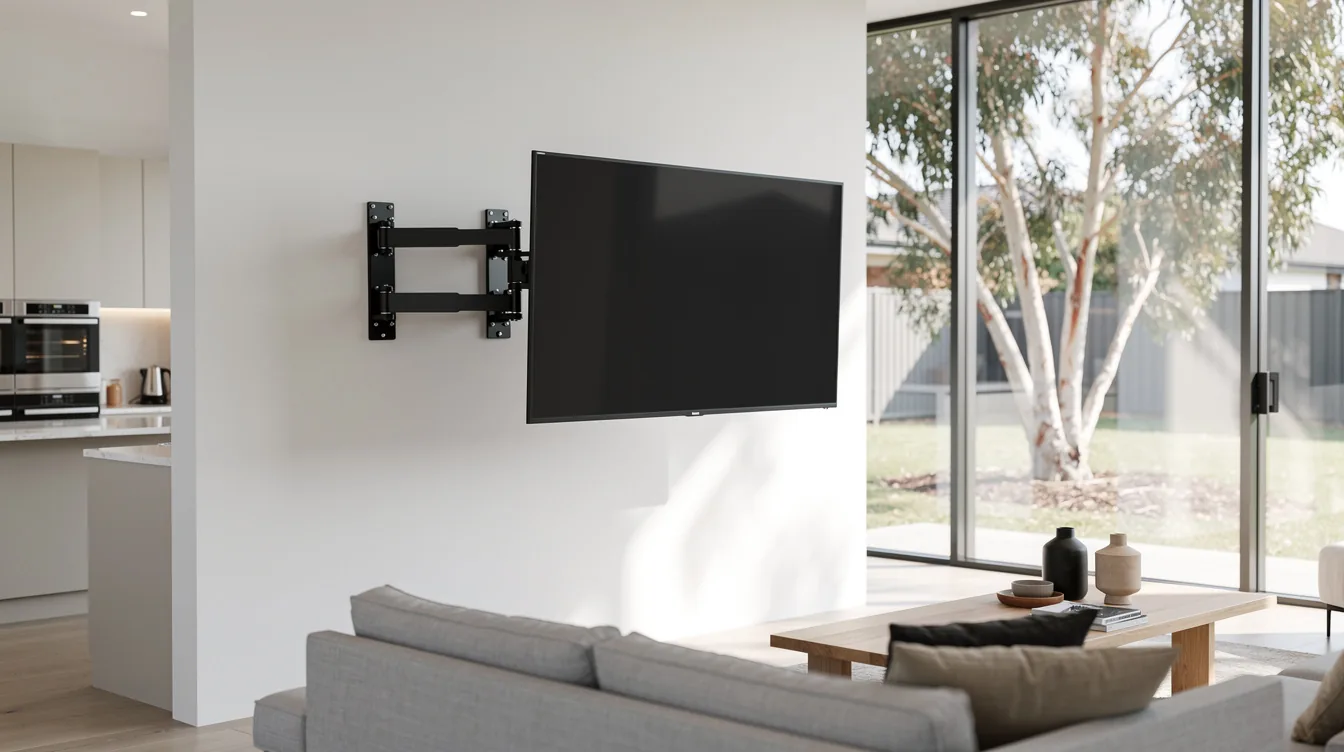
A full-motion bracket extends on an arm, swivels, and usually tilts as well. It is genuinely useful in specific rooms: open-plan living where you watch from the kitchen bench as well as the couch, a TV in a corner, a bedroom viewed from both the bed and a chair. It also earns its place outdoors, where folding the screen flat against the wall keeps it out of the weather between uses.
Three costs catch people out.
- Leverage. Folded, the weight sits close to the wall. Extended, the TV acts as a lever on the fixings, and the pull-out force on the top fixings can equal or exceed the weight of the screen itself. This is the single biggest reason the wall matters more than the bracket.
- It never sits flush. Even folded, a full-motion arm usually holds the TV 60 to 100mm off the wall. The flush, built-in look is gone before you have moved it once.
- The cables have to travel. Every extension drags the loom with it, so the cabling needs slack, and that slack has to live somewhere out of sight.
And the honest part: a good number of full-motion arms get swung about twice in the first week and then never touched again. If you cannot name the second seat you will actually watch from, you probably want a fixed bracket and the money back in your pocket.
The wall decides more than the bracket does
Melbourne housing throws up four common walls, and each one changes the job.
- Brick veneer, which covers most post-war suburban housing. The brick is the outer skin only; inside you have plasterboard on timber studs. Fixings go into the studs, and the studs are where the builder put them rather than where you want the TV centred.
- Solid brick and double brick, common in the older inner suburbs. Excellent to mount on, takes anything you like with the right masonry anchors.
- Plasterboard on steel studs, standard in apartments and many newer builds. Steel studs are thin, and a heavy TV on a long arm is not a job for plasterboard anchors.
- Weatherboard and older timber-framed walls, where stud sizes and spacing vary a great deal and you find out what you have when you open it up.
Then there is what runs inside the wall. Power, water and sometimes gas, none of which you want to find with a masonry bit, which is why, on nearly every job, the bracket is the easy part of the decision. More on how we approach it on our TV wall mounting page.
The two numbers that matter more than the type
The VESA pattern. This is the spacing of the mounting holes on the back of your TV in millimetres, and we cover how to measure yours properly. It is set by VESA's Flat Display Mounting Interface standard: 200×200, 400×400, 600×400 and so on. The bracket has to match the pattern your TV uses.
The weight. Check the bracket's rating against the actual mass of your panel, not against the screen size, and read what that rating does and does not cover. VESA's largest interface part covers everything from 31 inches to 90 inches and up to 113.6kg, according to VESA's mounting interface overview, so the size on the box tells you very little about what you are actually hanging on the wall. A 75-inch OLED and a 75-inch LCD can differ substantially. The figure in your TV's manual is the one that counts, and our comparison of OLED, QLED and Mini-LED covers what else the panel type changes about the mount.
Worth saying about safety
It is the strongest argument for mounting at all. The ACCC's guidance on toppling furniture and televisions records that toppling furniture has killed at least 28 people in Australia since 2000 and causes nearly 20 injuries a week, and it explicitly suggests considering wall-mounting your TV. A screen fixed into structure is not going to come down on a child pulling itself up on the entertainment unit.
That holds for all three bracket types, with one condition: the fixings have to go into something structural. A mount that has only ever been screwed into plasterboard is not a safety improvement.
Frequently asked questions
Can I put a full-motion mount on a plasterboard wall?
Not into the plasterboard itself. It needs to be fixed into the studs behind it, and on a long arm you generally want to hit two studs, which constrains where the TV can sit. In a stud wall we will sometimes fit a backing plate or noggin behind the sheet first so the bracket is not fighting the stud spacing.
Does a tilting bracket fix a TV mounted above a fireplace?
It improves it and it is the right bracket for the job, but it does not make a high TV comfortable. Also check how much heat comes up that wall before committing. Some fireplaces push more up the chimney breast than a television is happy sitting in.
Will a full-motion bracket sag over time?
A cheap one on a heavy screen can, and the fixings are usually the first thing to move rather than the arm. It is worth buying a bracket rated well above your TV's weight rather than just above it.
Can I change bracket type later?
Yes, but the old fixing holes stay in the wall, and a different bracket rarely lines up with them. It is cheaper to make the decision once, which is why we ask about the room rather than the TV.
We wall-mount TVs across Melbourne and the Mornington Peninsula, on every wall type above, and we will tell you if the bracket you have bought is the wrong one before we put a hole in anything. Have a look at the installation gallery to see how they finish up.