From inside the room, four completely different walls look identical. Painted plaster, flat, solid when you knock it. What is actually behind that surface decides your drill, your fixings and whether the job takes an hour or an afternoon.
Masonry is the good news, mostly. A solid wall will hold anything you are likely to hang on it. The trouble is that plenty of Melbourne walls only look solid, and the one that catches people out is the most common wall in the city.
The short answer
- Solid masonry holds a television easily. Getting the fixing into the right layer is the whole job.
- Brick veneer is the trap. The house is brick, but the wall you are fixing to is timber.
- Render is a finish, not a structure. The anchor has to reach the masonry behind it.
- Fix into the brick itself rather than the mortar joint, unless the anchor is specified otherwise.
- There is no cavity, so the cable route has to be decided before the bracket goes up.
Four walls, one appearance
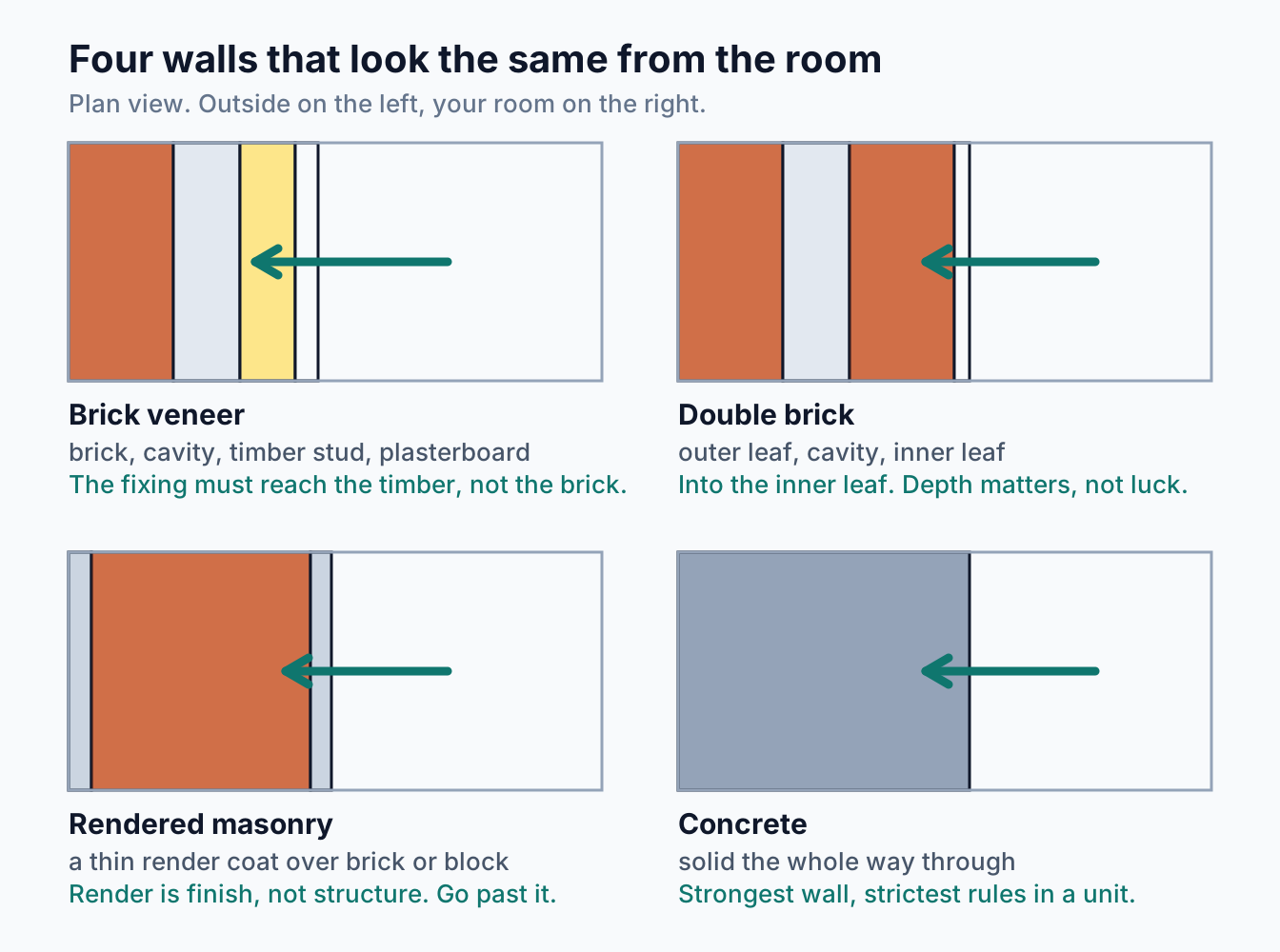
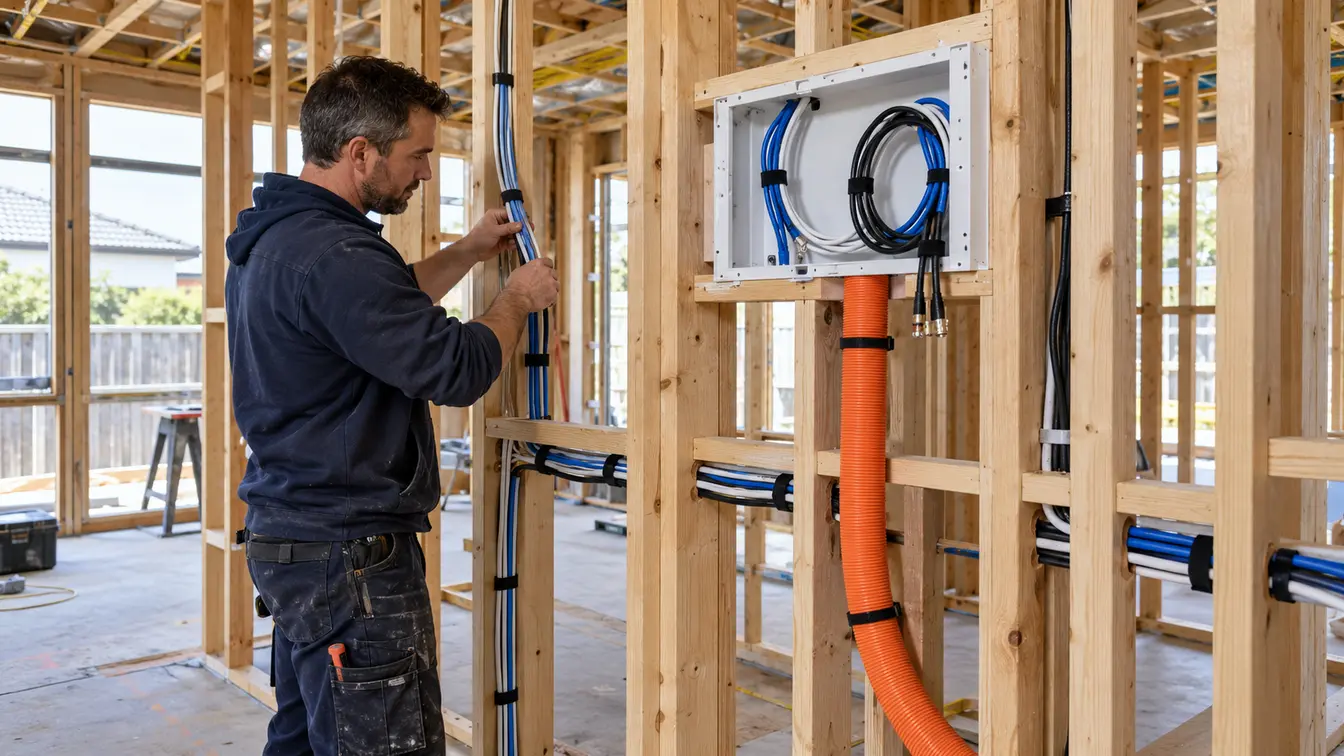
Brick veneer. Brick outside, cavity, timber frame, plasterboard inside. Most Melbourne houses built since the 1950s are this. The brick is a skin hanging off the frame and it carries the weather, not your television. You fix to the timber studs behind the plasterboard exactly as you would in any stud wall, and everything in our guide to mounting on plasterboard applies. If you drill expecting brick and find a cavity, this is why.
Double brick. Two leaves with a cavity between them, common in older and inner suburbs. The inner leaf is what you fix into, and it is genuinely structural. Depth is what matters here: the anchor needs to be well into the brick, not just biting the plaster skim on the face of it.
Rendered masonry. A cement coat over brick or block, sometimes over insulation. The render might be 10mm or it might be 30mm, and it is a surface finish with no useful strength. An anchor that stops in the render will feel tight going in and pull out later.
Concrete. Apartments and newer townhouses. The strongest wall in the list and the one with the most rules attached, which is a separate problem from the drilling.
Working out which one you have
Three checks, in order, and the third one settles it.
Look at a window reveal. The depth from the glass to the internal wall face tells you a great deal. A deep reveal suggests double brick or solid masonry. A shallow one suggests veneer.
Use a stud finder anyway. If it picks up regularly spaced studs, you have a timber frame regardless of what the outside of the house is made of. That single check separates veneer from solid faster than anything else.
Drill a test hole and read the dust. The most reliable method and the one tradespeople actually use. A 4mm hole somewhere inconspicuous, and the colour of what comes out tells you: white or grey powder is plaster or render, red or brown grit is brick, pale grey and hard-won is concrete. Feel matters too. If the drill suddenly goes soft and easy, you have broken into a cavity.
Melbourne houses are frequently mixed. It is entirely normal for the external walls to be solid brick and the internal partitions to be timber studs, so check the specific wall the television is going on rather than the house as a whole.
Fixings that actually work in masonry
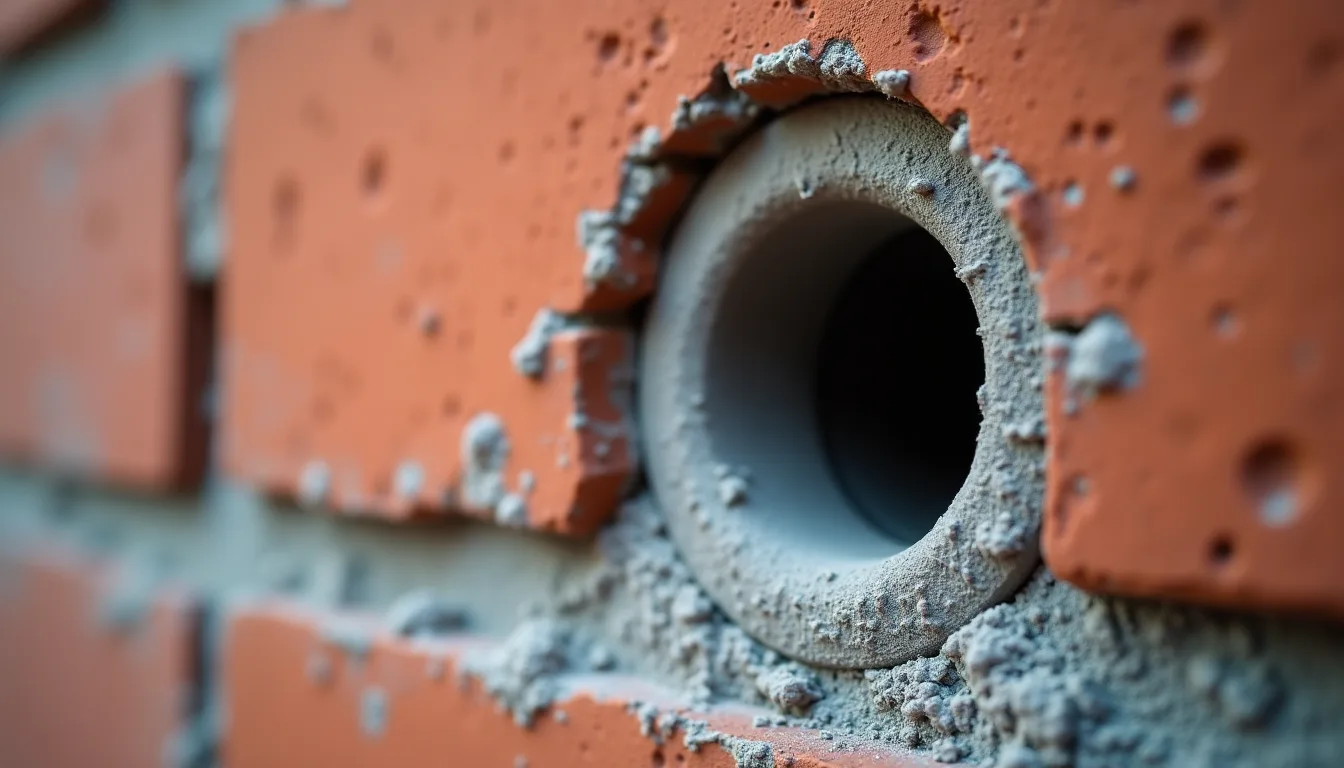
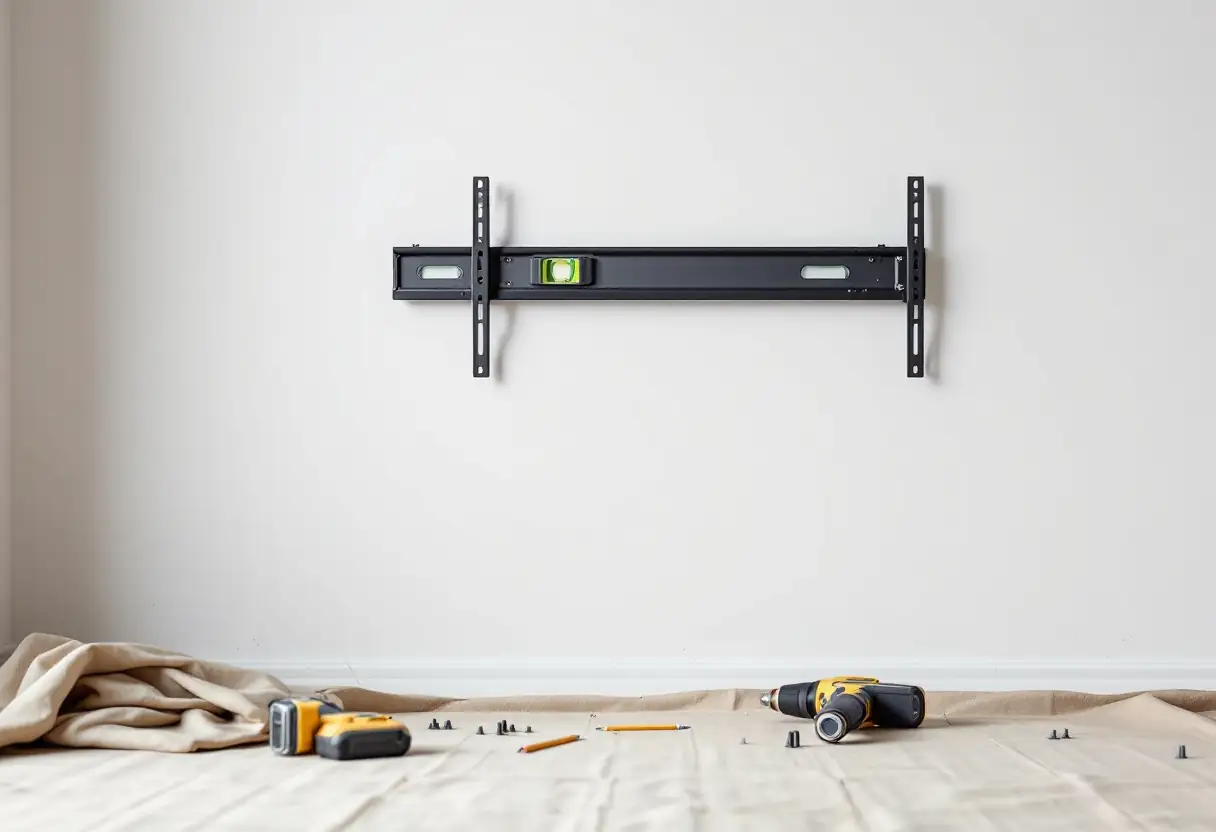
Plastic wall plugs from the general drawer are for hanging pictures. A television needs a proper masonry anchor, either a sleeve or wedge type that expands against the hole, or a screw-in masonry bolt that cuts its own thread. Use what the bracket manufacturer specifies, and use the size they specify rather than the one you have.
Aim for the brick, not the mortar. Mortar is softer than brick, and in an older Melbourne house it can be very soft indeed. Unless the anchor is specifically rated for mortar joints, put the hole in the face of the brick.
Watch for hollow bricks. Some bricks are cored, and an expanding anchor in the void of a cored brick has almost nothing to grip. If the drill breaks through into a space, change the anchor rather than the location.
Use a hammer drill and a masonry bit. A normal drill will polish the hole rather than cut it, and you will burn out the bit before you get through. Drill deeper than the anchor needs and blow the dust out of the hole, because dust left in the bottom stops the anchor seating properly.
Do not overtighten. The failure mode in masonry is crumbling the hole, not stripping a thread. Firm is enough.
Render and lightweight blocks
Two variations worth knowing, because both punish the assumption that render means masonry.
Rendered walls need the anchor's grip length measured from where the solid material starts, not from the wall surface. If the render is 25mm and your anchor expands over the first 30mm, almost none of it is doing anything useful. Longer anchor, deeper hole.
Autoclaved aerated concrete, the pale lightweight block sold as Hebel and used widely in newer Melbourne builds, looks and drills like soft masonry and behaves nothing like brick. Standard expanding anchors crush it rather than grip it. It needs fixings made specifically for aerated concrete, and it is worth identifying before you start because the drill goes through it startlingly easily.
A tiled or stone-clad wall is any of these with a finish over the top, and the finish changes how you get through it rather than what holds the screen. We go through that in mounting on a tiled, stone or feature wall.
Concrete, and the apartment problem
Concrete holds a television better than any other wall. The complications are not structural.
Check the rules before the drill. In an apartment, walls may be common property, and owners corporations frequently have conditions about drilling structural elements. Sorting that out first is a great deal cheaper than sorting it out afterwards, and our guide to wall mounting a TV in a Melbourne apartment covers where the boundary usually sits.
Never drill a ceiling or slab on assumption. Many modern apartment slabs are post-tensioned, with steel tendons under enormous load running through the concrete. The Post-Tensioning Institute of Australia sets out the process for cutting holes through post-tensioned slabs, and it involves scanning and engineering sign-off rather than guesswork. This matters most for a ceiling-mounted projector or speaker, but it is a good reason to treat concrete in a unit with respect generally.
Assume there are services in there. Conduit is cast into concrete walls, and a scan is worth the trouble before drilling anything substantial.
The cable, which is the real difference
This is where a masonry job genuinely diverges from a stud wall, and it is worth deciding before the bracket goes up rather than after.
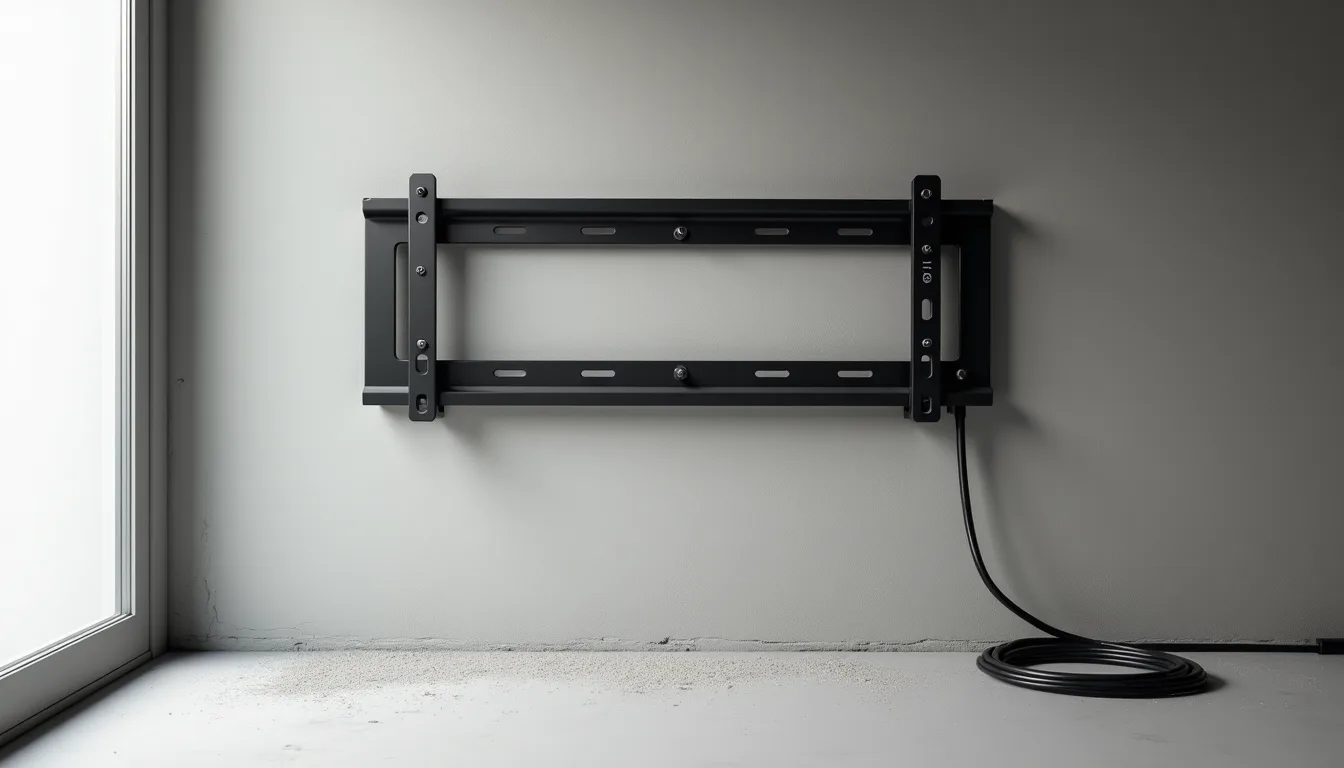
There is no cavity, so cables cannot simply drop down inside the wall. The honest options are a chase cut into the render or masonry and made good afterwards, surface conduit or trunking painted to match, routing through an adjoining cupboard or wardrobe, or accepting a tidy visible run. Our guide to hiding cables behind a wall-mounted screen goes through what each looks like when it is finished.
If a new power outlet is going in behind the screen, that is electrical work, and Energy Safe Victoria is clear it is not a job to do yourself. In masonry it is more work than in a stud wall, so it belongs in the plan rather than in the surprises.
Frequently asked questions
Can you mount a TV on a brick wall?
Yes, and solid brick is one of the better walls for it. The work is in using proper masonry anchors, drilling into the brick rather than the mortar, and getting the depth right. The part people underestimate is the cable route, not the bracket.
My house is brick. Why did the drill go through into a gap?
Because it is brick veneer, which describes most Melbourne homes built since the 1950s. The brick is an outer skin and the internal walls are timber framed with plasterboard. You are fixing to the timber studs, not the brick.
Can I drill into the mortar instead of the brick?
Better not to for a television. Mortar is softer than the brick around it and older mortar can be very soft. Some anchors are rated for it, but the default is the face of the brick.
Do I need a hammer drill?
For brick, block or concrete, yes. A standard drill will glaze the hole and overheat the bit. For brick veneer you are drilling timber, so an ordinary drill is fine.
Is it safe to drill a concrete wall in an apartment?
Usually, once you have checked the owners corporation rules and confirmed there are no services in the way. Ceilings and slabs are the ones to be careful with, because post-tensioned slabs need scanning and proper sign-off rather than a confident guess.
Masonry rewards knowing what you are drilling into and punishes assuming. Work out which of the four walls you have, use anchors made for it, and settle the cable route before anything is fixed. We mount screens on brick, block, render and concrete across Melbourne, Bayside and the Mornington Peninsula, and we identify the wall before we quote rather than on the day. Have a look at our TV wall mounting page, or book a free onsite quote.