Yes. Whether you should is a different question, and for most rooms the honest answer is that it is a compromise rather than a good idea.
It is also the single most common thing we get asked to do, and we do plenty of them. So rather than telling you not to, here is what actually goes wrong, how to find out whether your particular fireplace is a problem, and what to do if the answer comes back badly.
The short answer
- Heat is the risk that damages equipment. Viewing angle is the one you live with every night.
- The two are separate problems and a room can fail on either.
- Measure the temperature where the screen will actually sit, with the fire running for an hour. Do not guess from the fireplace type.
- A deep mantel shelf helps a great deal. A shallow one or none at all helps very little.
- Tilting the bracket improves the angle you view the panel from. It does not lower the screen.
Why it keeps coming up
Because in a lot of Melbourne houses the chimney breast is the only wall that makes sense. It faces the seating, it is already the focal point of the room, and every other wall has a window, a door or a walkway in it. The furniture is arranged around the fireplace whether anyone planned it or not.
So the instinct is sound. The problem is that the wall which is best positioned is also the one wall in the room with a heat source under it, and it puts the screen higher than anywhere else you could have mounted it.
What actually changes up there
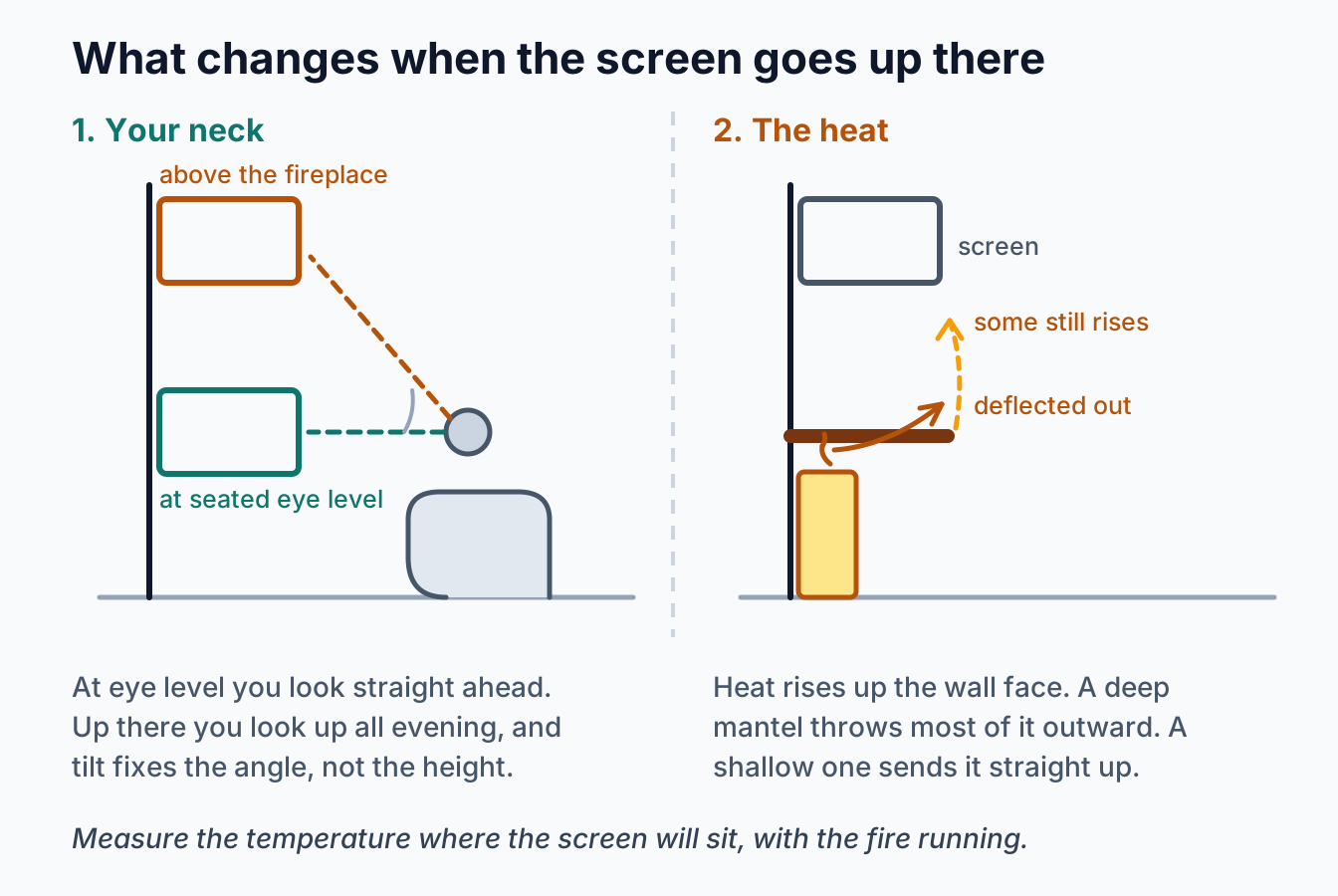
Two independent problems, and it is worth keeping them apart because they have different fixes and different severities.
The angle, which you notice every night
The centre of a screen wants to sit at your eye level when you are seated, which our guide to TV mounting height works through properly. Above a mantel you are typically well above that, and the result is a sustained upward look for the length of a film.
The honest test costs nothing: sit where you actually sit, look at the spot on the wall where the middle of the screen would be, and hold it for two minutes. That is the position your neck will be in for two hours. Most people find it fine for the news and tiring for a film, which is roughly the right conclusion.
Tilting the bracket is worth doing and is regularly oversold. It rotates the panel so you are looking at the screen face more squarely, which helps the picture and the reflections. It moves the screen down by nothing at all. If somebody tells you a tilt bracket solves the height, they are describing a different product.
The heat, which you may never notice until it matters
Televisions are rated for a room, not for the top of a heat source. Manufacturers publish an operating temperature range for each model and it usually tops out around 40 degrees. That figure is in the manual for your specific set, and it is worth two minutes to look up before committing.
Sustained warmth is the thing to worry about rather than a dramatic moment. Electronics running warm year after year age faster, and it tends to show up as a fault well outside warranty rather than as a failure you can point at. It is a slow risk, which is exactly why it gets ignored.
How much heat reaches the wall above varies enormously, and not in the way people assume:
- A sealed modern gas unit vents its combustion products outside and often throws surprisingly little heat up the wall face.
- An open wood fire is the worst case. Most of its heat goes up, some of it up the wall rather than the flue, and it is entirely uncontrolled.
- A wood heater or insert sits in between and depends heavily on the installation. Solid fuel appliances are installed to AS/NZS 2918, which sets clearances to heat-sensitive materials, and the appliance's own installation instructions carry the numbers for that model. Those clearances are about the building, not about your television, but they are a strong hint about how much heat the thing throws.
- An electric fireplace is usually a non-issue, and some are designed with a screen above them in mind.
The mantel is the other half of it. A deep shelf catches rising warm air and pushes it out into the room, away from the wall above. A shallow shelf, or a flush modern surround with no shelf at all, sends it straight up the face of the wall and across whatever is mounted there. Two fireplaces of identical output can behave completely differently for this reason alone.
How to find out, rather than guess
This is the part almost nobody does, and it converts the whole question from an argument into a measurement.
Run the fire the way you actually run it, for at least an hour, on a normal evening rather than a mild one. Then measure the wall temperature at the exact height the middle of the screen will sit. An inexpensive infrared thermometer does it in seconds, or tape a cheap thermometer to the wall and come back later.
What you are comparing it against is your television's stated operating range, not a number somebody quotes you on the internet. If the wall is sitting comfortably below that with the fire going hard, the heat question is settled and you can move on to the angle. If it is close to the limit, or above it, that is your answer and no bracket fixes it.
Two things to be honest about while you are up there. Measure in winter if you can, because a test in October tells you very little about July. And measure with the doors shut and the room as it normally is, not with the house open.
If the answer comes back badly
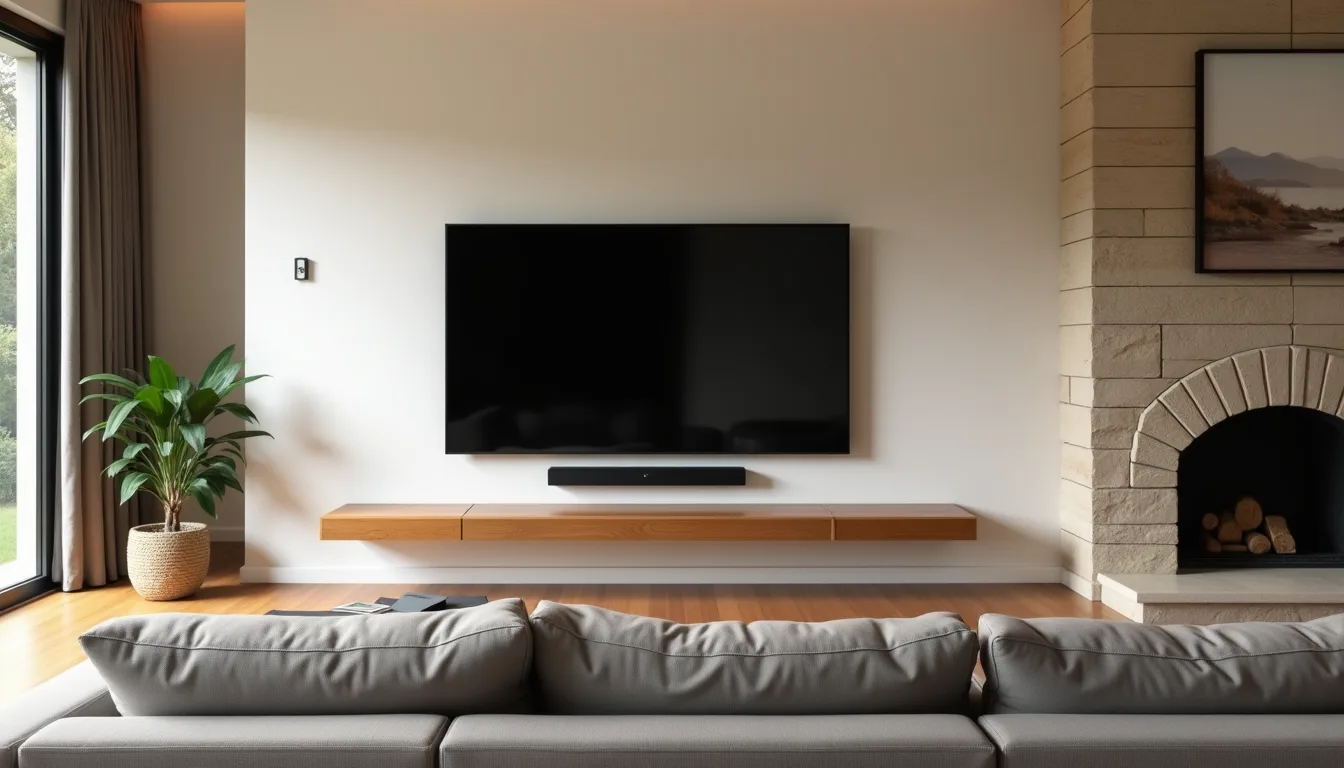
There are more options than people realise, and they are worth considering before accepting a compromise you will live with for a decade.
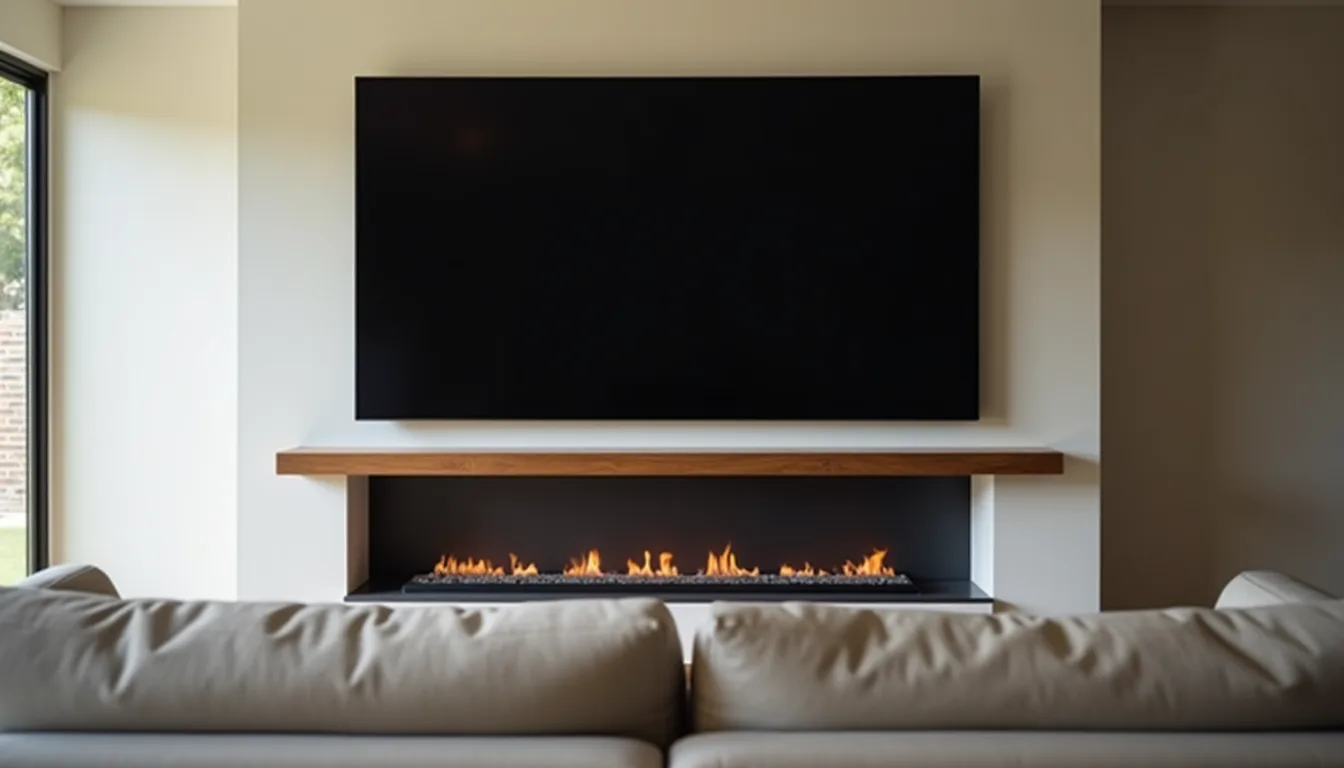
Use a different wall. The obvious one, and the one most people dismiss before really looking. It usually means moving the furniture rather than accepting a worse screen position, and a room arranged around the television it actually watches is not a sacrifice. The photograph above is that arrangement: the screen where the viewing is good, the fireplace still doing its job on the wall beside it.
A pull-down mount. These bring the screen down and forward in front of the fireplace for viewing, then fold it back up. They genuinely solve the geometry, they are considerably more expensive than a normal bracket, they need the wall to take the load, and the screen still spends its life sitting above a heat source when it is stowed. Worth knowing they exist; not a universal answer.
Mount lower than the mantel suggests. Often there is more room than it looks and the screen has been placed by eye rather than by measurement. Getting the bottom edge as close to the mantel as clearance allows can claw back real height.
Accept it knowingly. Entirely reasonable, and what a lot of households sensibly choose. If the room only really works one way, the fireplace runs a handful of times a year, and the viewing is mostly casual, then a tilted screen above the mantel is a fine outcome. What you want to avoid is finding out afterwards.
The practical side, if it is going ahead
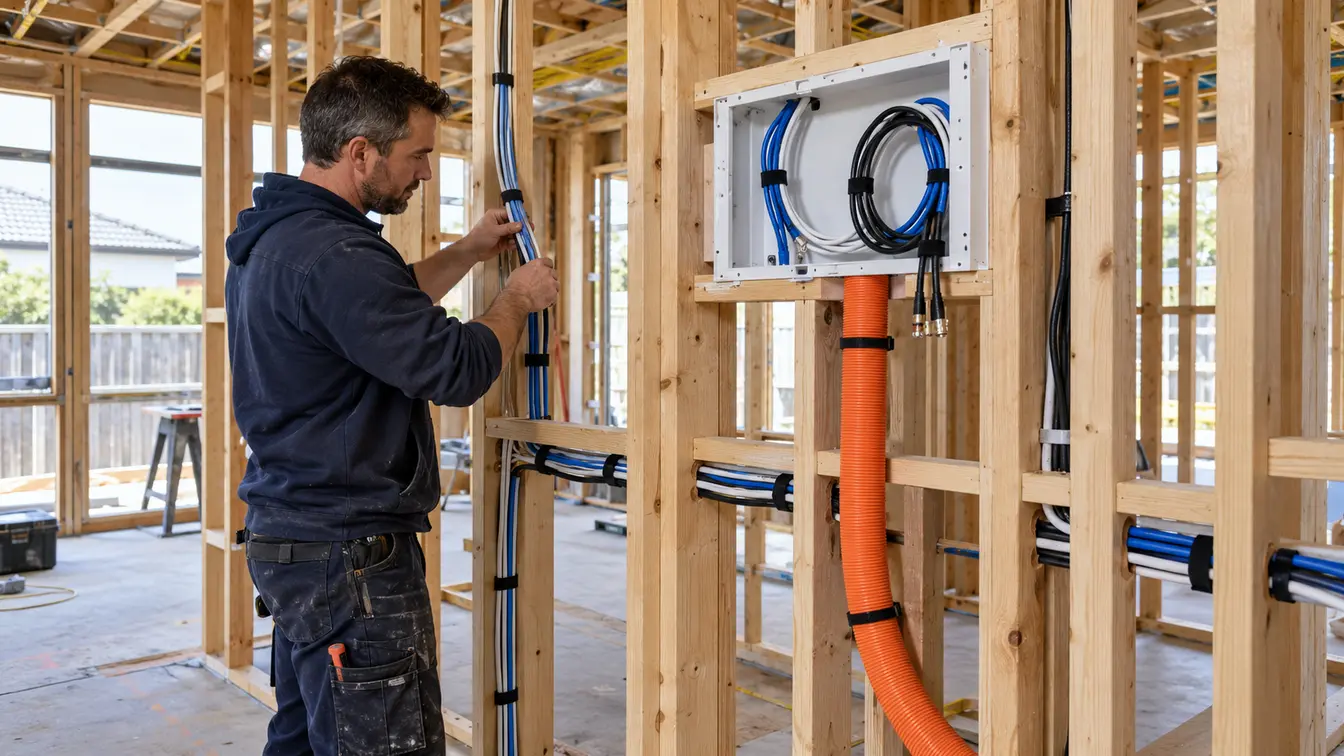
Find out what the chimney breast is made of. This is rarely as simple as the wall next to it. It might be solid brick, a rendered masonry flue, a timber-framed box built around a modern unit, or brick with a plasterboard skin and a cavity behind. Each takes different fixings, and a bracket into the skin of a boxed-in flue rather than into structure is a serious problem. If the breast is tiled or clad in stone, the finish hides all of that and cannot be made good afterwards, which we cover in mounting on a tiled, stone or feature wall. Our wall mounting guide covers reading a wall before drilling it.
Work out the cable route early. A chimney breast frequently has nowhere to run a cable, which is the thing that turns a straightforward job into an awkward one. There may be no cavity, and a masonry flue cannot simply be chased. Sort this out before the bracket goes up rather than after, and our guide to hiding cables behind a wall-mounted screen goes through the options.
Get the power sorted properly. A new outlet behind the screen is electrical work, and Energy Safe Victoria is clear that it is not a job to do yourself. Running an extension lead down a chimney breast to a power point beside the fireplace is exactly the improvisation you do not want near a heat source.
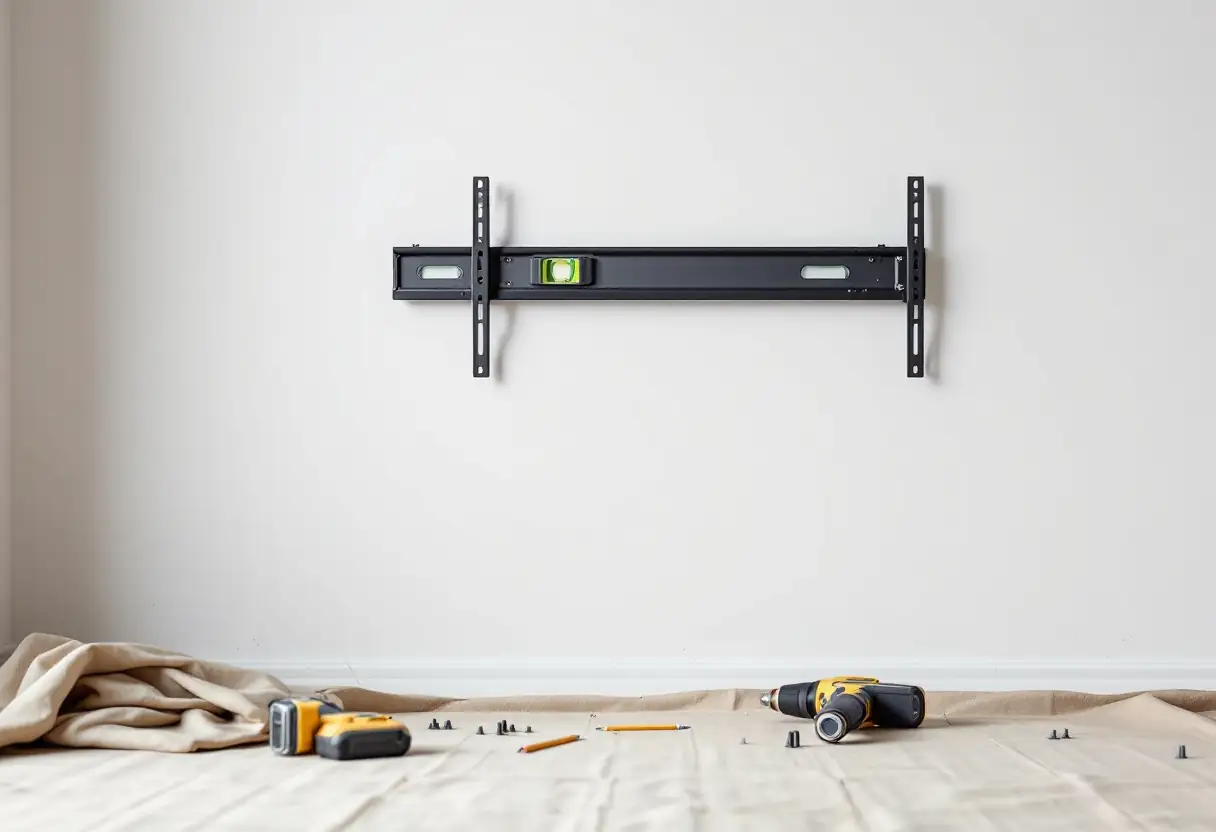
Choose the bracket for the position. A tilt bracket earns its money here more than anywhere else in the house, and on a masonry flue a low-profile fixed bracket with a tilt is usually the sensible combination. We compare the types in fixed, tilt and full-motion mounts.
Think about where the soundbar goes. If the mantel is occupied by the fireplace surround, the soundbar has nowhere obvious to live, and this is worth deciding before the screen height is set rather than afterwards.
Frequently asked questions
Will the heat from my fireplace damage the TV?
It can, and whether it will depends entirely on your fireplace, your mantel and how often you run it. The failure mode is usually shortened life rather than a dramatic breakdown. Measure the wall temperature where the screen will sit with the fire running and compare it against the operating range in your television's manual, which typically tops out around 40 degrees.
Does a mantel shelf protect the television?
A deep one helps considerably, by catching the rising warm air and pushing it out into the room instead of up the wall. A shallow shelf, or a flush surround with no shelf, does very little. It is one of the biggest differences between two otherwise similar installations.
Will a tilting bracket fix the viewing angle?
It improves it and does not solve it. Tilt changes the angle you are looking at the panel from, which helps the picture and reduces reflections. The screen is still just as high, and your neck is still doing the same work.
How high above the fireplace should the TV go?
As low as the clearances allow. Get the manufacturer's required clearance above the appliance or mantel, respect it, and then put the bottom of the screen as close to that line as you can. Every centimetre you save is a real improvement, and the position is usually chosen by eye when it should be measured.
What about an OLED above a fireplace?
The same heat rules apply and are worth taking a little more seriously. We go through the panel technologies in OLED versus QLED versus Mini-LED.
Can you mount it if the wall turns out to be unsuitable?
Not safely, and we will tell you on the day rather than proceed. A boxed-in flue with nothing structural behind the lining is the usual culprit. The answer is then a different wall, a backing plate fixed into something solid, or a rethink, and it is a far better conversation to have before the holes exist.
Above the fireplace is a compromise, and a well-informed compromise is a perfectly respectable thing to choose. What we would rather you did not do is discover the heat or the neck ache after the bracket is in a masonry wall. Take the measurement, sit in the chair and look at the spot for two minutes, and then decide. We mount screens above fireplaces across Melbourne, Bayside and the Mornington Peninsula, and we are equally happy to tell you when the wall beside it is the better answer. Have a look at our TV wall mounting page, or book a free onsite quote.