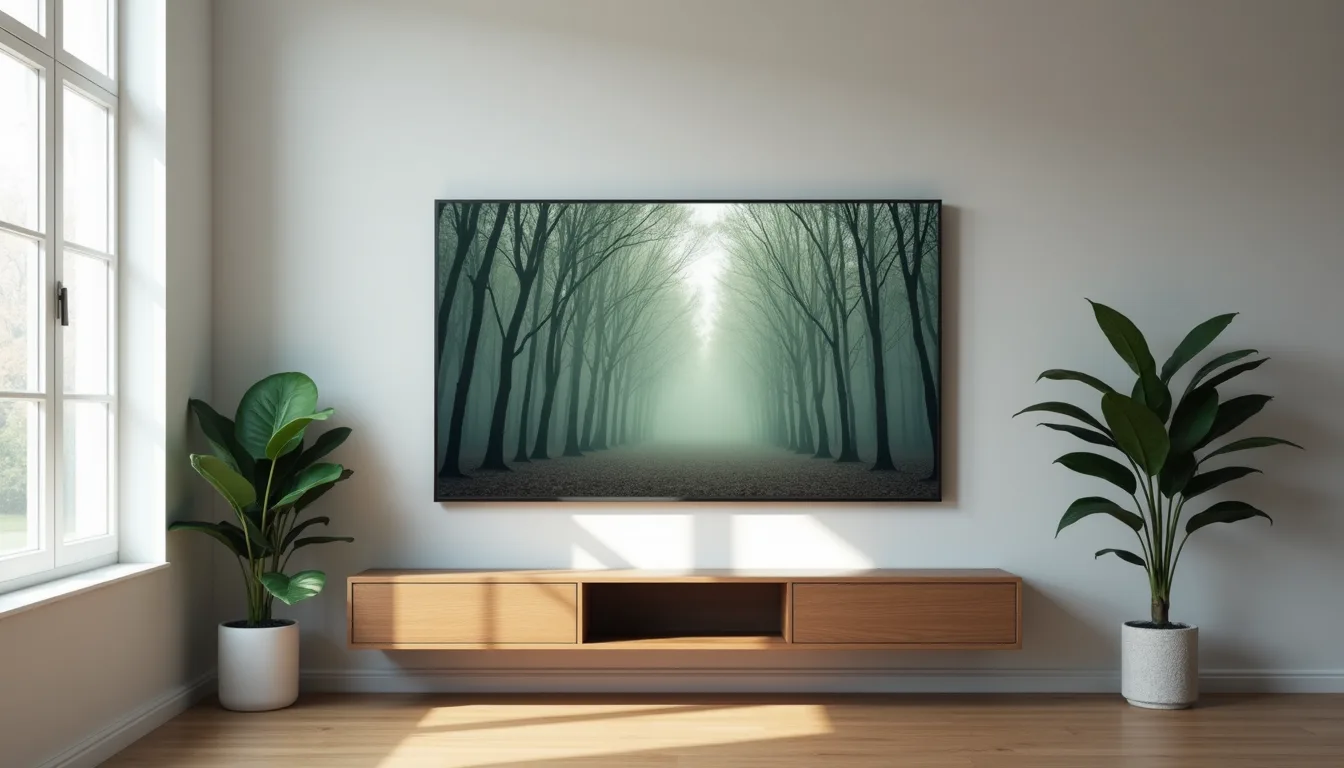
Wall-mounting the TV is the easy part. What decides whether it looks built-in or looks like a television someone hung on a wall is the four or five cables dangling out the bottom of it.
There are three honest ways to deal with them, and one rule that catches out nearly every homeowner who has a go themselves. Start with the rule, because it decides which of the three you can use.
The short answer
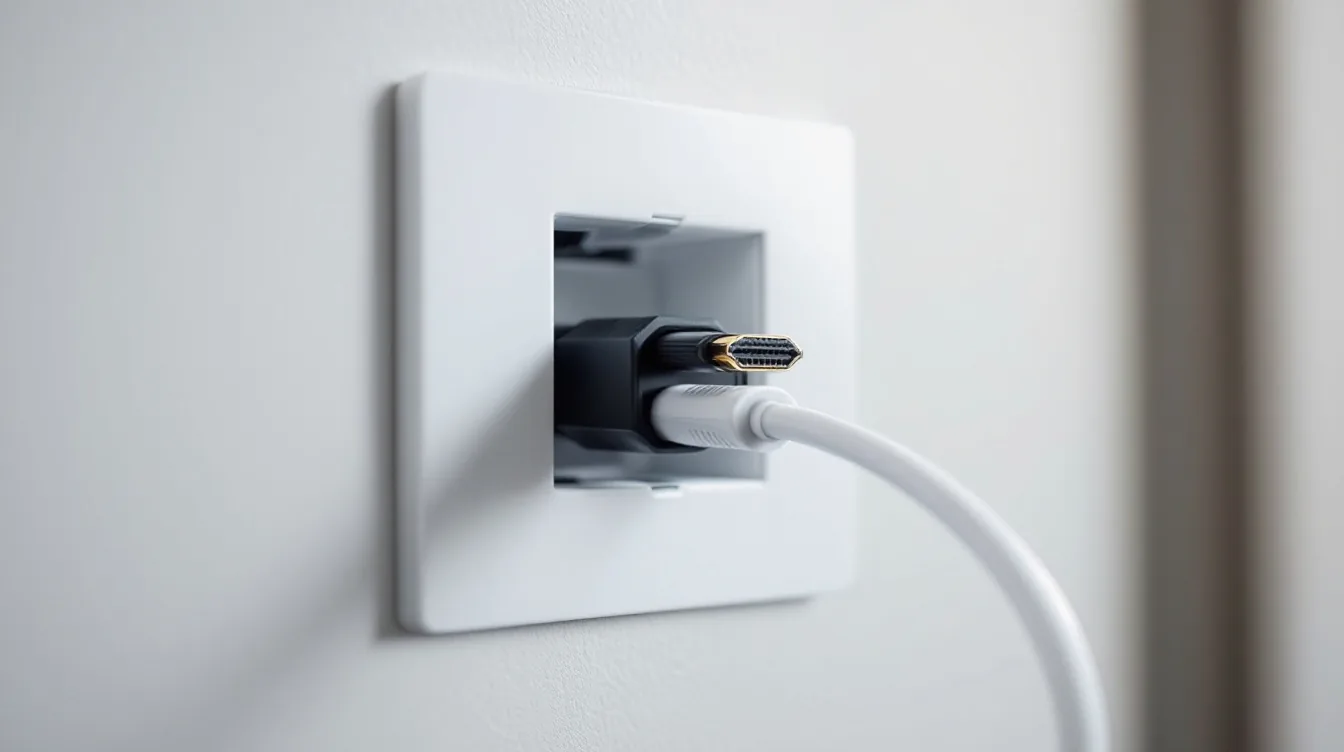
Run the signal cables (HDMI, antenna, speaker, network) inside the wall cavity, and have a licensed electrician fit a recessed power point in the wall behind the screen so the power is proper fixed wiring rather than a lead pushed through a hole. If the wall has no cavity, or you rent, use surface trunking painted to match the wall. Everything else is detail.
The power cable is not like the others
This is where do-it-yourself jobs come unstuck. It is tempting to cut two holes, drop the TV's power lead inside the wall, and pull it out at the power point near the skirting. Tidy, free, ten minutes.
It is also illegal, and there is no grey area in it. Energy Safe Victoria puts it plainly: "Doing unqualified electrical work isn't only extremely dangerous, it's also illegal," and, on the same page, "Electrical work isn't a DIY job, even for small jobs such as changing power points or light switches." That is the regulator, not an installer's opinion.
The compliant version is neither difficult nor dear: a licensed electrician fits a new outlet inside the wall behind the TV, wired properly back to the circuit, and the TV plugs straight into it. You should receive a Certificate of Electrical Safety for it. Energy Safe Victoria requires the electrician to give the customer a copy, within 30 days for ordinary non-prescribed work. Keep it; it is the piece of paper that matters when you sell or make an insurance claim.
The rules that electrician works to are AS/NZS 3000, which Standards Australia describes as "the technical rules that help electricians design, construct and verify electrical installations". None of that is something a homeowner is expected to know. It is simply why the power cable is handled differently from the HDMI. Running a network cable up at the same time falls under a separate regime again. That is telecommunications cabling, and the ACMA's position is just as short: "To work as a cabler in Australia, you must be registered."
The three ways to hide TV cables
| In-wall | Surface trunking | Cable tidy only | |
|---|---|---|---|
| What you see | Nothing | A painted channel down the wall | A neat bundle behind the unit |
| Needs a wall cavity | Yes | No | No |
| Power | New outlet behind the TV, by an electrician | Existing lead, run in the channel | Existing lead |
| Suits renters | Rarely. Ask first | Yes, removable | Yes |
| Adding a cable later | Easy if conduit was left in | Easy, lift the lid | Easy |
| Making good afterwards | Two patched openings | Filler and paint | Nothing to make good |
Most of our jobs are the first. The second is a genuinely good answer on a solid wall or in a rental, and looks far better than people expect once painted the wall colour.
What actually goes through the wall
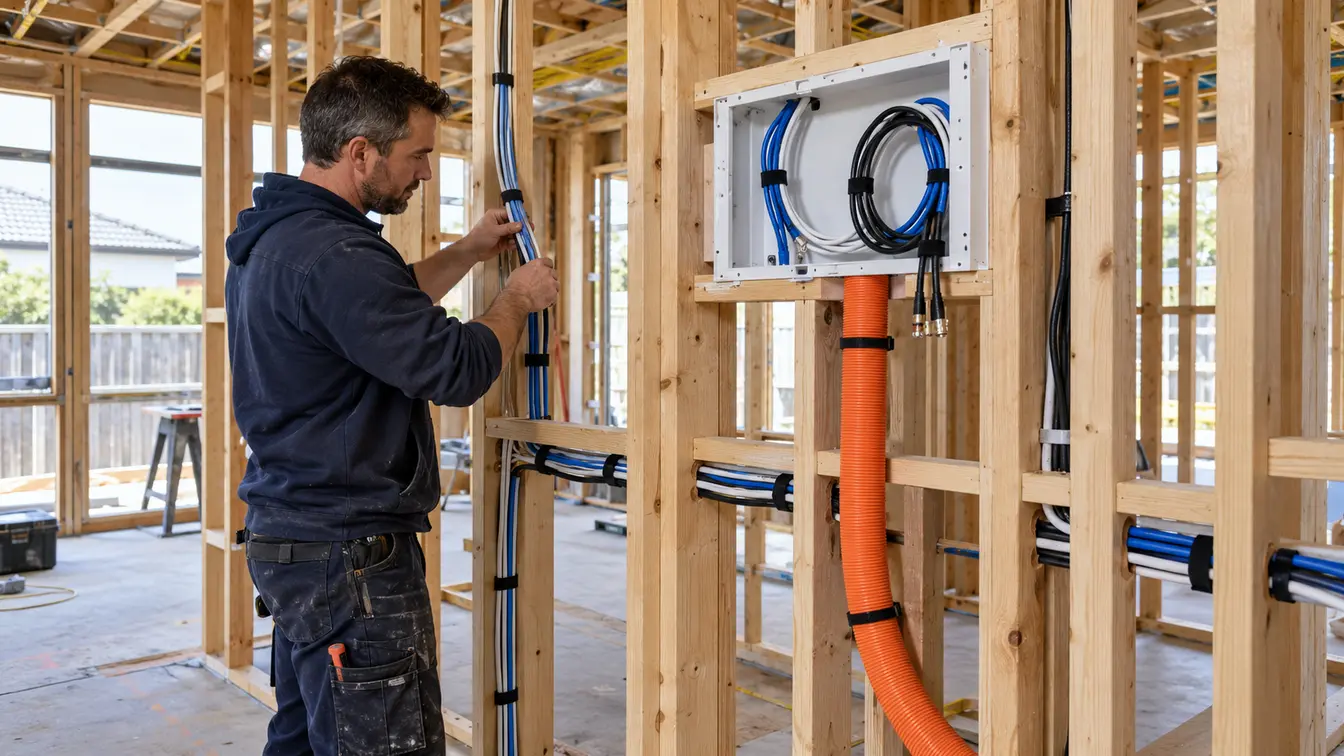
The usual set is one HDMI from the source gear up to the TV, a coaxial lead if the antenna point is not already behind the screen, speaker cable if there is a soundbar or surround system, and sometimes a network cable.
The one worth thinking about now is the cable you have not bought yet. Pulling a spare HDMI through an open wall costs a few dollars and five minutes; pulling it through a closed wall two years later means opening the plaster again. We run a spare as standard for that reason.
Power and signal also take separate paths through the wall on our jobs: different openings, kept apart inside the cavity. Partly that is how the electrical side has to be treated, and partly it is practical: mains sitting hard against an unshielded audio run is a recipe for hum you will never quite track down afterwards.
What your wall will allow
Melbourne housing throws up four common walls, and the wall decides more than the TV does.
- Brick veneer. Most post-war suburban housing. Brick outside, plasterboard on timber studs inside, and a cavity you can drop cable down. The best case, and the one most of this article assumes.
- Solid brick or double brick. Common through the older inner suburbs. There is no cavity, so concealment means chasing a channel into the masonry and making good (a real job, not an afternoon), or surface trunking. Trunking is usually the sensible call.
- Plasterboard on steel studs. Standard in apartments and many newer builds. There is a cavity, but the studs are thin, often already carrying services, and in an apartment you may be looking at a fire-rated or party wall you should not cut into at all. Check with the body corporate before anyone drills, and see wall mounting a TV in an apartment for which walls are usually yours.
- Weatherboard and older timber frames. Cavity depth and stud spacing vary enormously, and there is usually a surprise inside. Old wiring, blocking, or nothing at all where the plan said there was a stud.
Two things get in the way even in a good cavity. Insulation batts are the first, and a cable fished past them will not simply drop. Noggins are the second, the horizontal timbers between studs, and they tend to sit at about the height people want the TV, so the run has to go around them. Neither is a problem, but both are why this takes longer than the ten minutes the internet promises.
The mistakes we get called out to fix
The extension lead in the wall. The most common by a distance, and it has to be undone rather than tidied up. Where a previous owner has done it, an electrician usually finds it the next time they work on the house.
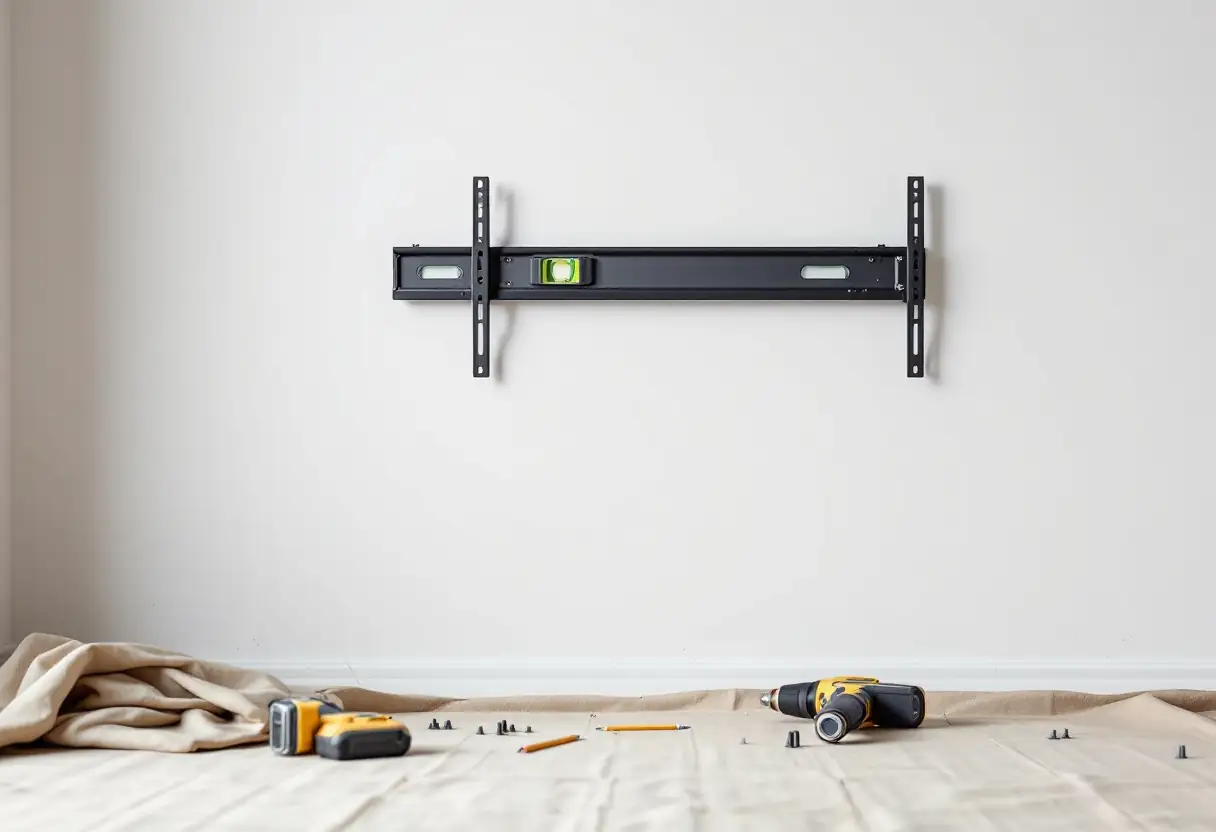
Cutting the opening before setting the bracket position. The upper plate ends up visible beside the screen instead of behind it, with a patch in the plaster to prove it. Mount the bracket first, hold the TV up, then mark.
No slack on a full-motion arm. Every extension drags the loom with it, and a tight cable either unplugs itself or slowly pulls out of the wall plate. An articulated bracket needs slack for full extension, and somewhere for that slack to sit when it is folded back. One of several reasons we talk people out of full-motion when they do not need it, which we go through in our comparison of fixed, tilt and full-motion brackets.
Drilling into what is already in the wall. Power, water, and occasionally gas. A stud finder tells you where the timber is, not what is beside it.
The five minutes that saves you a callout
Leave a path behind. When the wall is open, we run conduit between the two openings rather than just the cables, with a draw string left in it. Adding a cable later then takes minutes and no plaster comes off. It costs almost nothing at the time, and it is what homeowners thank us for years afterwards, usually when a new console or soundbar turns up.
The other is height. Settle the screen position before anything is cut, because moving a mounted TV up or down by 100mm afterwards means new fixings, new openings and two patches. We cover how to work that out in our guide to TV wall mount installations.
When you do not need to hide anything
If the TV sits above a media unit as wide as the screen and the gear lives inside it, the cables have a very short trip and the furniture hides most of it already. A cable sock and a few clips get you most of the result for about fifteen dollars.
Renting with a landlord who will not have holes in the wall is the other case, and trunking beats a fight. If a full home theatre with in-wall speakers is on the cards, though, plan the TV cabling as part of that job rather than on its own, which is what our home theatre installation work covers.
Frequently asked questions
Can I run the TV's power cable inside the wall?
No. A standard appliance lead is not fixed wiring and cannot be run inside a wall cavity. The compliant answer is a new outlet fitted behind the TV by a licensed electrician, which is quick and inexpensive, and comes with a Certificate of Electrical Safety.
What about the in-wall power kits sold online?
Most are made for the American market and its wiring rules rather than ours. Some Australian-supplied recessed outlets are fine, but fitting one is still electrical installation work and still needs a licensed electrician. Buying the box does not change who is allowed to install it.
Can cables be hidden in a double brick wall?
Not without chasing a channel into the masonry and making good, which is a considerably bigger job than most people expect. On solid walls we generally recommend surface trunking painted to match, because the finished result is tidy and the wall stays intact.
Can you hide cables on a TV that is already mounted?
Usually yes, and it is a common callout. The screen comes off the bracket, the cabling is run, the plates go in and the TV goes back up. It is quicker than the original install because the bracket position is already settled.
Does hiding cables in the wall affect the picture?
Not if the cable is right for the run. Long HDMI runs at high resolution are the one place to be careful. Past about five metres it is worth using an active or optical HDMI lead rather than a cheap passive one, because that is a cable you will not want to replace once the wall is closed.
We wall-mount TVs across Melbourne and the Mornington Peninsula with the cabling concealed as standard, and we will tell you before anything is cut if your wall is a trunking job rather than an in-wall one. See how they finish up on our TV wall mounting page, or book a free onsite quote.