Everybody arrives at the same problem from a different direction. The screen is meant to sit flat against the wall, and there is a plug in the way.
Our other guides spend their time on what you must not do about that. This one is the opposite: what the right answer looks like, who is allowed to fit it, and what you should be handed when they leave.
The short answer
- A standard power point puts the plug in front of the wall. A recessed one puts it behind.
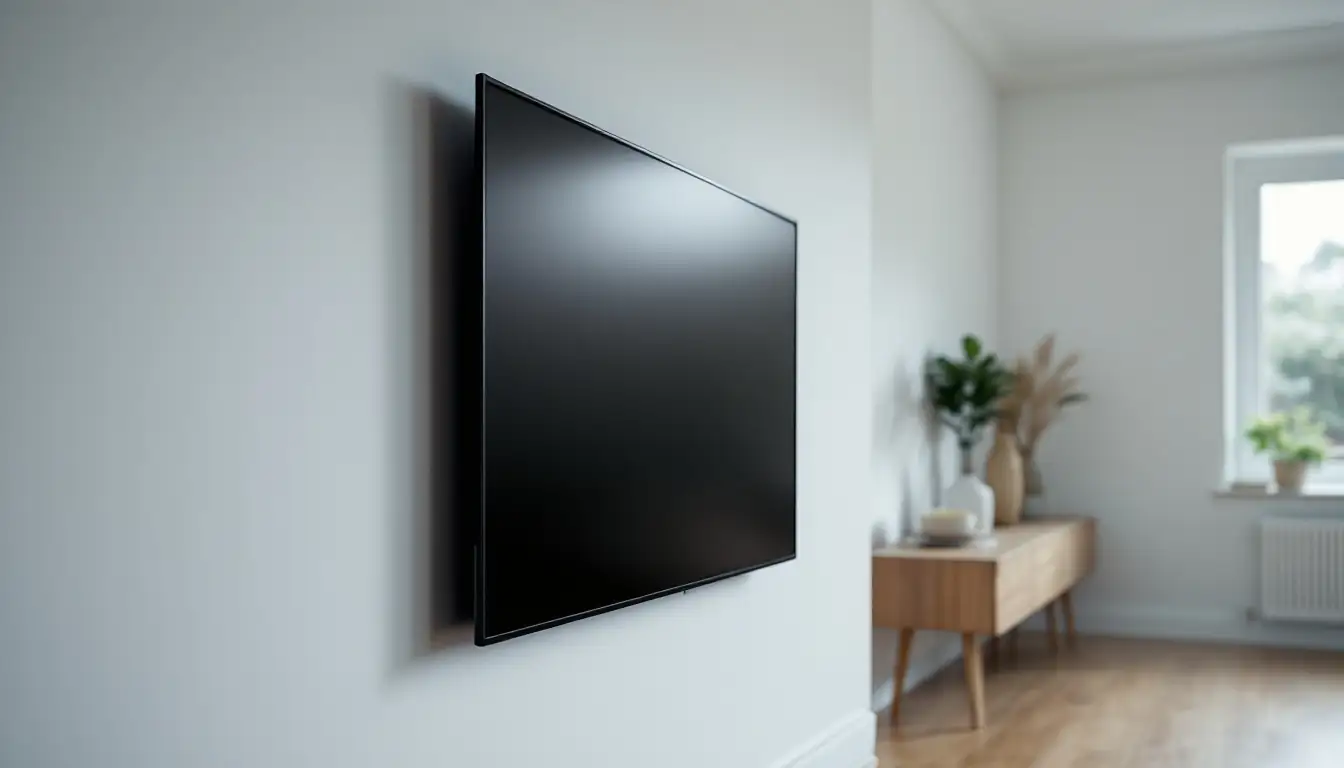
- That is the whole idea, and it is why a screen can sit flat instead of standing off.
- Only a licensed electrician can fit one, and you should be given a Certificate of Electrical Safety afterwards.
- For a new outlet on an existing circuit that certificate does not need an independent inspection. You should still receive it.
- It goes in before the plaster closes and before the bracket does, not afterwards.
Why an ordinary power point gets in the way
A socket sits flush with the wall and the plug sticks out in front of it, with the lead bending away below. That is exactly the space a wall-mounted television wants to occupy.
On a fixed bracket the gap between the panel and the wall is small by design, because that flat, close look is the reason people mount a screen in the first place. Put a plug in that gap and one of three things happens: the television stands proud of the wall, the lead is crushed against the back of the panel, or the whole screen has to move sideways to dodge the outlet.
None of those is a disaster and all of them are avoidable, which is the point. Measure the gap your bracket actually leaves before you decide where the power goes. On a full-motion arm there is more room, and on a slim fixed bracket there is very little, which we compare in fixed, tilt and full-motion mounts.
What a recessed outlet actually is
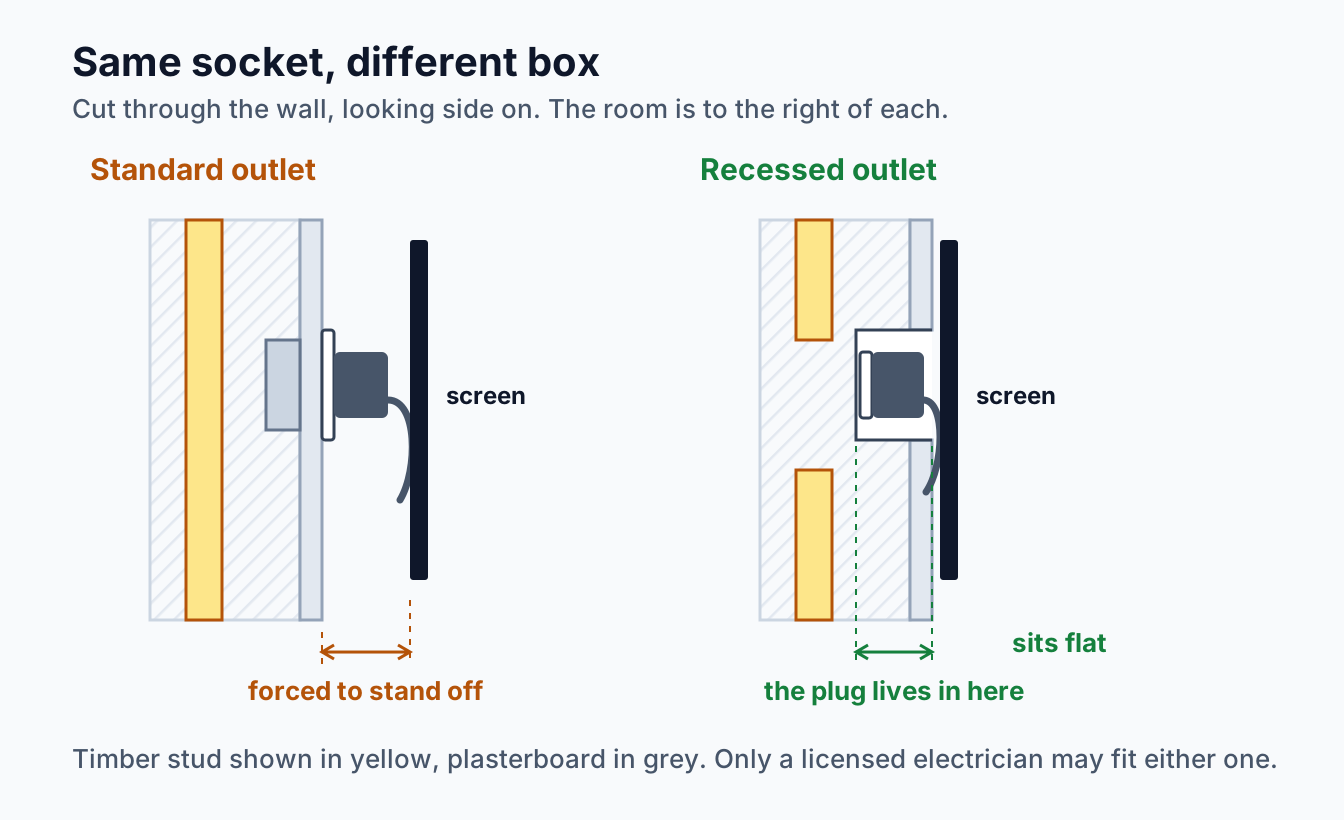
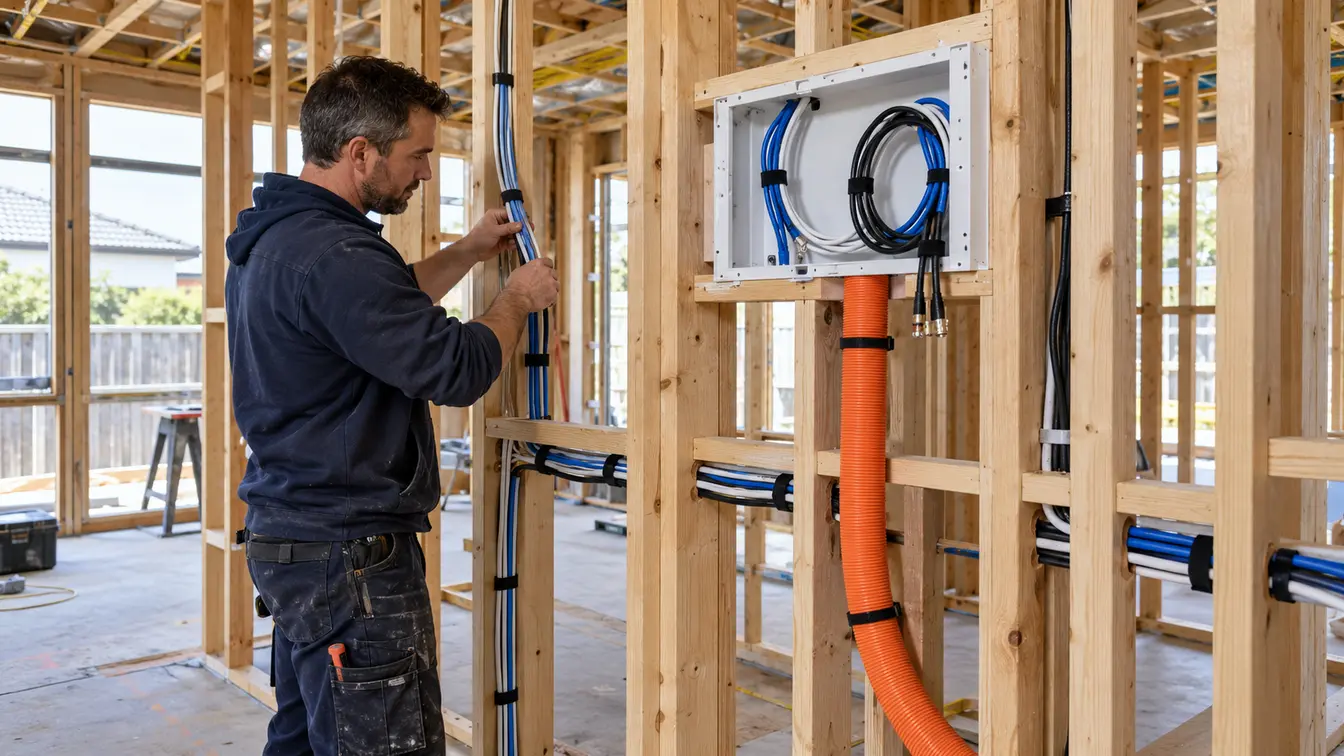
It is a normal socket in an abnormal box. The box is set back into the wall cavity so the face of the socket sits behind the plane of the plasterboard, leaving a shallow recess with the plug and the first part of the lead tucked inside it. Nothing protrudes.
Two details are worth knowing before you ask for one.
It needs a cavity to sit in. On a timber stud wall there is one. On solid masonry there is not, and the answer changes, which we cover in brick, concrete and rendered walls.
Power and signal do not share a hole. The HDMI, antenna and speaker cables can run in the cavity too, but they do not simply get bundled in with the power. Separation is part of what your electrician is responsible for, and in practice it usually means a second plate beside the power outlet. Our guide to hiding cables behind a wall-mounted screen goes through the routes.
Who is allowed to fit one
A licensed electrician, and nobody else. That is not our opinion, and Energy Safe Victoria puts it plainly: electrical work is not a DIY job, even for small jobs.
Worth doing before anyone starts: ask to see the licence. Energy Safe's own advice to the community is direct about it, and there is a public register you can search to check a contractor is registered. A licensed electrical worker carries an identification card, and a reluctance to show it tells you everything you need.
The part almost nobody asks about is the paperwork.
The certificate you should be given
Every piece of electrical installation work in Victoria comes with a Certificate of Electrical Safety. It is the record that the work was done by someone qualified and tested afterwards, and it is the document you want if the house is ever sold, insured or argued about.
Victoria splits that work in two, and the difference decides what happens next.
Prescribed work is the serious end: consumer mains, the main switchboard, the meter box, the main earthing system, solar and battery systems. It must be independently inspected, and Energy Safe Victoria sets out the process for consumers: the electrician arranges the inspection, the inspector signs the certificate once satisfied, and you get a copy.
Non-prescribed work is everything else, and a new power point on an existing circuit sits here. Energy Safe's guidance on prescribed and non-prescribed work describes the non-prescribed certificate as covering minor wiring work in a home, including power points, and this work does not require an inspection.
So do not expect an inspector to turn up for a power point behind your television. Do expect the certificate. If it does not arrive, ask for it, because that is the only thing you are left holding once the wall is closed.
When it has to happen
This is the part that costs people money, and it is purely about order.
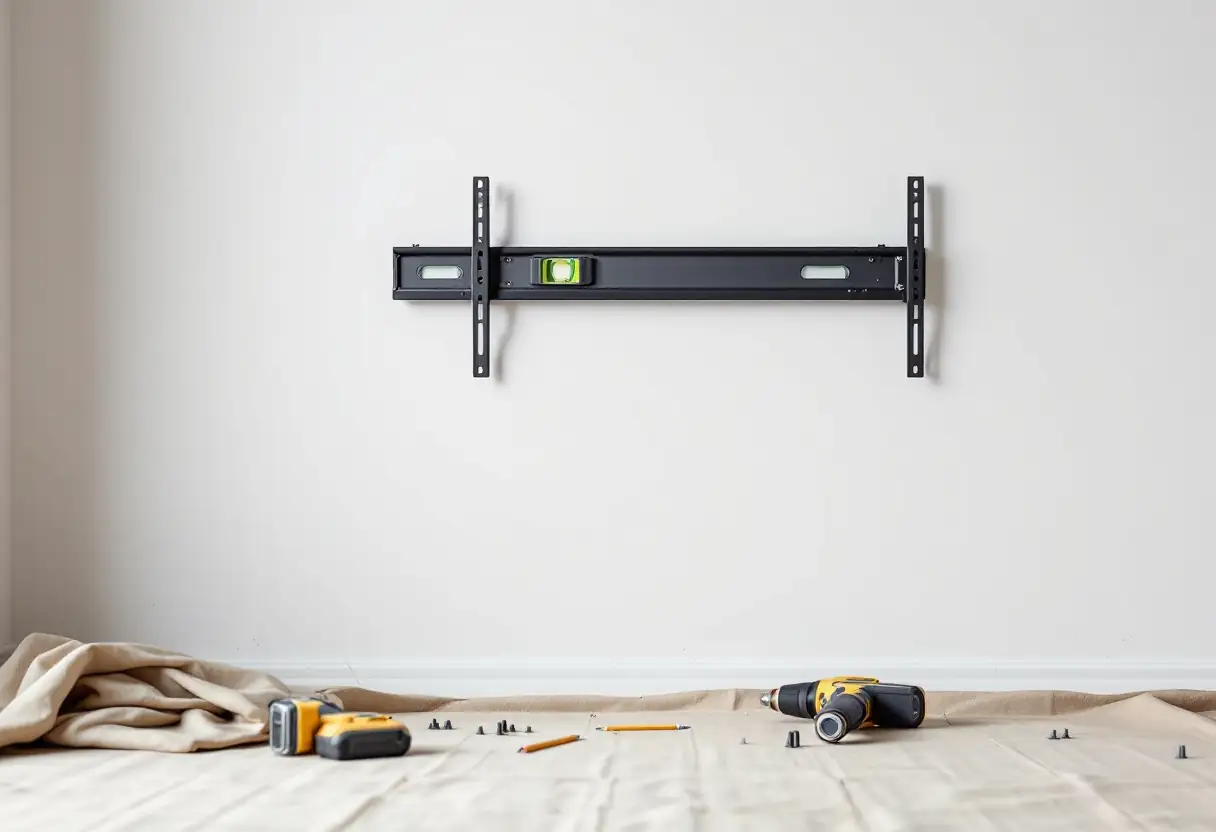
The outlet has to be in the right place, and the right place is decided by the bracket, which is decided by the screen and where you sit. Work backwards. Settle the viewing position, then the height, then the bracket, then mark where the panel's rear connections will be, and only then cut the wall. Our guides to viewing distance and mounting height cover the first two.
The wall gets opened once. Power, signal cabling and anything you might want later all go in during that opening, because the second opening costs more than the first one did and comes with patching and paint.
In a new build or a renovation, this is a conversation to have before the plaster goes on, when it is close to free. Our home theatre setup checklist puts it in sequence with everything else.
When you cannot open the wall
Sometimes a recessed outlet is not on the table, and there are honest alternatives.
Solid masonry with no cavity. Chasing a channel for power is real work and a real make good. Sometimes the better answer is to place the screen where the existing outlet already is.
Renting. A new outlet is a permanent alteration to someone else's property and a different conversation from hanging a bracket. We work through the Victorian position in wall mounting a TV in a rental.
Apartments. Walls may be common property or structural, and there may be rules before there is any drilling, which we cover in TV antennas in apartments and units.
In each of those, a tidy surface conduit painted to match is a perfectly respectable outcome, and a great deal better than a lead pushed into a hole.
Frequently asked questions
What is a recessed power point for a TV?
A standard socket fitted in a box that sits back inside the wall cavity, so the socket face is behind the surface of the wall and the plug and lead sit within the recess. Nothing sticks out, so the television can sit flat against the wall.
Can I install one myself?
No. It is electrical installation work and in Victoria that means a licensed electrician. Energy Safe Victoria is unambiguous that electrical work is not a DIY job, and the risk is not only to you but to whoever owns the house next.
Do I get a certificate for a power point?
Yes. A new outlet on an existing circuit is non-prescribed work, which still requires a Certificate of Electrical Safety even though it does not need an independent inspection. Ask for it if it does not arrive.
Can the TV's power lead run inside the wall instead?
No. A flexible lead is not fixed wiring and concealing one in a wall is not compliant, however neat it looks. The compliant version is an outlet fitted properly, which is both cheaper and tidier than most people expect. We go through this in hiding cables behind a wall-mounted screen.
Where exactly should the outlet go?
Behind the panel, clear of the bracket plate and clear of where the arms bolt on, and positioned so the lead has room to bend without being pinched. That is why the bracket position is settled first.
Can you organise the electrician?
Yes. We coordinate the electrical work with the mount so the wall is opened once and everything goes in together, which is quicker and cheaper than running the two jobs separately.
The power point is the least glamorous part of a wall mount and the one most likely to be left until the wall is already closed. Decide where the screen goes, let the bracket decide where the outlet goes, get a licensed electrician to fit it recessed while the wall is open, and keep the certificate. We mount screens and coordinate the electrical side across Melbourne, Bayside and the Mornington Peninsula. Have a look at our TV wall mounting page, or book a free onsite quote.