Plasterboard holds almost nothing. Roughly ten millimetres of compressed gypsum with paper on both faces, and it is a lining rather than a structure. What holds a television is the timber frame behind it, or something you have fixed to that frame.
That is the whole answer, and it sounds simple until you go looking for the studs and find they are not where you need them. Here is what is actually in a Melbourne wall, how to find it, and what to do when the framing and the bracket disagree.
The short answer
- Plasterboard on its own will not hold a television, and no anchor changes that.
- The load has to reach the timber studs, or a backing plate fixed to them.
- Australian framing runs studs at 450mm centres on external and loadbearing walls, and 600mm on internal partitions.
- On 600mm centres a normal bracket rail often reaches only one stud, which is the problem nobody warns you about.
- Two studs, or a backing plate, and the wall stops being the interesting part of the job.
What is actually behind the sheet
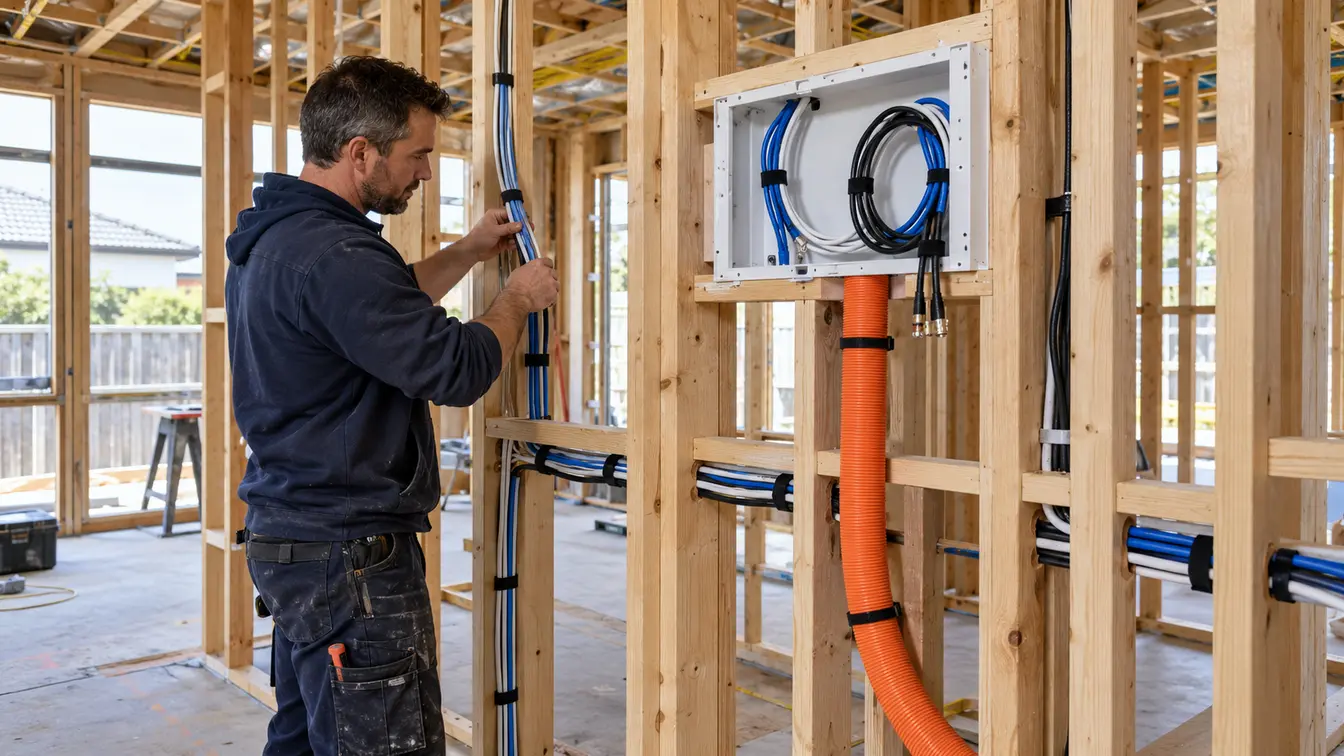
A typical internal wall is a timber frame lined both sides with plasterboard. The vertical members are studs, the horizontal blocks between them are noggins, and between all of that is a cavity with nothing in it but air, maybe insulation, and whatever services were run before the sheets went on.
Spacing is not arbitrary. Australian residential framing is built to AS 1684, and it gives two common spacings: 450mm centres on external and loadbearing walls, where the wall is carrying something or facing the weather, and 600mm centres on internal non-loadbearing partitions. Noggins usually land around a third of the way up and again higher on taller walls.
Both are perfectly normal. The trouble is that a television bracket does not know which one it is being asked to hang on.
The 600mm problem
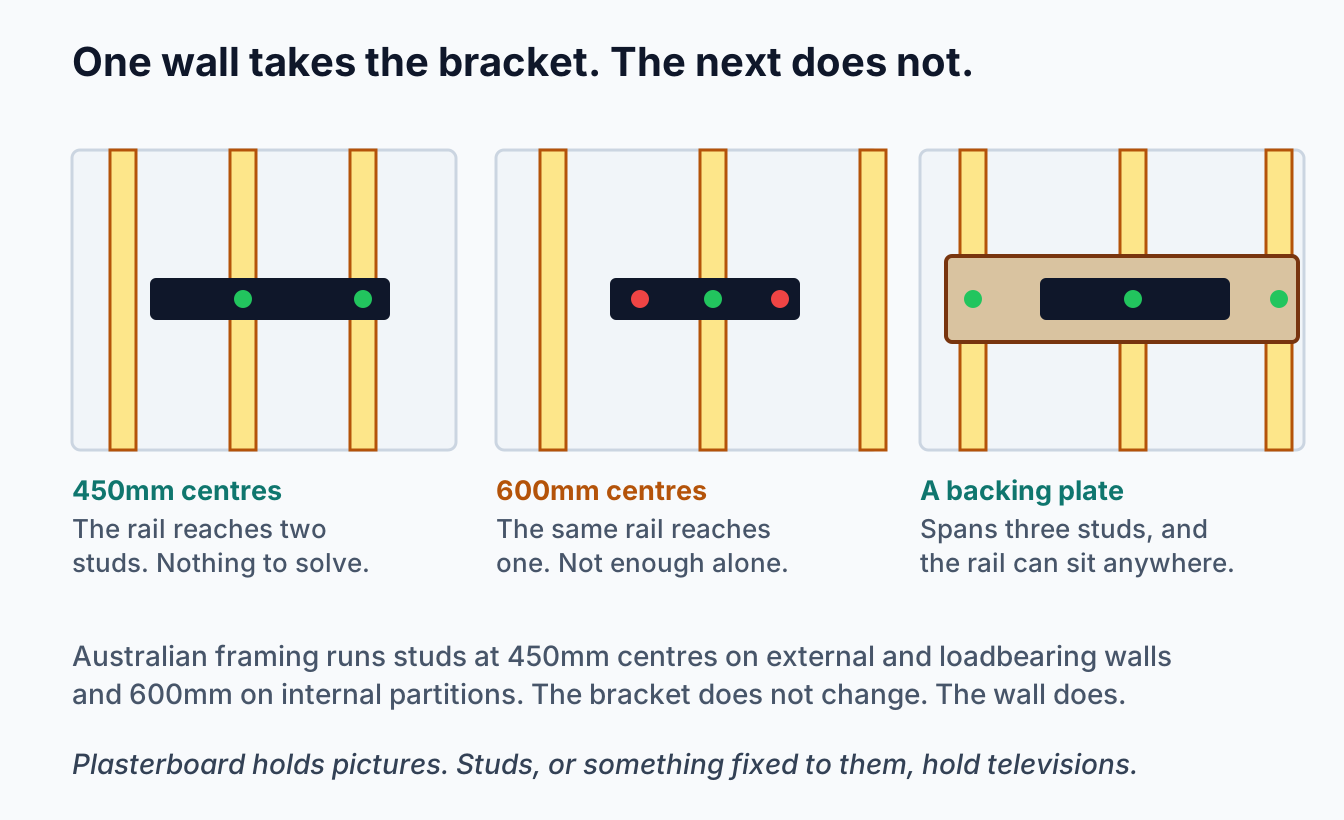
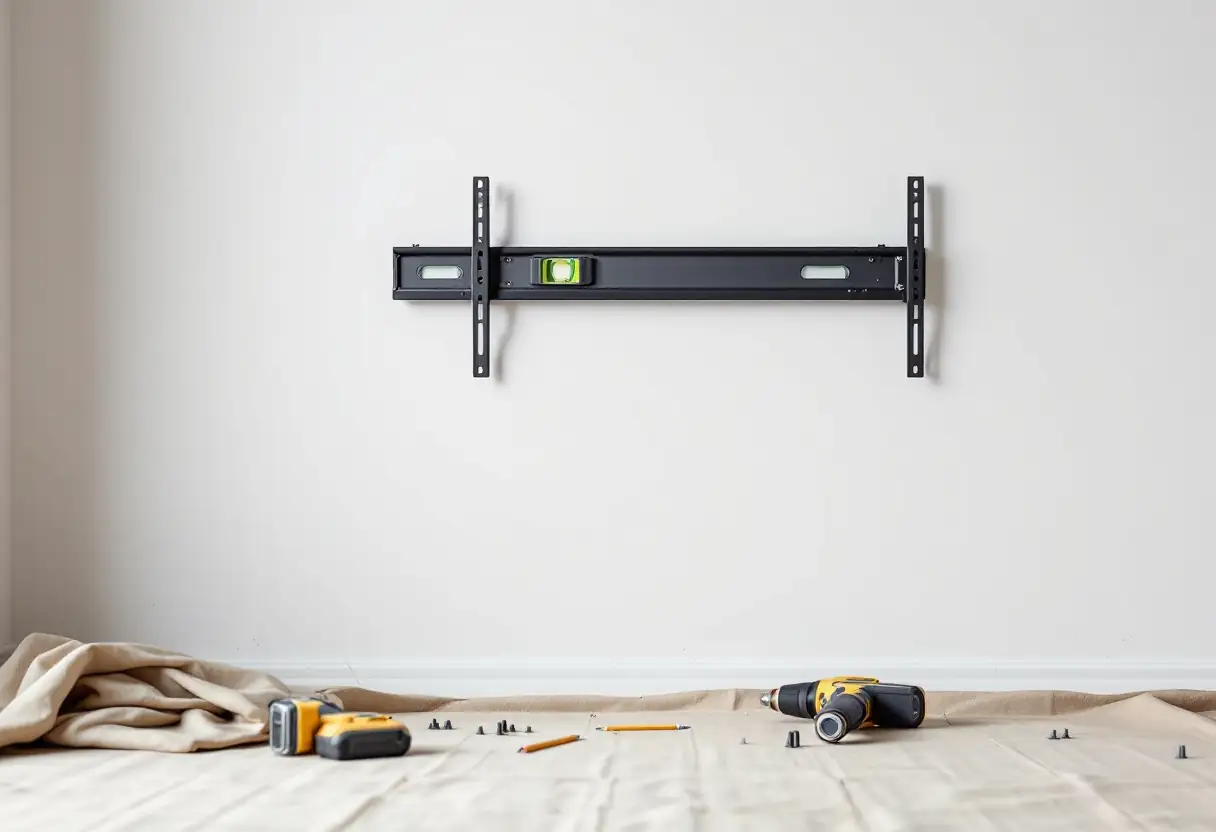
Most bracket wall plates are somewhere between 400 and 700mm wide. Put one of those on a wall framed at 450mm centres and it comfortably spans two studs wherever you place it. Put the same bracket on a 600mm internal partition and it can easily reach only one, with the fixings at each end going into nothing at all.
This is the single most common reason a wall mount goes wrong in a Melbourne house, and it is entirely invisible until somebody actually finds the framing. It is also why "my mate did his and it was fine" is not evidence about your wall. His wall may simply have had closer studs.
One stud is not automatically a failure, but it is a decision rather than an accident. A small screen on a fixed bracket, properly fixed into a single stud with the right screws, is a different proposition from a 75 inch panel on a full-motion arm, where the leverage multiplies the load every time somebody swings it out. If the answer is one stud, the bracket needs to be modest, or the wall needs help.
Finding the studs, properly
Guessing costs you a wall full of holes, and everyone has a favourite unreliable method.
Knocking tells you roughly where solid is, and it is a good first pass and a poor last one. The change in sound is real but it is easy to fool yourself, particularly near a corner or a service.
An electronic stud finder is the sensible tool and it needs to be used properly. Calibrate it on a clearly hollow part of the wall, sweep slowly from both directions, and mark both edges of the stud rather than one. The centre is what you want, and a stud you have only found the left edge of will pull your screw out towards the cavity.
Find a second one and check the maths. This is the step people skip and it is the one that tells you the truth. Once you have two studs, measure between the centres. If it comes out near 450, expect the rest of the wall to follow. If it comes out near 600, you know what you are dealing with before you have drilled anything.
Then confirm with a small pilot hole. A 2mm bit in the spot you intend to fix, and you will feel timber or you will feel it break through into cavity. A pilot hole is a fifteen second repair. A 10mm coach screw hole in the wrong place is not.
Two warnings while you are drilling. Power cables and water pipes live in wall cavities too, and neither announces itself. Be especially careful directly above or below a power point, a light switch or anything wet on the other side of the wall, because that is exactly where a cable runs vertically. If a new outlet is going in behind the screen, that is electrical work, and Energy Safe Victoria is clear it is not a job to do yourself.
Why hollow wall anchors are not the answer
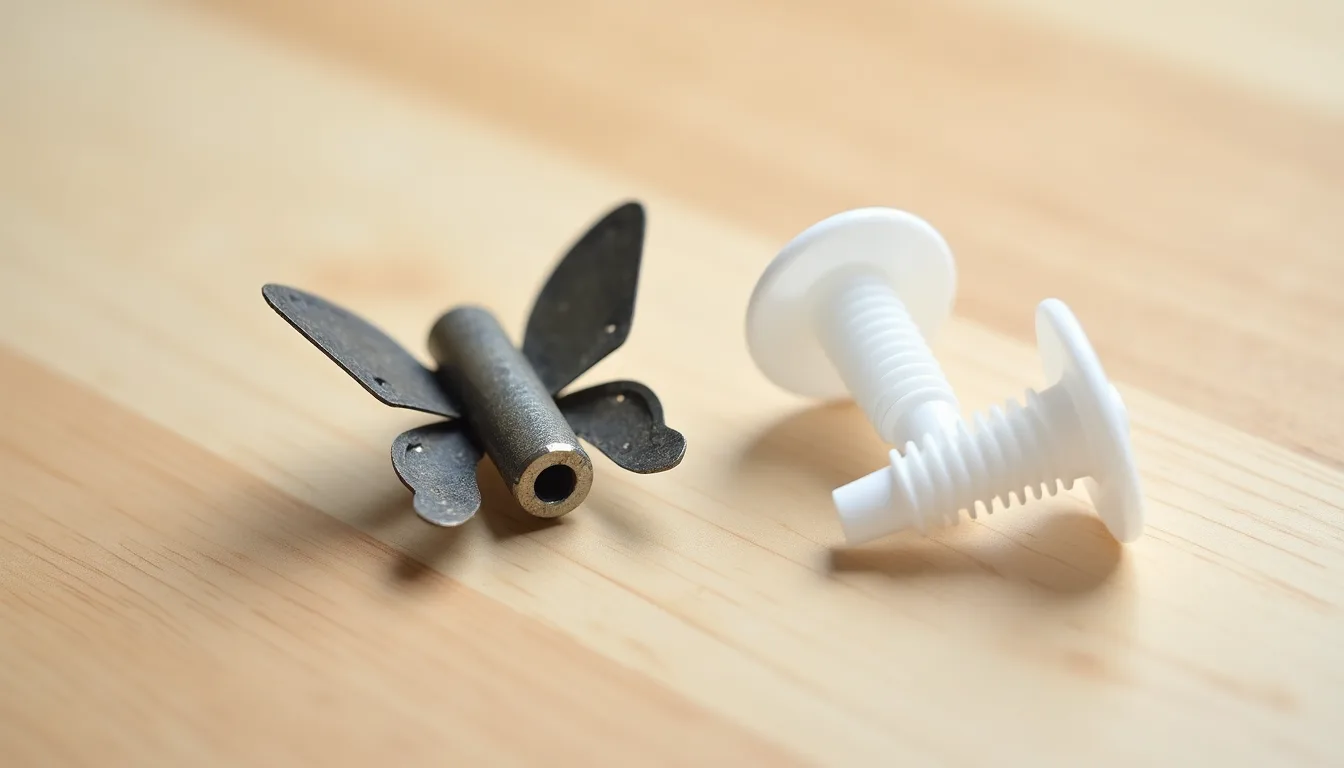
The packet says a butterfly toggle holds a surprising number of kilograms, and in a straight downward pull on a good sheet it very nearly does. That figure is not the load a television puts on a wall.
A bracket on a wall pulls outward at the top as much as it pulls down. The screen hangs forward of the fixings, so the weight tries to rotate the whole bracket off the wall, levering the top screws straight out through the sheet. Plasterboard has very little to offer against that, and anchors concentrate the load into a small ring of gypsum that crumbles rather than tears.
It is also a slow failure rather than a sudden one, which is what makes it dangerous. The anchors weep a little plaster dust, the bracket creeps forward a few millimetres over a season, and then a warm day and a bumped screen finishes it.
Anchors have a proper place in this job. They are fine for a soundbar bracket, for cable trunking, for a shelf below the screen. They are not what a television hangs from.
When the studs are in the wrong place
Which happens often, because the framing was set out for the house and not for your viewing position. There are three honest answers.
Move the television. The cheapest fix and the one worth considering first. Shifting the screen 100mm sideways to line up with the framing costs you nothing you will ever notice, and people talk themselves out of it far too readily. Check the position against your seating first, and our guide to TV mounting height covers what actually matters about placement.
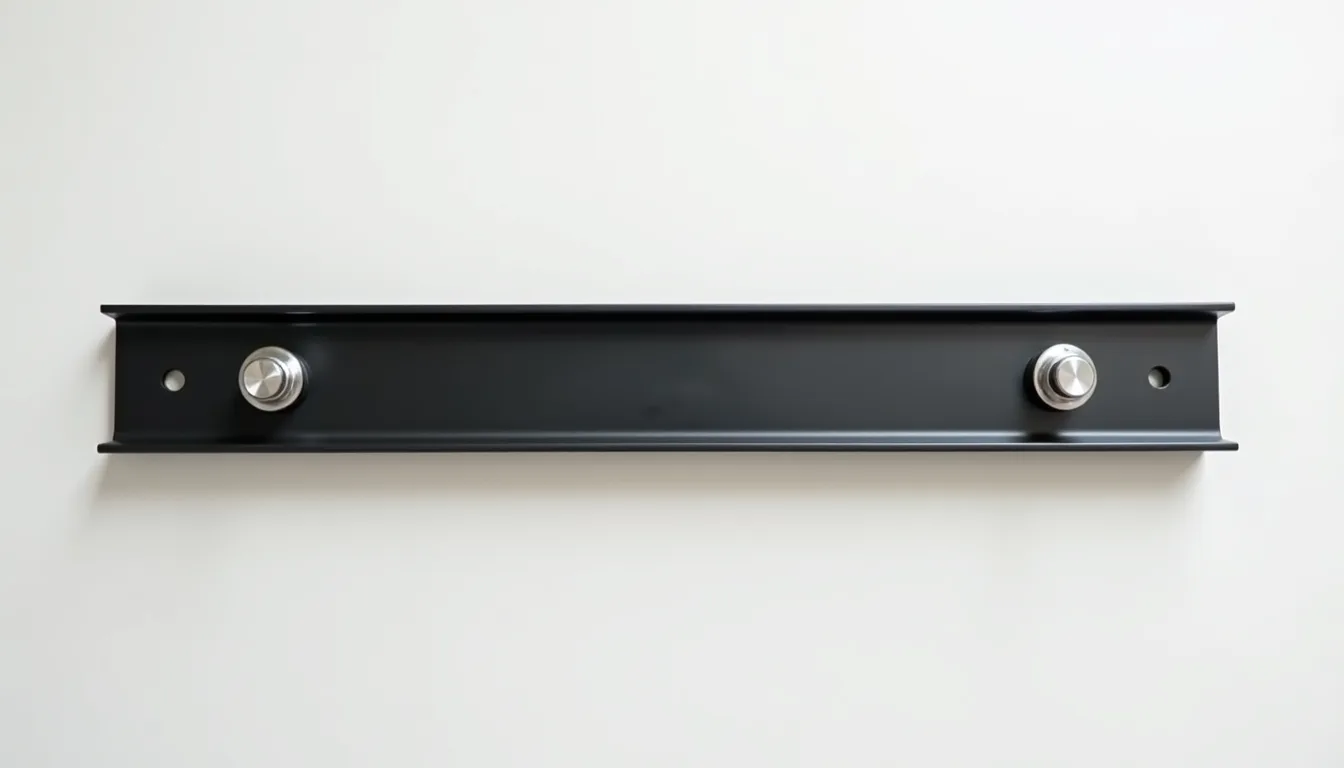
Fit a backing plate. A length of structural timber or steel fixed across three or more studs, which the bracket then fixes to anywhere along its length. It is what we do routinely when the framing does not cooperate, and it is the proper answer for a heavy panel, a full-motion arm, or any wall where you only found one stud. It can be surface mounted and painted out, or recessed and flushed so it disappears entirely.
Use a bracket that suits the spacing. Some wall plates are wide enough to reach two studs at 600mm centres, and some have slotted rails that give you sideways adjustment after the fixings are in. Worth checking the plate width before buying rather than after.
What is not on the list is a longer screw into the same single stud. Depth into one piece of timber does not fix the fact that the other end of the bracket has nothing behind it.
Check it is actually plasterboard on timber
Worth thirty seconds before you assume, because a fair few Melbourne houses are not what they look like. Steel stud is common in apartments and newer builds, finds like timber and behaves nothing like it, because you cannot drive a coach screw into folded sheet steel. Brick veneer is brick outside and a timber frame inside, so it behaves exactly like a stud wall. Plasterboard glued to masonry confuses a stud finder and needs a fixing that reaches the brick rather than stopping in the void. And older homes may have plaster on lath, which is soft and rewards a pilot hole.
Masonry walls are a different job with different fixings, a tiled or stone-clad wall hides whichever of these is behind it and is covered in mounting on a tiled, stone or feature wall, and a chimney breast is its own problem again, which we go through in mounting a TV above a fireplace.
Frequently asked questions
Can you mount a TV on plasterboard without hitting a stud?
Not safely, for a television. The plasterboard is a lining, not a structure, and hollow wall anchors are not rated for the outward leverage a wall-mounted screen applies. If there is genuinely no stud where the screen has to go, the answer is a backing plate fixed across the framing, not a better anchor.
How do I know if my walls are 450 or 600mm centres?
Find two adjacent studs and measure between their centres. External and loadbearing walls are usually 450, internal partitions usually 600. It takes five minutes and it tells you immediately whether your bracket will reach two studs.
Is one stud ever enough?
For a small, light screen on a fixed bracket, sometimes, with the right fixings. For anything large, or on an arm that extends, no. The leverage on a full-motion mount is considerably higher than the weight of the television suggests.
What screws should go into the studs?
Whatever the bracket manufacturer specifies, which is normally a substantial coach screw rather than anything from the general screw drawer. Use their hardware if it came with the bracket, and match the length so there is real depth into the timber past the plasterboard.
Will mounting a TV damage the wall permanently?
Not in any way a plasterer cannot make disappear. Removing a bracket leaves a handful of screw holes in the sheet, which patch and paint out. This matters most in a rental, where the permission and making-good side is worth sorting before you drill.
Can you tell what my wall is without opening it?
Usually yes, from the age and style of the house, the sound, a stud finder and a pilot hole in an inconspicuous spot. It is the first thing we do on site, before anything is decided about the bracket.
Plasterboard is the least important part of a plasterboard wall. Find the framing, work out what spacing you have, and the whole job either becomes straightforward or tells you honestly that it needs a backing plate. Getting that wrong is what we get called out to repair, and it is always more expensive than getting it right the first time. We mount screens on every kind of wall across Melbourne, Bayside and the Mornington Peninsula, and we check what is behind the sheet before we quote. Have a look at our TV wall mounting page, or book a free onsite quote.