You can, and plenty of Melbourne homes do. What you cannot do is take an ordinary indoor television, hang it in the weather and expect it to survive. That is the version we get called out to replace, usually after one wet winter or one 40-degree afternoon.
There are three honest ways to put a screen outside, and they cost and last very differently. Here is what the weather actually does to a television, what "outdoor-rated" means when you see it on a box, and the decisions that matter before anything goes on a wall.
The short answer
- A fully weather-rated outdoor television is the only option that tolerates real exposure.
- An indoor television in a weatherproof enclosure is the cheaper route, and it works if the enclosure suits the screen.
- An indoor television under a genuine roof, out of sun and rain, is what most alfresco areas actually get away with.
- Sun and glare decide where the screen goes more often than rain does.
- The power point is a licensed electrician's job, not a job for an extension lead.
What outside actually does to a television
Rain is the obvious threat and rarely the one that kills the set. Moisture in the air is. A screen cools overnight, warm morning air meets a cold panel and condensation forms inside it, and that cycle repeats every day until something corrodes. This is why a television can fail in a spot that never gets rained on.
Heat is the second. Melbourne days over 40 degrees are not rare, and a dark panel in direct sun runs far hotter than the air around it. An indoor television has a modest operating range and no way to shed that heat, so it dims itself, shuts down, or simply ages fast.
Then the small things that add up: dust and pollen in the vents, insects nesting inside a warm housing, ultraviolet light making plastics chalky and brittle, and, anywhere near the bay or down the Peninsula, salt in the air, which is unkind to every metal part of the installation including the bracket.
Sun is the problem people underestimate
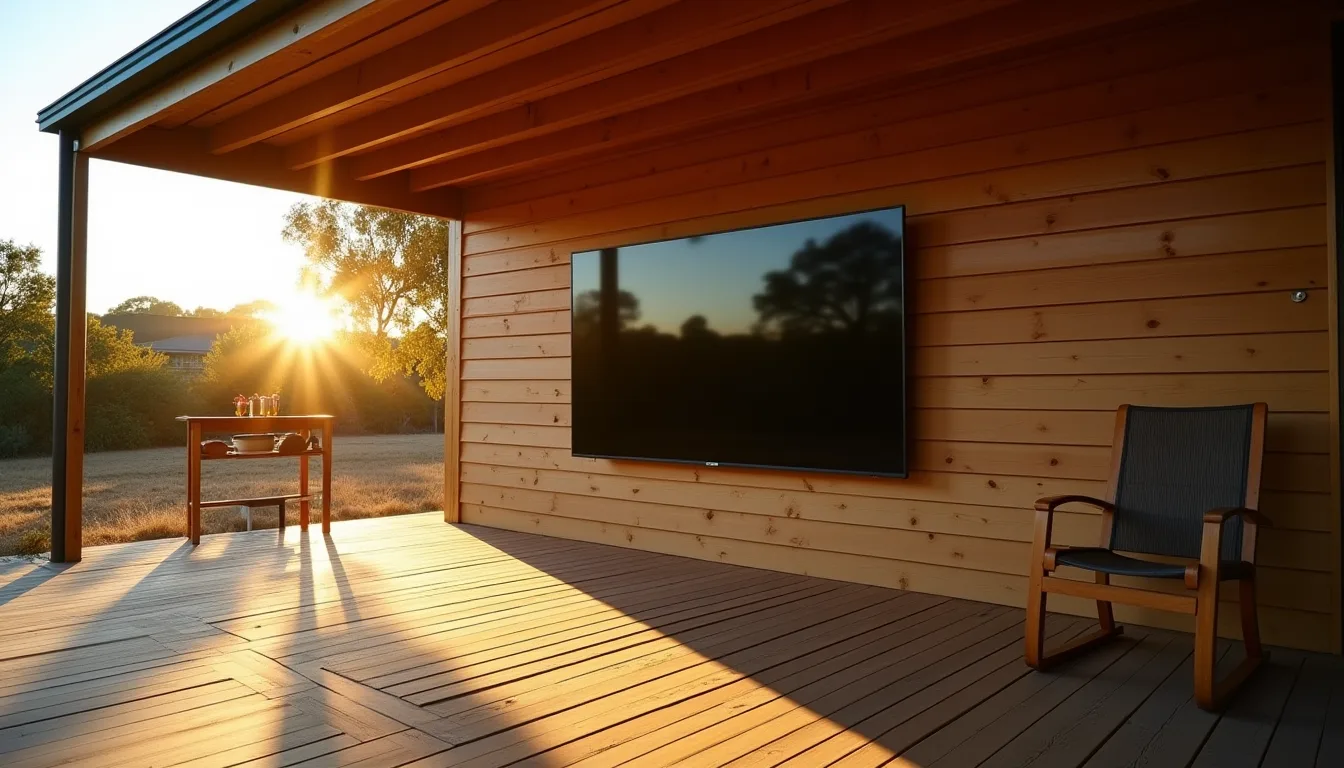
Most people plan around rain and are then surprised that the screen is unwatchable at the exact time they wanted to use it. Outdoors your eyes adjust to daylight, so a panel bright enough indoors looks grey and flat, and any polished surface mirrors the sky.
Two things follow. First, a screen for outdoors needs to be far brighter than an indoor one, which is a large part of what you pay for in a purpose-built outdoor television. Second, direct sun on the screen is worse than a bright environment generally. A west-facing wall catches low afternoon sun straight on, which is the one direction a roof does not shade.
Where the wall can be chosen, face the screen away from the afternoon sun and put it under something solid. Where it cannot, a tilting bracket buys back some of the reflection, and our guide to fixed, tilt and full-motion mounts covers what each type can and cannot do.
The three ways to do it
| Approach | Where it suits | What to know |
|---|---|---|
| Purpose-built outdoor TV | Genuinely exposed areas, poolside, full or partial sun | Sealed, far brighter, rated for temperature extremes. Costs several times an indoor set of the same size |
| Indoor TV in a weatherproof enclosure | Partly covered areas where an outdoor set is hard to justify | The enclosure has to fit the screen and vent properly. Adds bulk, and glass adds another reflective surface |
| Indoor TV, fully undercover | Enclosed alfresco areas with a solid roof and shelter from wind-driven rain | Cheapest and commonest. Accept a shorter life, and understand the warranty will not cover weather damage |
The third row is where most Melbourne backyards land, and it is a reasonable decision as long as it is a decision. An alfresco with a roof, walls on two sides and the screen out of the sun is a mild environment. A pergola with open sides facing the weather is not, whatever it looks like on a still evening in March.
What "outdoor-rated" actually means
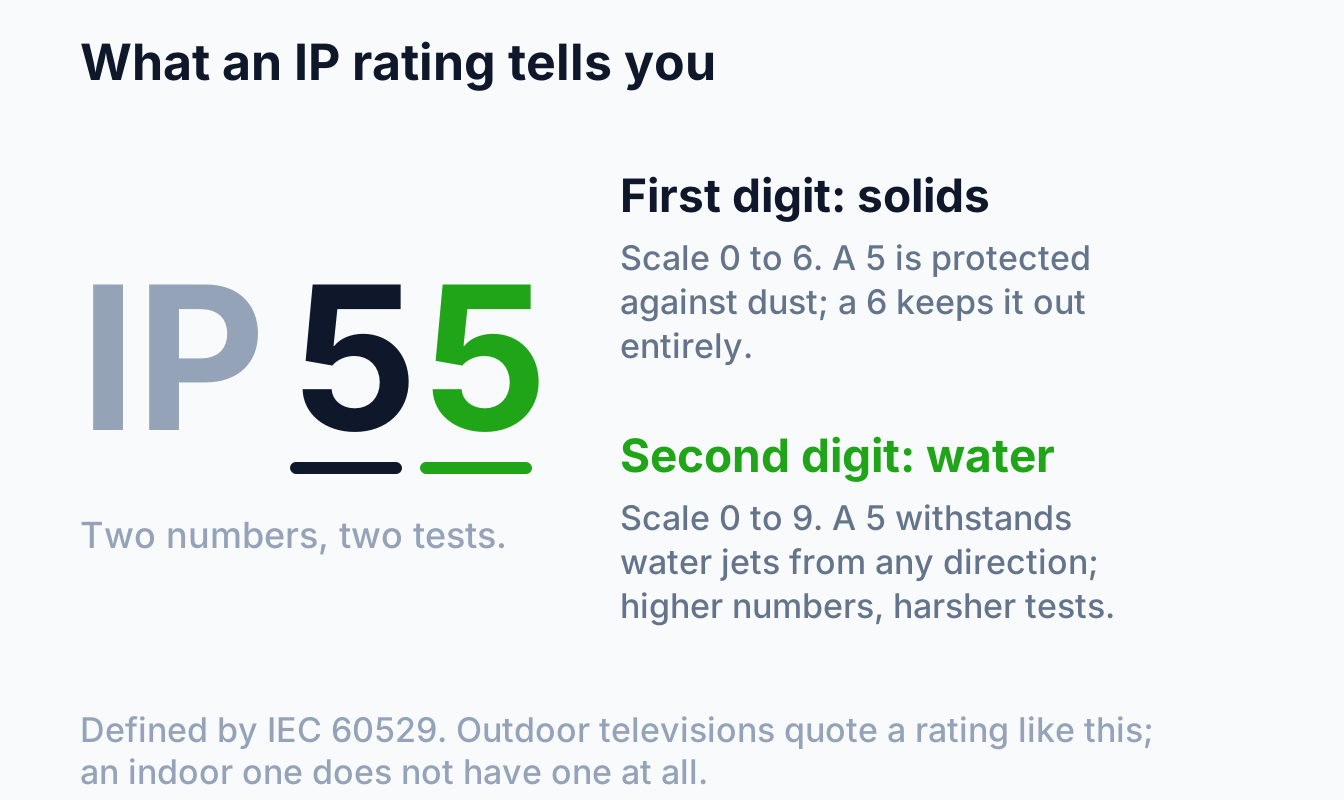
The claim to look for is an IP rating. Under IEC 60529, the first numeral rates protection against solid objects on a scale from 0 to 6, and the second rates protection against liquids on a scale from 0 to 9. Higher is more sealed, and a product without a rating is telling you something by its silence.
For a sense of the numbers, Samsung's support page for its outdoor Terrace television gives it an IP55 rating and an operating range of −30°C to 50°C. That is the specification an outdoor television is built to. An indoor set has no such rating, and its manual will tell you to keep it out of humidity, dust and direct sun.
Brightness is the other half and is not covered by the IP code. Partial-sun and full-sun models exist and differ substantially in price; a partial-sun screen in full sun is money spent on a rating you are not using and a picture you still cannot see.
Power is not the part to improvise
An outdoor screen needs an outdoor power point, and that is electrical installation work. In Victoria it must be done by a licensed electrician working for a registered electrical contractor, and Energy Safe Victoria requires that you be given a Certificate of Electrical Safety for the work.
An extension lead run out a window is the alternative people reach for, and it is genuinely dangerous outdoors: water, foot traffic and no protection from a fault. A weatherproof outlet installed properly costs less than most people expect and is the difference between a tidy job and a hazard.
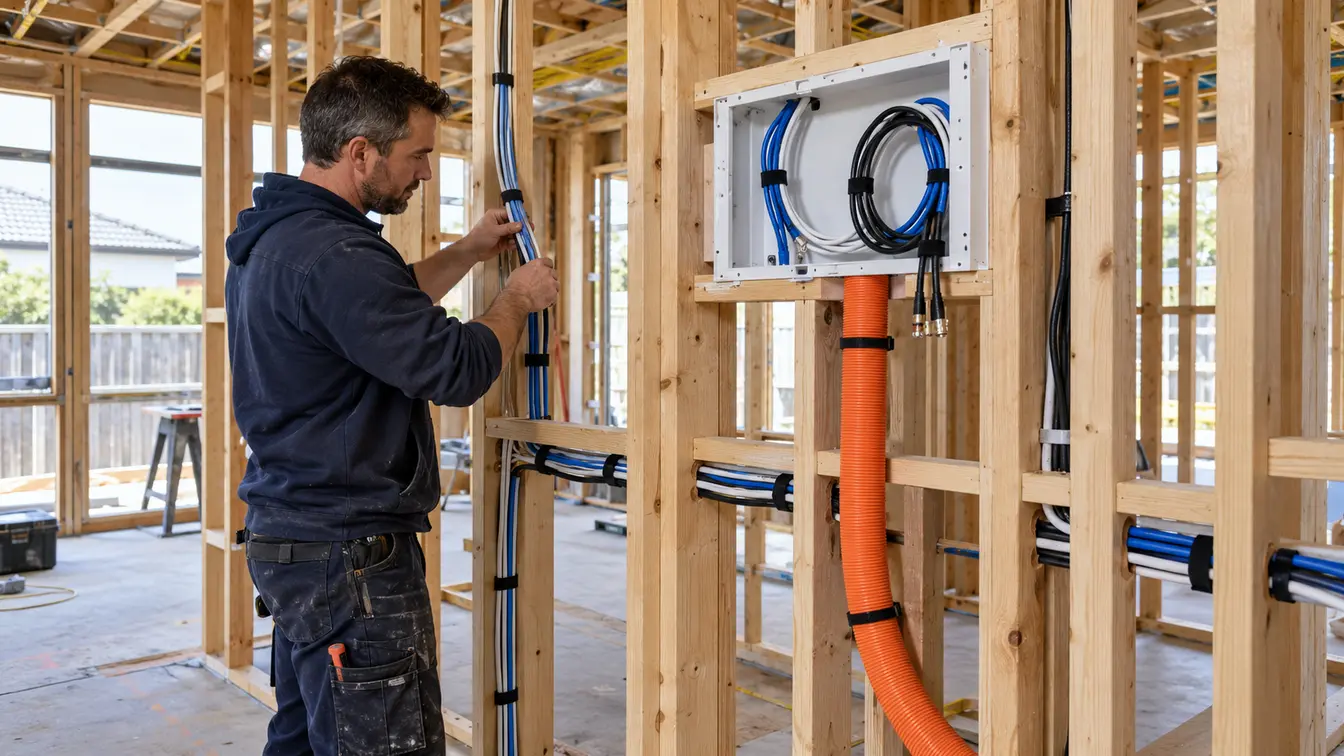
While an electrician is there, that is the moment to run the aerial and HDMI cabling as well, since the wall is open and the conduit is going in anyway. The approach is the same one we use inside, described in our guide to hiding TV cables when wall mounting.
Signal, streaming and sound outside
Getting a picture to the screen is usually the easy part, but it is worth deciding before the cable goes in.
Free-to-air. An outdoor TV point is simply another outlet off the same antenna, and it counts against how far the signal can be divided. If the house already runs several points, adding one more may be the split that tips it: the situation covered in our guide to what affects TV antenna reception in Melbourne.
Streaming. Wifi that is solid in the lounge often is not solid through a brick wall and across a deck, and outdoor use is exactly when everyone wants the same match at the same time. A cabled connection to the screen is the reliable answer if the wall is open anyway.
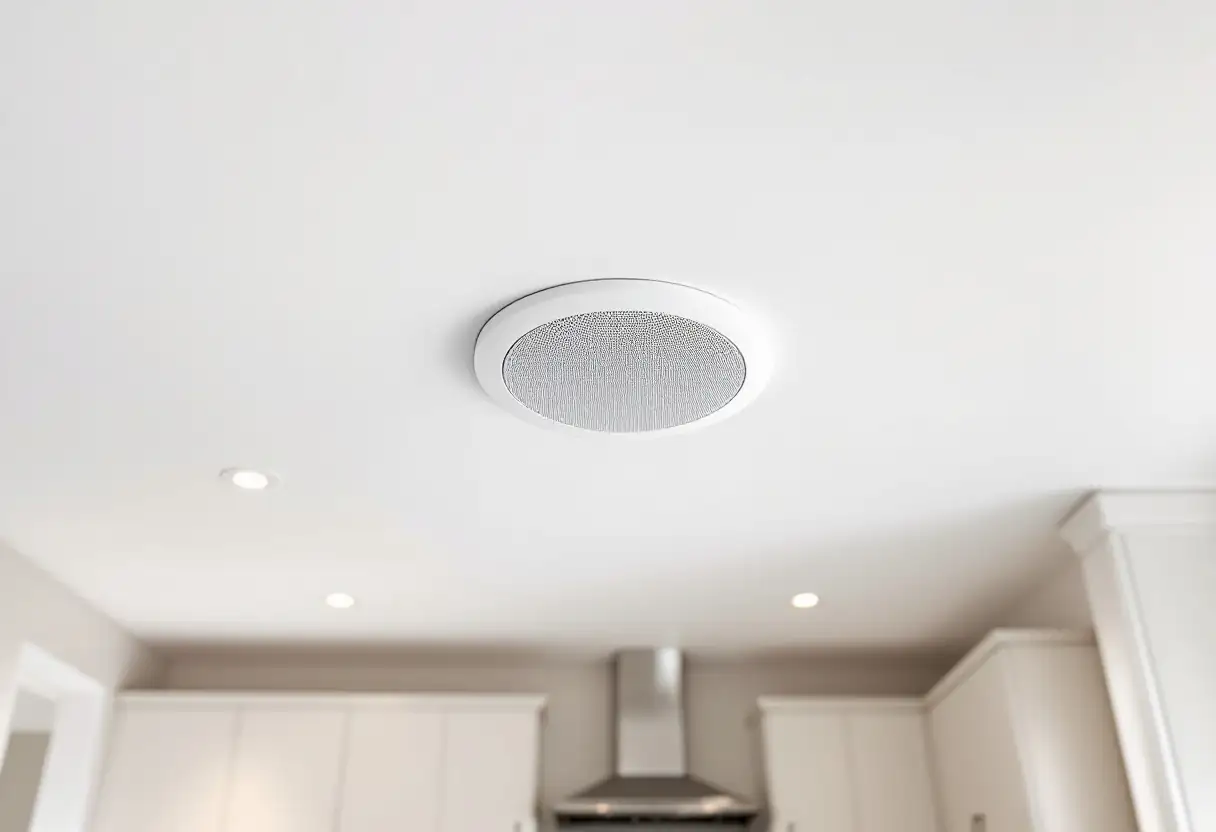
Sound. A television's own speakers fire into an open space with nothing to reflect off, and outdoor noise swallows dialogue. Weather-rated speakers under the eaves work far better. They also carry further than you think, which matters: under EPA Victoria's residential noise rules, "electrical audio goods, including stereos, radios, TVs and public address systems" must not be audible in a neighbour's habitable room before 7am or after 10pm Monday to Thursday, after 11pm on Friday and Saturday, and after 10pm on Sunday, with a 9am start on weekends and public holidays.
Mounting it so it stays there
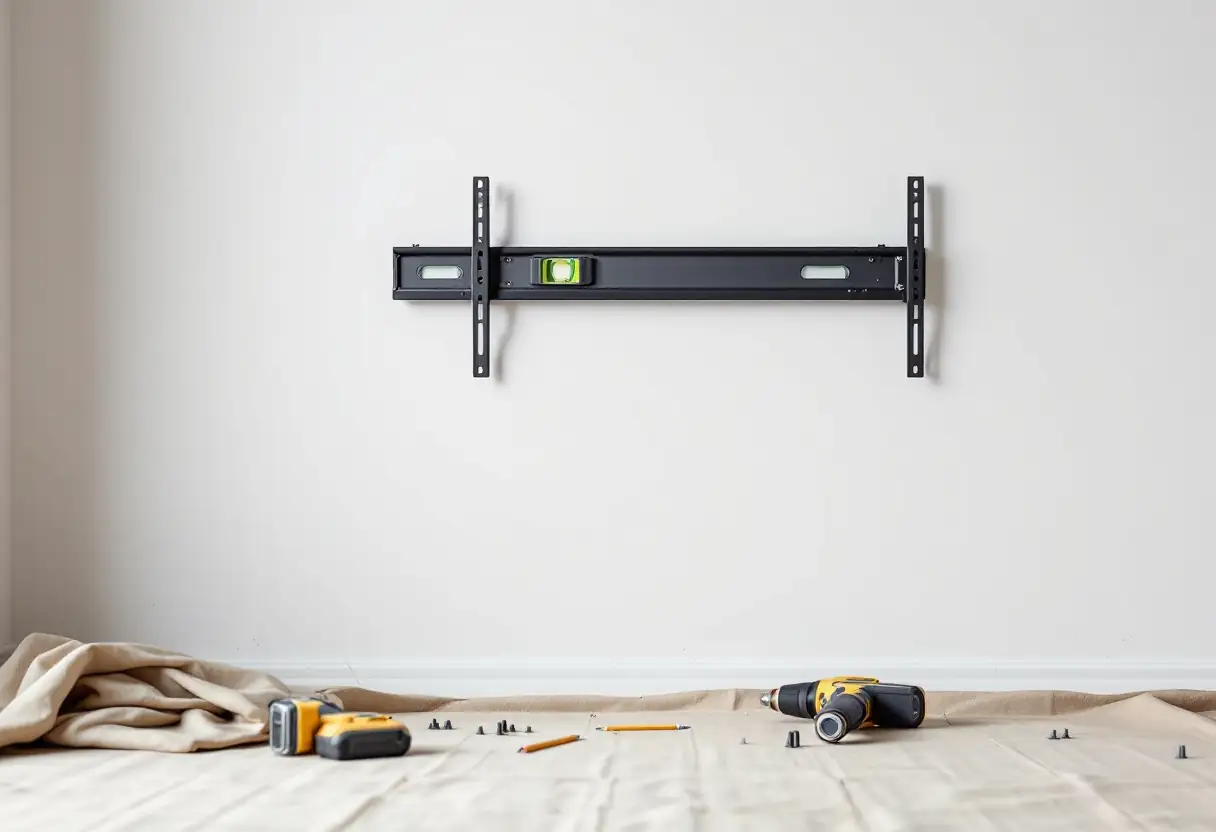
Outdoors the bracket is exposed to everything the screen is. Stainless or properly galvanised hardware is not optional near the coast, and a bracket with a painted finish over plain steel will bleed rust down a wall within a couple of summers.
What you are fixing into matters as much. Solid brick is straightforward. Rendered walls hide what is behind them, and weatherboard or lightweight cladding needs the load taken back to a stud or a frame rather than the sheet. Height follows the same logic as it does inside. People stand more and sit lower outdoors, so it is worth reading our guide to what height a TV should be mounted at with the actual seating in mind.
Two last practicalities: wind gets under a screen on an open deck and works at the fixings, and an outdoor screen is visible from the back fence. A full-motion arm that folds the television flat against the wall solves a surprising amount of both.
What we would do in a typical Melbourne backyard
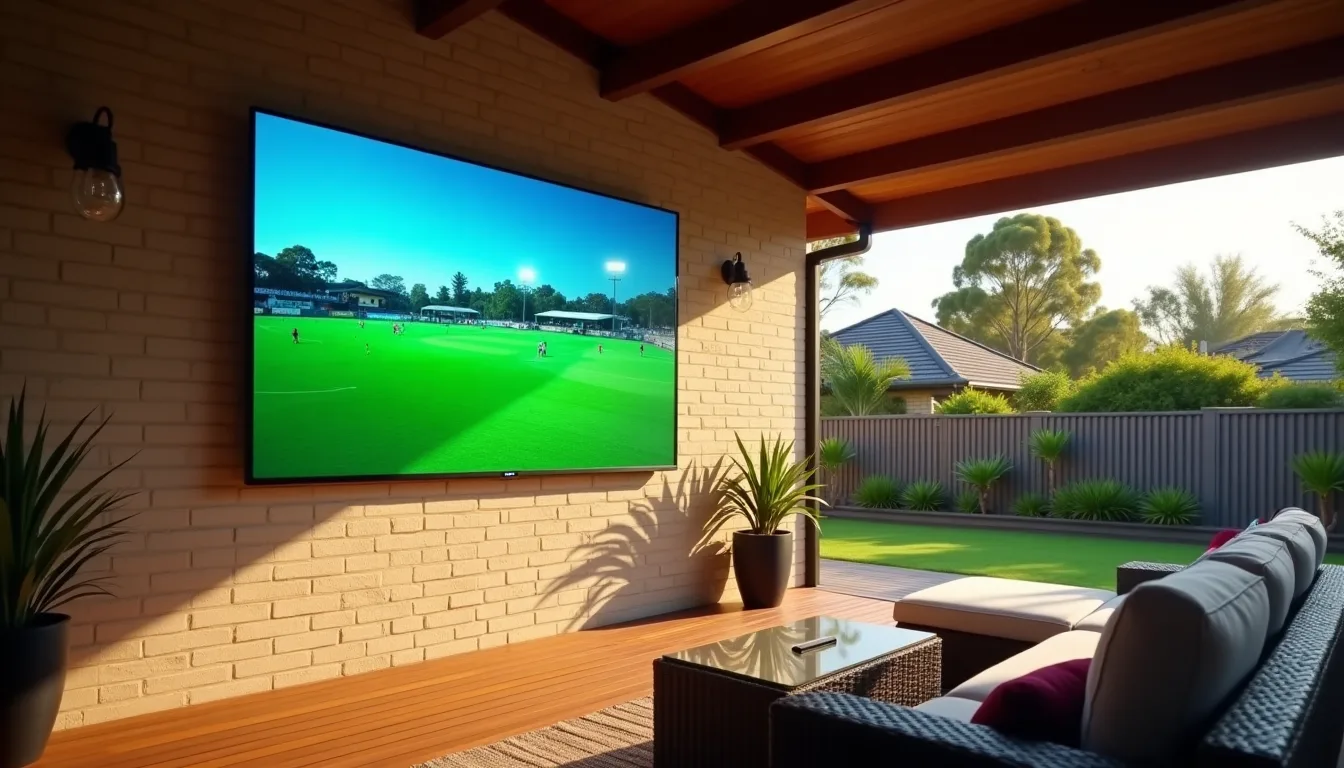
A covered alfresco off the back of the house, roof above, two walls, opening west to the garden. Put the screen on the wall that faces away from the afternoon sun rather than the one that looks best in a photograph. If that wall is genuinely sheltered, an indoor television is defensible; if the weather blows in, budget for an outdoor set rather than replacing an indoor one twice.
Power and cabling by the electrician in one visit, conduit rather than surface leads, stainless fixings, a tilt or full-motion bracket, and speakers under the eave instead of relying on the television. That is the job that still looks right in five years.
Frequently asked questions
Will an ordinary TV survive under a pergola?
Sometimes for years, sometimes for one winter. A solid roof with sheltered sides is a mild spot; an open pergola that lets rain blow through is not, and condensation gets it even where rain does not.
Does an outdoor television void my warranty?
Using an indoor television outdoors generally falls outside what the manufacturer warrants, because the conditions sit outside its specification. Read the manual before you buy rather than after the failure.
What IP rating do I need?
It depends on exposure, not on a number to chase. A screen under a solid roof faces dust and humidity; one beside a pool faces direct water. Match the rating to the position rather than buying the highest figure available.
Can I put a soundbar outside with it?
Only if it is rated for outdoor use, and most are not. Weather-rated outdoor speakers mounted under the eaves are the better answer, and they cover an open area more evenly than a bar ever will.
Is a projector an option outdoors?
For occasional evening use, yes, and it gives you a much larger picture for the money. It is useless before dusk, and the equipment still has to come inside afterwards, so it complements a screen rather than replacing one.
Outdoor installations are the ones where the wrong call is most expensive, because the weather does the damage slowly and then all at once. We install outdoor and alfresco screens across Melbourne and the Mornington Peninsula, and we will tell you plainly whether your spot is sheltered enough for an ordinary television. Have a look at our TV wall mounting page, or book a free onsite quote and we will look at the position before anything is bought.