Speaker placement is the part of a home theatre that costs nothing and changes the most. A modest system placed well will beat an expensive one scattered around the room to suit the furniture, and it is the single thing we most often fix without selling anybody anything. Our guide to what a system costs covers the parts you do have to buy.
The rule underneath all of it is simple: build the layout around the seat, not around the room. Here is how that works in an ordinary Melbourne lounge, what each speaker is actually for, and the mistakes we get called out to undo.
The short answer
- Put the front three across the screen and aim them at where you sit.
- Put the surrounds beside you, roughly level with the seat or just behind it, not high on the back wall.
- Get the tweeters near ear height when you are seated.
- Put the subwoofer where it sounds best, which is rarely where it looks best.
- Keep the left and right sides of the room as symmetrical as you can.
Everything below is detail on those five.
Start from the seat, not the screen
Most rooms only have one sensible place for a sofa, and that is decided by doors, windows and traffic through the room rather than by acoustics. Accept it. The seat is the fixed point, and every speaker is positioned relative to it.
This sounds obvious and is routinely ignored. Speakers get placed where a cabinet already stands, or evenly along a wall because that looks tidy, and the result is a soundstage centred on a spot nobody occupies.
The thing to protect above all else is symmetry. If the left speaker sits in a bookshelf recess and the right one stands in open air a metre further out, no amount of calibration will make the middle of the room sound like the middle. Where the room is not symmetrical, and open-plan Melbourne extensions rarely are, get the distances from the seat as close to equal as the furniture allows, and treat the rest as a compromise you have chosen deliberately.
The front three do most of the work
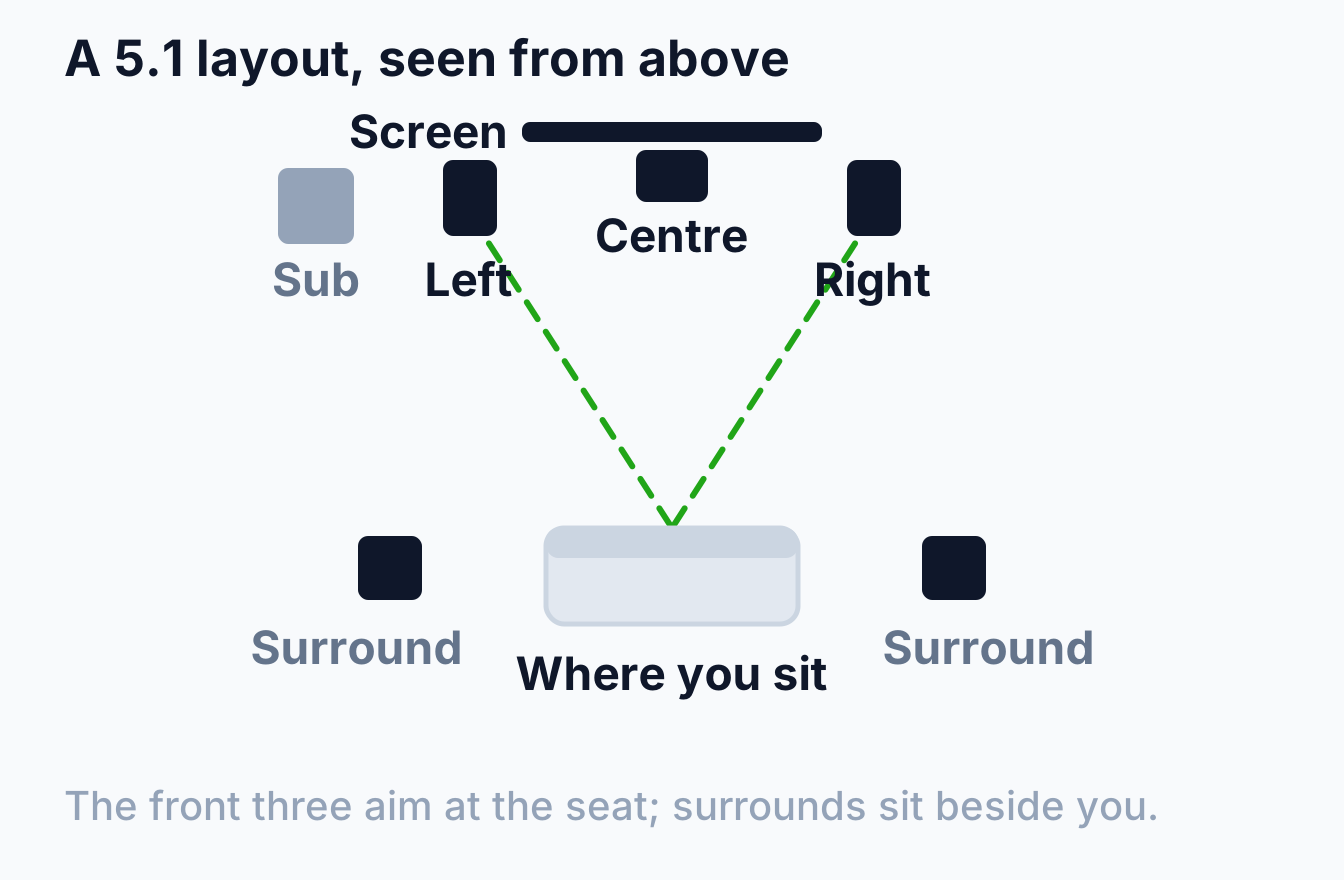
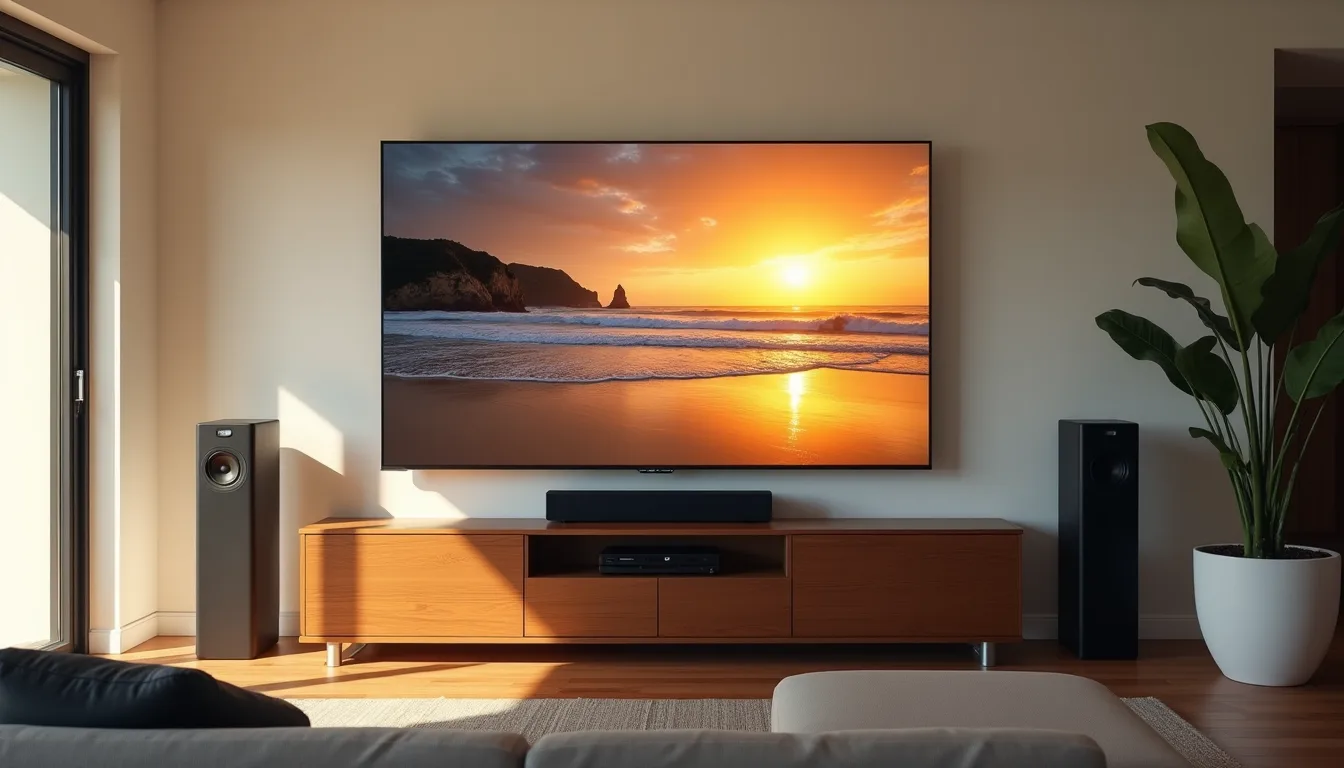
Left and right. These want to form a triangle with your seat, roughly as far from you as they are from each other. Too close together and the sound collapses into the screen; too far apart and there is a hole in the middle where dialogue and music should be. Angle them inward so each one points at the seat rather than straight down the room.
The centre. This is the speaker that carries most of the dialogue, and it is the one people most often skimp on or hide. It belongs directly under or above the screen, on the same vertical line, tilted so it fires at seated ear height rather than at the ceiling or the coffee table. A centre speaker lying flat inside a cabinet, firing into a shelf, is the commonest cause of "we can hear the explosions but not the words".
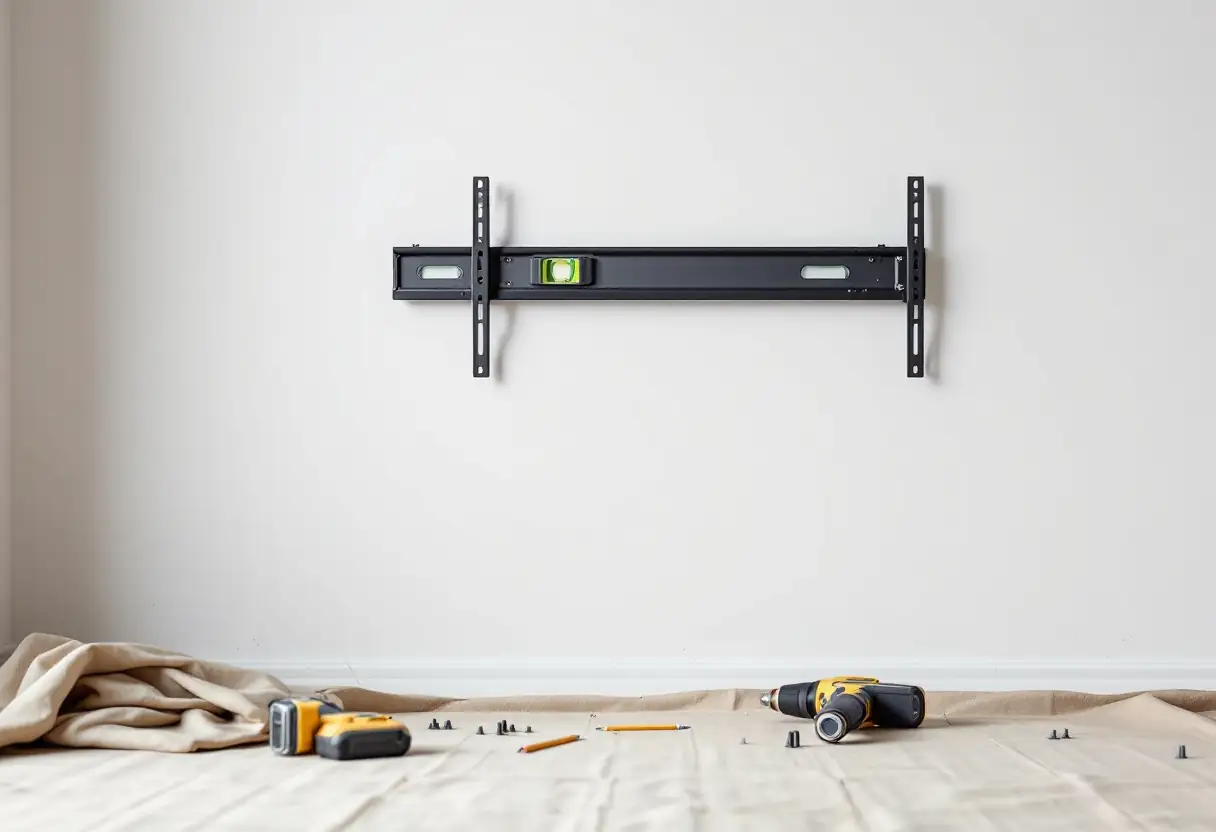
Where the screen is wall-mounted, the centre usually ends up on a console or a floating shelf beneath it. That works, provided the shelf is not so deep that the speaker is set back behind the screen. Getting the screen height right first makes this much easier. Our guide to what height a TV should be mounted at covers that, and the two decisions are worth making together rather than one after the other.
Surrounds go beside you, not behind you
This is the placement error we see most, and it comes from a reasonable assumption: surround sound means sound from behind, so the speakers go on the back wall. In a typical lounge that puts them several metres behind the seat and usually near the ceiling, which is neither where they belong nor where they were mixed to be.
Surrounds are meant to sit to the sides of the listening position, roughly level with it or slightly behind, and only a little above ear height. In most Melbourne lounges that means the side walls rather than the back wall. Their job is to widen the sound around you and place effects to your left and right, not to throw noise at the back of your head.
If the sofa is pushed against the back wall (very common, and often unavoidable), the side walls are the only realistic option, and the speakers should be angled down and inward towards the seat. If you genuinely cannot mount to the side, that is an argument for a different system rather than for putting the surrounds in the wrong place. We compare the options in our guide to soundbars versus surround sound.
Height, and what the numbers actually mean
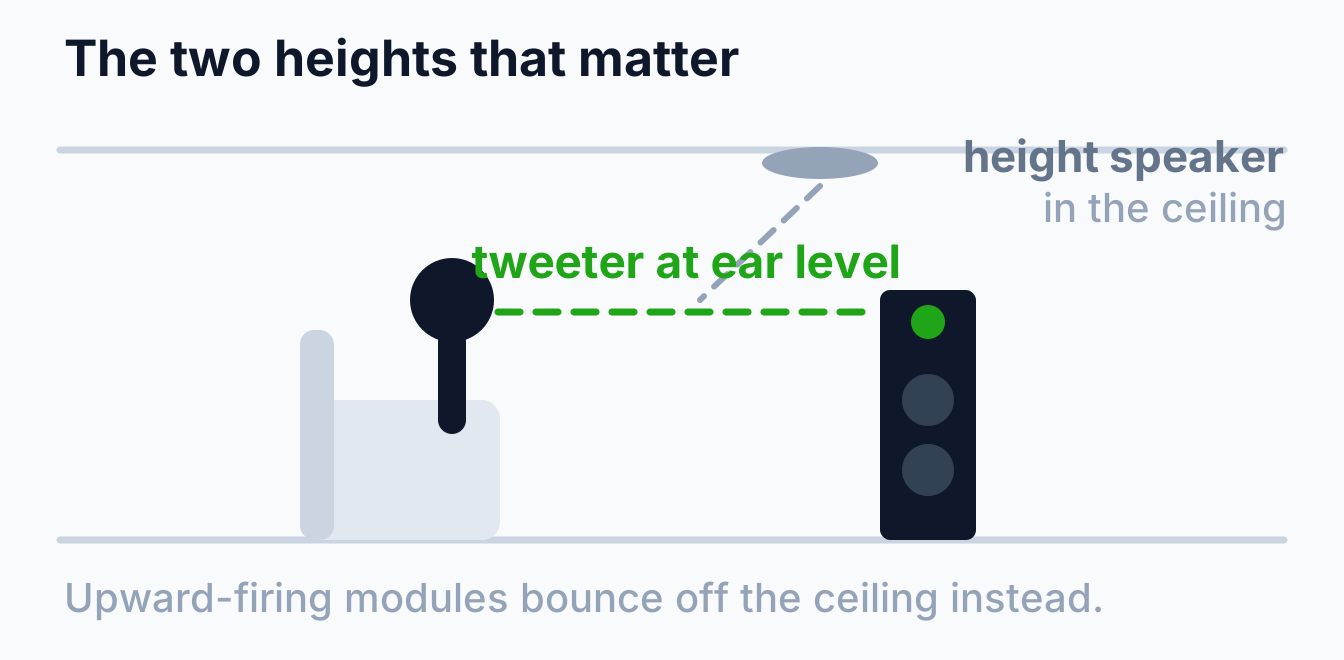
Two heights matter, and they are different questions.
The first is the height of the front speakers. Aim to have the tweeter, the small driver that handles detail, near your ears when you are sitting down. Floorstanders usually manage this by design. Bookshelf speakers on a low cabinet usually do not, and end up firing at your chest, which dulls everything. Stands are the fix, and they are cheaper than new speakers.
The second is overhead sound, which is where the notation comes in. Dolby explains the numbering on its Atmos speaker setup guide: in a label like 5.1.2, the first number is the speakers around you, the second is the subwoofer, and the third is the height channels. A 5.1 system has none; a 5.1.2 adds two.
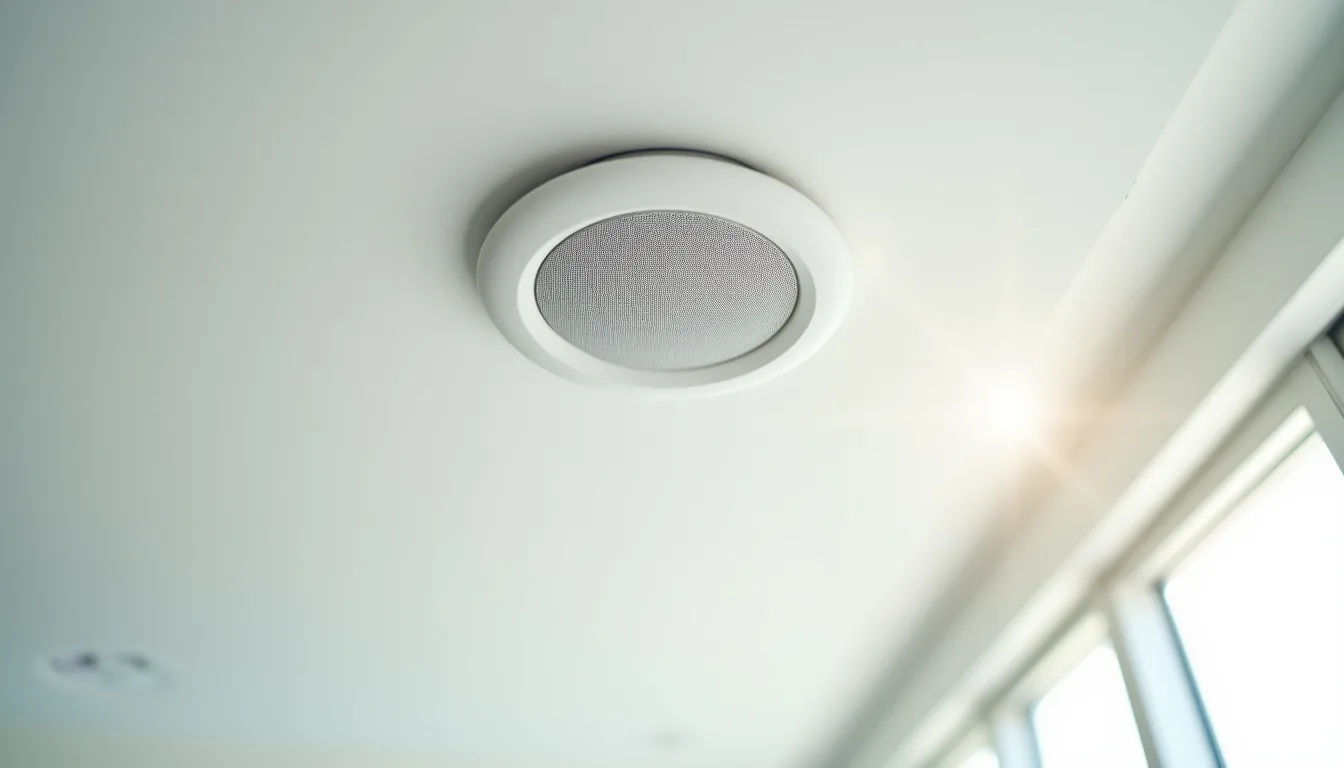
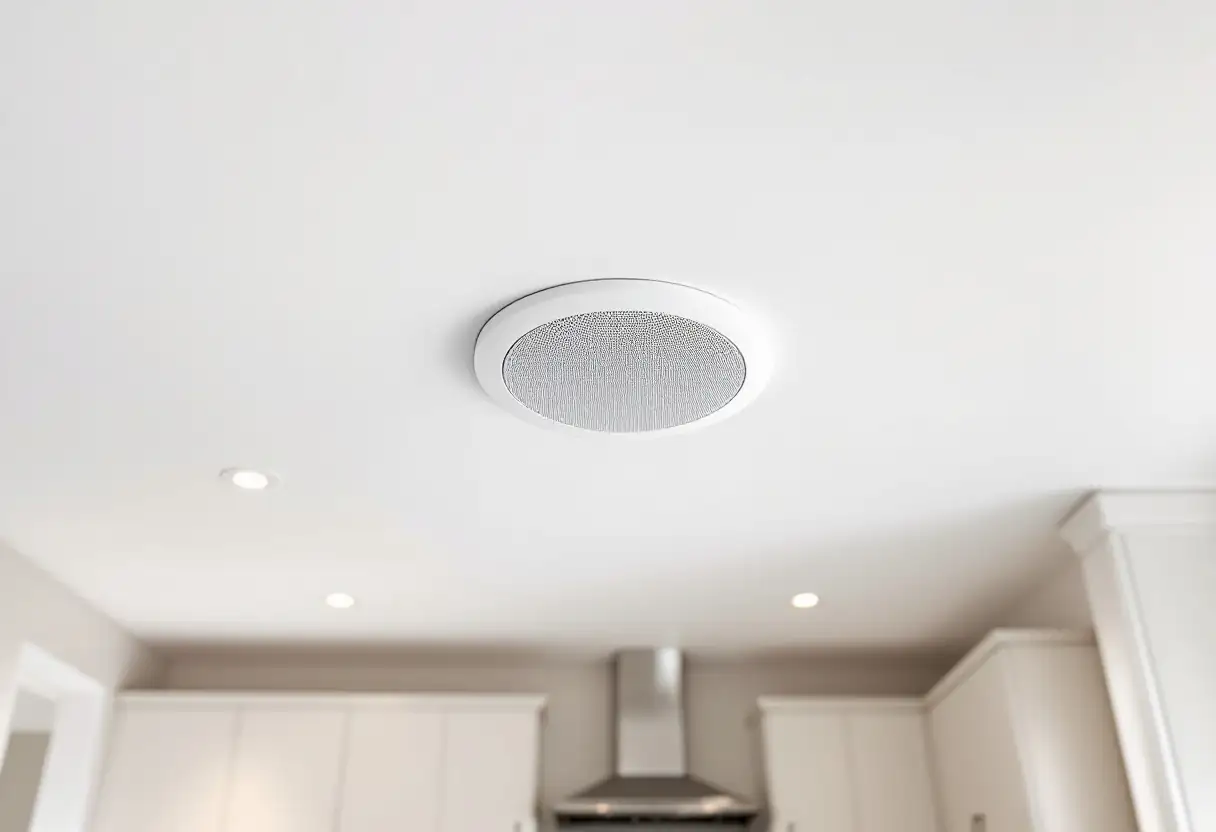
Dolby gives two ways to get those height channels: speakers set into the ceiling, or upward-firing modules that sit on top of your existing speakers and bounce sound off the ceiling. In-ceiling is the better result and much easier while a ceiling is open or a room is being built. Upward-firing is the retrofit answer, and it depends on having a flat, hard, reasonably low ceiling to reflect off. A raked ceiling or exposed timber beams will scatter it.
Worth being honest here: height channels are the last thing to add, not the first. A well-placed 5.1 beats a badly placed 5.1.2 comfortably.
The subwoofer is the one you move around
Bass behaves differently to everything else. It is long enough in wavelength to interact with the room itself, which means the same subwoofer can sound tight in one corner and like a wet cardboard box two metres away. You cannot reason your way to the right spot; you find it.
The practical method costs nothing. Put the subwoofer on the sofa where your head normally is, play something with steady bass, then crawl around the floor at the positions you would consider putting it. Wherever it sounds best from floor level is where the subwoofer goes, because the physics works the same in reverse.
Corners produce the most output and usually the least control: plenty of boom, not much definition. A spot partway along a wall is often the better compromise. And if bass is going to reach a neighbour, that is worth settling before you buy: Victoria sets actual prohibited hours for audio equipment audible in a neighbour's habitable room, which we go through in the soundbar and surround comparison.
What the room does to all of it
Placement is half the job; the surfaces around the speakers are the other half.
Hard rooms exaggerate everything. Polished boards, large windows and plasterboard walls with nothing on them make a room bright and reverberant, and dialogue is the first casualty. A rug between the seat and the speakers and curtains over the largest glass will do more than most equipment upgrades.
Open plan is the Melbourne problem. A lounge that runs into a kitchen and out to a deck has no rear wall and no left-right symmetry. Surround effects have nowhere to come from on the open side. There is no perfect answer, but keeping the front three tight and correct matters more here than anywhere, because they are carrying the room.
Do not bury speakers. A speaker pushed into a shelf or a cavity gets coloured by that cavity. If it has to live in joinery, get its front face flush with the front of the shelf rather than set back inside it.
The mistakes we are called out to fix
| What we find | What it sounds like | The fix |
|---|---|---|
| Surrounds on the back wall, high up | Effects behind your head, nothing to the sides | Move them to the side walls, near seated height |
| Centre speaker inside a cabinet | Muffled dialogue, clear effects | Bring it forward and tilt it at the seat |
| Bookshelf speakers on a low unit | Dull, no detail, no height to the image | Stands, to bring tweeters to ear level |
| Front pair too close together | Everything crammed into the screen | Widen until they form a triangle with the seat |
| Subwoofer wedged in a corner | Boomy, one-note bass | Find a better spot by crawling the room |
| Asymmetrical left and right | Sound pulls to one side of the room | Even the distances, or treat the reflective side |
| Height speakers before the basics | Impressive overhead, weak everything else | Fix the front three first |
What we would do in a typical Melbourne lounge
A rectangular living room, sofa against or near the back wall, television on the long wall, timber floor and a large window down one side. That describes a great many houses here, and the approach barely changes.
Screen height first, because the centre speaker follows it. Front left and right out wide enough to make a triangle with the sofa, angled in, tweeters at seated height. Centre directly beneath the screen on a shelf, tilted up. Surrounds on the side walls beside the sofa, angled down and in. Subwoofer positioned by crawling, usually ending up along the front wall but off-centre. A rug on the floor between the seat and the speakers, and curtains for the window.
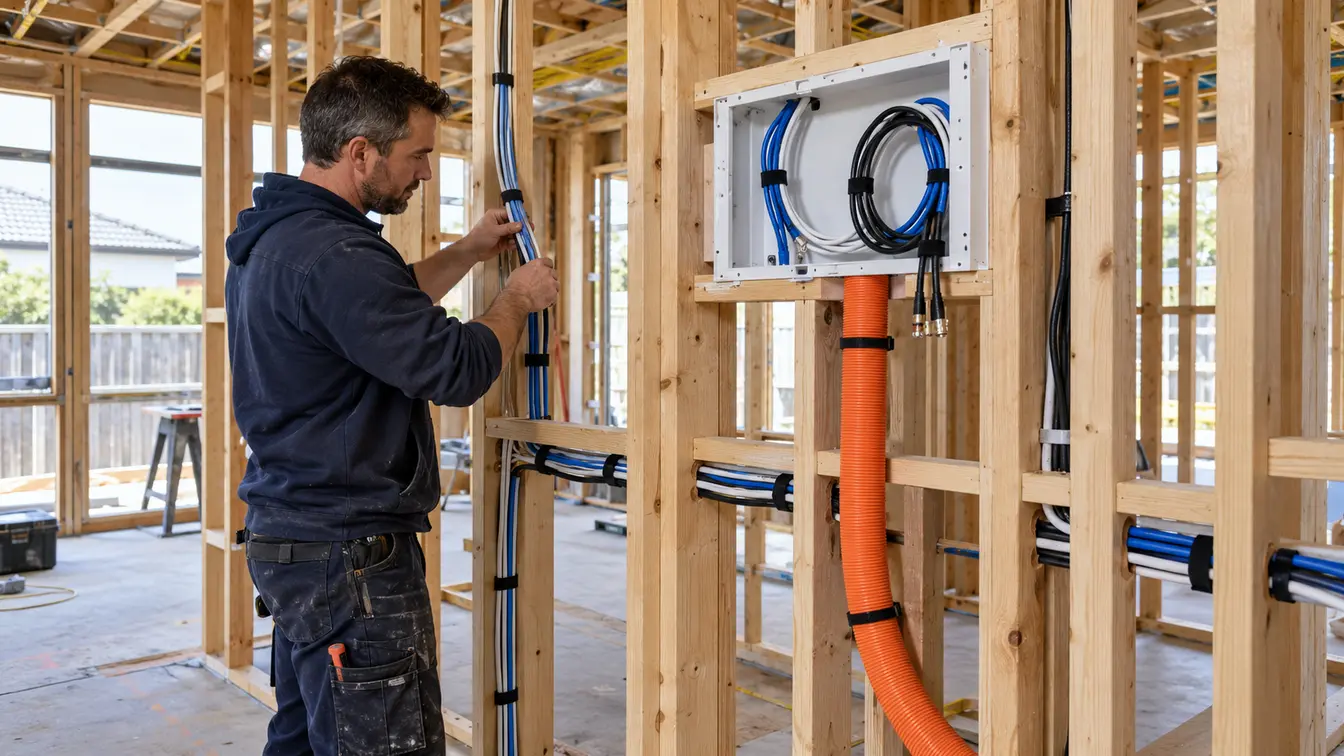
Cabling is the part that decides whether any of it looks acceptable, and it is far easier to plan before the speakers go up than after. The same in-wall approach as hiding TV cables when wall mounting applies to speaker runs.
Frequently asked questions
Do all the speakers need to be the same brand?
The front three should match if you can manage it, because sound moves across them constantly and a mismatch is audible as a change in tone every time something crosses the screen. Surrounds and the subwoofer are far more forgiving.
Can surround speakers go in the ceiling?
They can, and in-ceiling speakers are a tidy answer where wall mounting is impossible. Understand the trade: a ceiling speaker fires down at you rather than across at you, so the effect is less enveloping than a wall-mounted surround at seated height. For height channels, though, the ceiling is exactly right.
How far apart should the front speakers be?
Far enough to make a triangle with your seat, and no further. If dialogue starts drifting away from the screen, they are too wide; if the sound feels squeezed into the middle, they are too close.
Does furniture ruin surround sound?
Soft furnishings help far more than they hurt. What causes trouble is anything directly blocking a speaker: a tall plant in front of a surround, a bookcase beside a front speaker on one side only, or a lounge back higher than the surrounds beside it.
Is it worth having it set up professionally?
The placement itself is something a careful homeowner can do with a tape measure and an afternoon. Where it earns its keep is concealed cabling, in-ceiling and in-wall work, and measuring the room rather than guessing at it.
Good placement is mostly discipline rather than expense: build around the seat, keep it symmetrical, get things to ear height, and move the subwoofer until it behaves. It is step three of five, and our home theatre setup checklist puts it in order with everything else. In a room still being built, the positions have to be settled earlier again, which we cover in planning a home cinema room. We set systems up across Melbourne and the Mornington Peninsula, and we will happily tell you that your existing speakers are fine and just in the wrong places. Have a look at our home theatre installation page, or book a free onsite quote and we will work out the layout in your room.