Almost anything you can picture is possible. One press that drops the blind, dims the lights, wakes the projector and lowers the screen is an ordinary job. The useful question is not what can be done but which layer of control your house needs, because every step up buys convenience with complexity, and the complexity is what you live with.
Integration is really four layers stacked on each other, and most homes need one or two of them. Here is what each gives you, what it asks of you, and where we tell people to stop.
The short answer
- Your equipment already does some of this. HDMI-CEC is built into almost every television and receiver, and is often switched on without anyone knowing.
- The universal remote everyone used to recommend is gone. Logitech stopped making Harmony in 2021 and retired the programming software for older models in 2025.
- Real integration means a control system that reaches each device by a path that device understands: infrared, HDMI, your network, or a serial wire.
- Lights, blinds and scenes are where integration earns its money. Switching AV inputs is the easy half.
- Voice is a convenience layer on top, not the control system itself, and it is the first thing to stop working.
- Anything hardwired is electrical work, and in Victoria that means a licensed electrician.
Start with what your gear already does
Before anyone spends money, it is worth finding out whether the equipment in the room is already talking to itself. Most of it can.
HDMI carries a control channel alongside the picture and sound, called CEC. It is what makes the television turn the soundbar on with it, or the streaming stick wake the television when you press play. Every manufacturer gives it a different name, which is the main reason people do not realise they have it: Sony calls it BRAVIA Sync, Samsung calls it Anynet+, LG calls it SimpLink, Panasonic calls it VIERA Link. Same feature underneath, usually buried in the television's settings menu.
Turn it on and a surprising amount of the daily annoyance goes away for free. One remote powers the room on, the television follows the source you select, and the soundbar volume answers to the television's remote.
Then the catch. Each manufacturer implements CEC slightly differently, so a mixed rack is where it starts behaving oddly: devices waking each other at random, one box refusing to hand back control, something switching input after every set-top box update. When people tell us their system has a mind of its own, CEC is usually the culprit, and switching it off is sometimes the fix.
CEC also cannot see past the HDMI cable. It will never touch a light, a blind or a projector screen. For that you need something above it.
The universal remote gap
For about fifteen years the answer to "I have too many remotes" was a Logitech Harmony, and every installer in Melbourne, us included, sold a lot of them. That answer no longer exists. Logitech stopped manufacturing Harmony remotes in 2021, and in May 2025 the software that programmed the older models was retired, so those remotes still work but can no longer be reconfigured.
That gap matters, because it removed the cheap middle option between living with four remotes and installing a control system. What filled it is a split: households happy with CEC and the television's own remote, and households that go up to a proper hub. If you have a Harmony that still works, keep it, and do not factory reset it.
How a control system actually reaches your gear
This is the part that decides what is possible in your particular house, and it is worth understanding before anyone quotes on it. A control system is a box that has to reach each device by a path that device will listen to, and different equipment offers different paths.
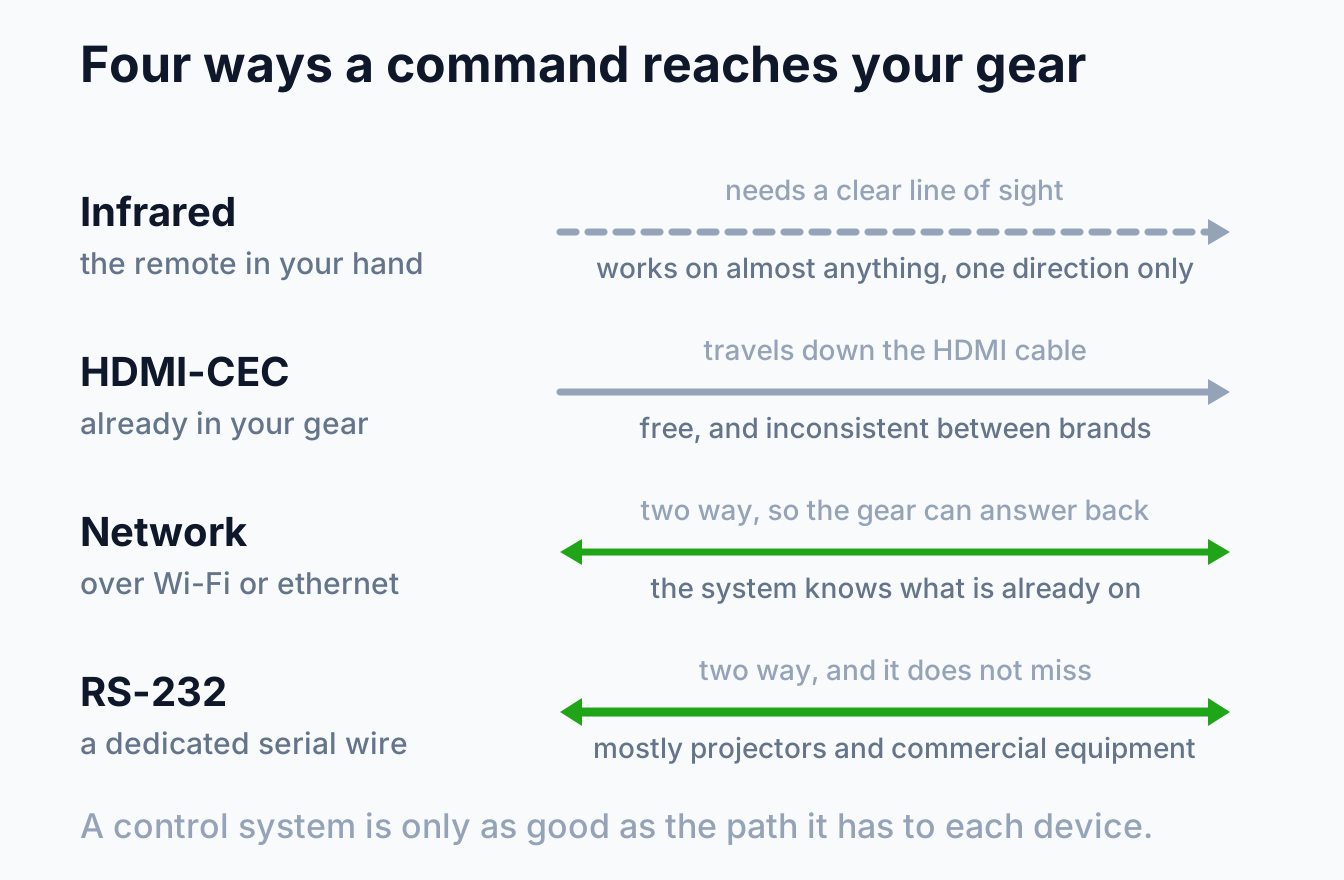
Infrared is the oldest and the most universal, which is why a control hub still ships with little emitter buds that stick over each device's receiver window. Its weakness is that it is one way. The hub can tell the amplifier to turn on, but it has no way of knowing whether it did, which is why badly set up systems drift out of step and leave you with the television on and the receiver off.
Network control is the significant upgrade, and it is why an integrated system wants a wired connection to the rack rather than Wi-Fi. Over IP the conversation goes both ways: the hub can ask the receiver what input it is on and correct it if the answer is wrong. A system that checks its own work does not need rescuing.
RS-232 is a plain serial cable and the most reliable of the lot, found mostly on projectors and commercial equipment. If a projector has a serial port we use it, because a projector that has confirmed it is warming up is worth the extra cable.
The practical consequence is simple. Old gear in a closed cabinet means infrared, and infrared means a bud stuck to every device. Newer gear on a wired network means a system that behaves predictably.
Scenes are the part worth paying for
Switching inputs is not what makes an integrated room feel different. Scenes are. A scene is a single press that sets the whole room, and the value sits in the things that are not AV at all.
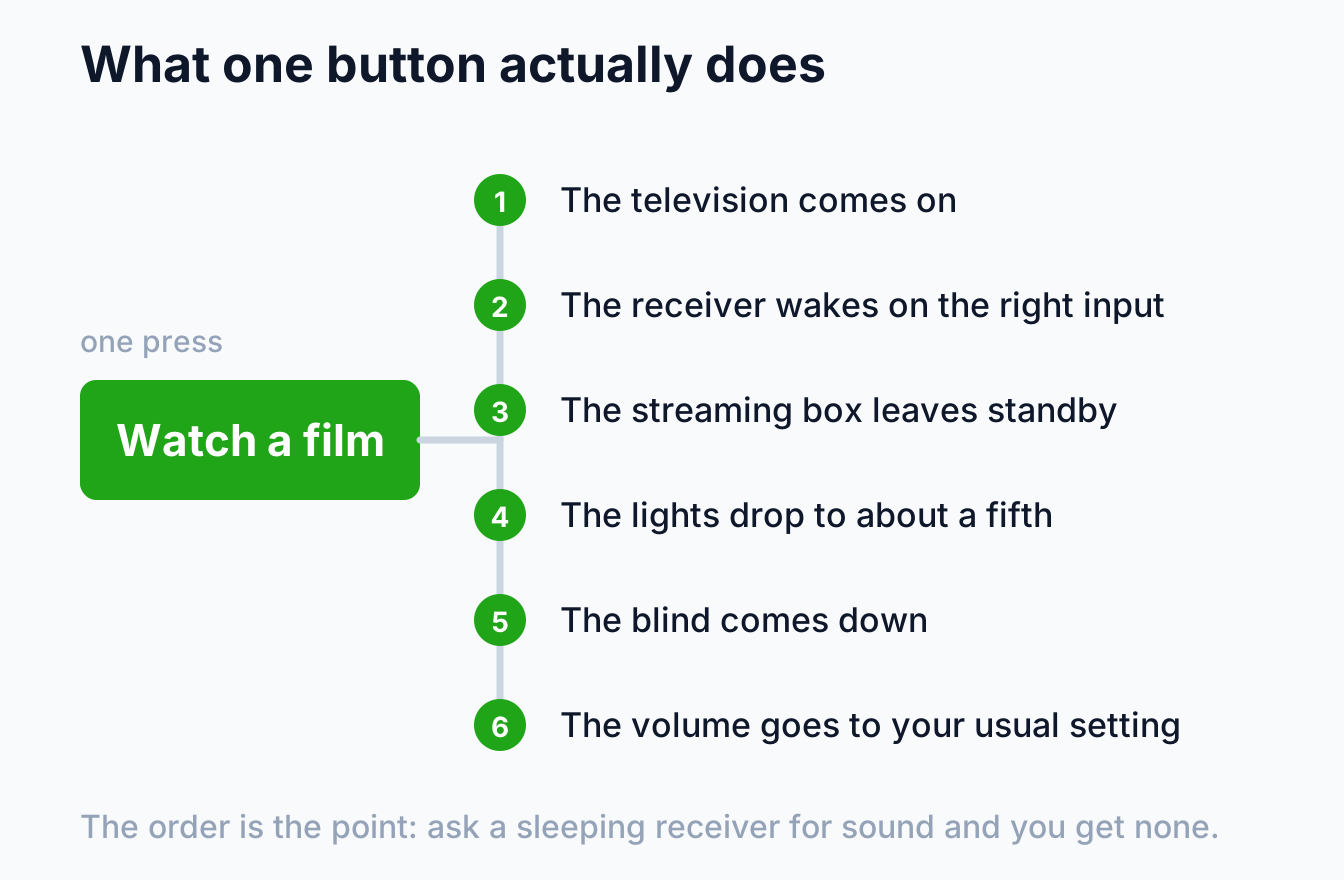
The order is not decorative. Equipment takes time to wake, and a receiver asked for sound before it has finished booting simply will not answer, which is how you end up with a picture and silence. A good part of setting one of these up is finding each device's real wake time and building the delays around it. Unglamorous work, and the difference between a scene that works every time and one that works most of the time.
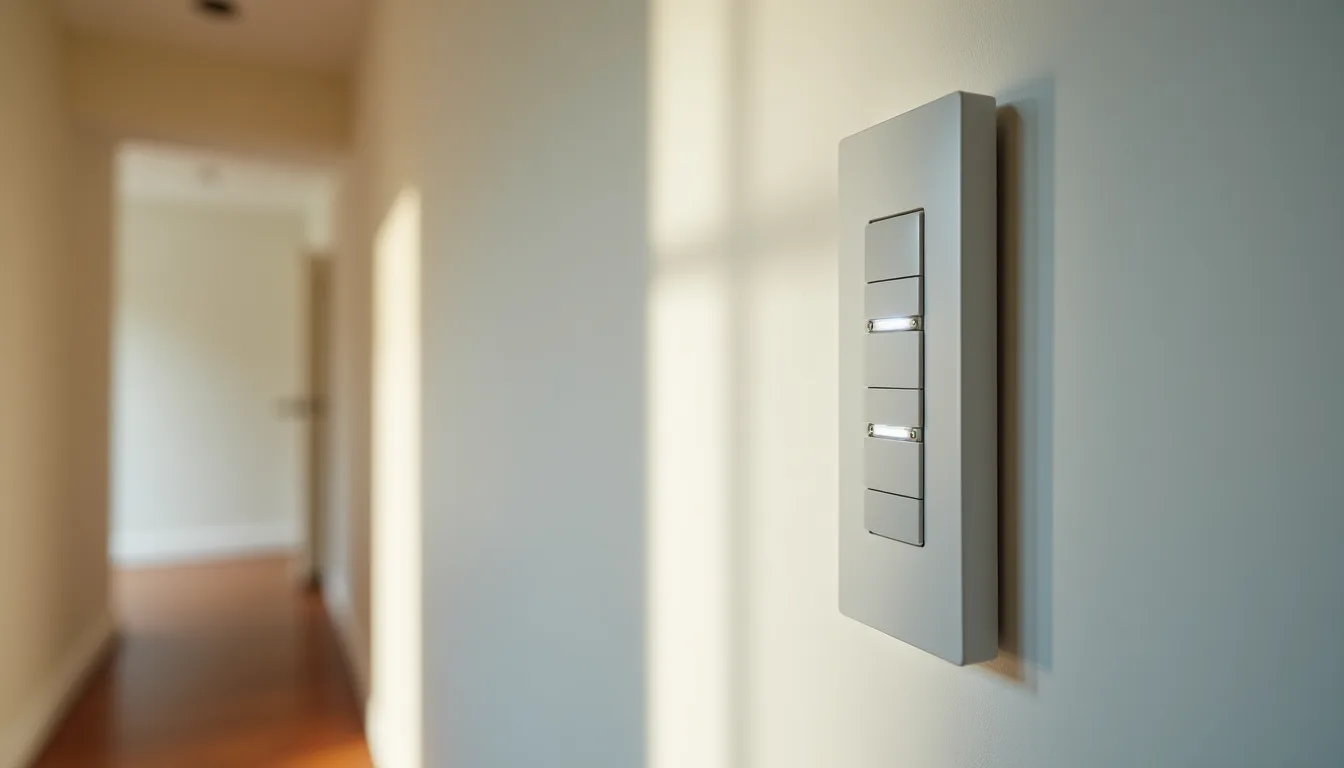
A wall keypad also beats an app for the scenes people use daily. Nobody wants to unlock a phone to turn the lounge on. Apps suit what you do occasionally and from elsewhere in the house; buttons suit what you do every night. A keypad by the door is what makes a system feel like part of the house rather than a gadget attached to it.
Voice control, honestly
Voice is genuinely useful, and it is also the layer that disappoints most often. It is good at simple, unambiguous commands: pause, volume, turning a named light off. It is poor at anything with a choice in it, and poor in a room with several similar devices, because you end up having to remember what you named things eighteen months ago.
More importantly, most voice control is a round trip through the internet. Your words go out to a server and the instruction comes back. When the connection drops, the lights and the television are still perfectly functional, but the way you have been talking to them is not. Voice belongs on top of a control layer that works without it, never instead of one.
The interoperability picture has improved on the smart home side. Matter, the standard backed by Apple, Google, Amazon and Samsung, has made lights, plugs, sensors and blinds far less locked to a single brand's app. It has not done the same for audio visual equipment: your receiver, projector and screen are not going to speak it, which is exactly why AV control still runs on infrared, HDMI, IP and serial.
The four levels, and who each one suits
The options land in four tiers, and most Melbourne homes we work in are well served by the first two.
| Level | What it gives you | Where it stops |
|---|---|---|
| HDMI-CEC | One remote for the basics, already paid for and already in the room | Behaves differently between brands, and cannot touch a light or a blind |
| A control hub | One press sets up a whole activity, including gear that only accepts infrared | Usually one room, and the configuration needs someone to maintain it |
| App and voice | Hands free, and control from anywhere in the house | Leans on the internet and on a cloud service staying up |
| A full platform | Lights, blinds, screen, audio and AV in one press, in every room, on keypads | Costs real money, and wants planning before the walls are closed up |
Platforms like Control4, Crestron and Savant sit at the top tier, and they are the right answer for a large house, a dedicated cinema, or a build where the cabling is going in anyway. In a single lounge with a television, a soundbar and a streaming box, they are a great deal of machinery for a problem a hub solves.
Where we tell people not to bother
A system with three devices. A television, a soundbar and one streaming box do not need a control system. They need CEC turned on and the streaming box's remote set up to run the television. Twenty minutes, no cost.
Automation for its own sake. A blind that comes down for a film is worth having. A blind that comes down because a light sensor thought it should is something people disable within a fortnight. Automation should do things you would have done yourself. Anything else is the house arguing with you.
Integration bought before the room works. If the sound is not right or the picture has never been set up properly, a control system only makes the same disappointing result easier to summon. Get the room right first: our guide to professional home theatre calibration covers what that involves, and if you are still choosing between a soundbar and a surround system, that decision comes before this one.
If you are building or renovating
This is the moment when integration is cheap, and the moment most people miss. Cabling costs very little while the walls are open and a great deal afterwards. The full room by room version is in pre-wiring a new build.
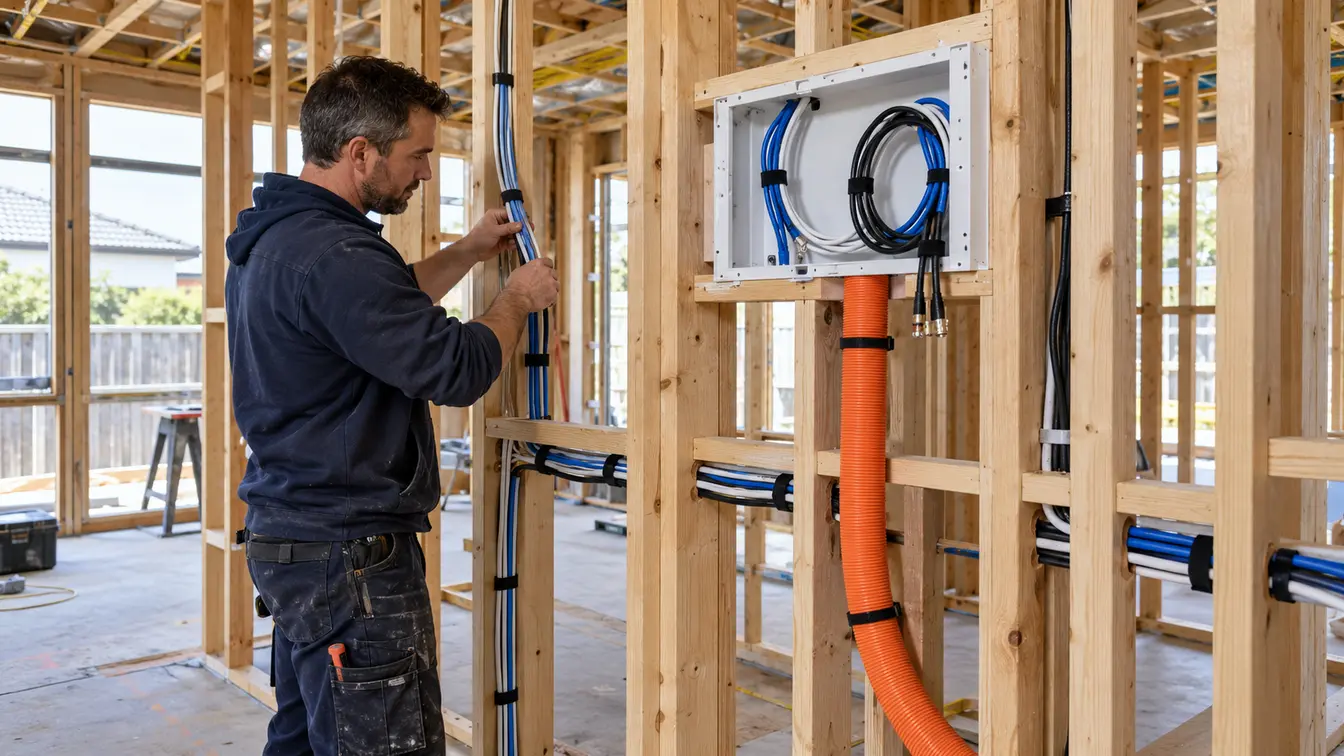
Three things are worth doing even if you have no intention of automating anything yet. Run a data cable to the television position and to wherever the equipment will live. Leave a conduit between the two, so a cable you have not thought of yet can be pulled through later. And if there is any chance of controlled lighting, have the electrician allow for it now, because retrofitting dimming into a finished ceiling is the expensive version of the same job. While the walls are open is also when cable concealment is trivial rather than a project, which we cover in our guide to hiding TV cables when wall mounting.
That last point is not optional advice. Lighting control alters the electrical installation, and Energy Safe Victoria is unambiguous that this is not work a homeowner may do themselves. We handle the AV side and coordinate with your electrician for anything touching mains, which is also the arrangement that keeps your insurance intact.
Frequently asked questions
Can I control my home theatre with Google Home or Alexa?
Partly. Voice assistants talk happily to smart lights, plugs and blinds, and to some televisions and streaming devices directly. Receivers, projectors and older equipment usually need a control hub in between to translate. The voice assistant is the microphone, not the control system.
Do I need Control4 or Crestron, or is there something simpler?
Most homes do not need them. A control hub handles a single room well for a fraction of the cost. The dedicated platforms make sense for multiple rooms, a dedicated cinema, or a new build where the cabling is going in anyway.
Will any of this still work if my internet drops?
It depends on how it was built. Infrared, HDMI-CEC and a local control hub keep working, because none of them leave the house. Voice control and most phone apps stop, because they route through a server. We build the everyday functions locally and treat voice as a bonus.
Can you integrate equipment I already own?
Usually. Anything with an infrared receiver can be controlled, which covers almost everything ever made. Newer gear with a network port gives a better result because the system can confirm what it did. We would rather work out what your existing equipment can do than replace it for the sake of it.
If what you are really after is music in every room rather than control of one, that is a separate build with its own decisions, and we set them out in multi-room and whole-home audio.
Integration is worth doing when it removes something annoying from your evening, and not worth doing when it adds something clever to your house. We install and program AV control across Melbourne and the Mornington Peninsula, from turning on CEC properly through to a full platform in a new build. Have a look at our remote and smart home programming page or our home theatre installation service, or book a free onsite quote and we will work out which layer your place needs.