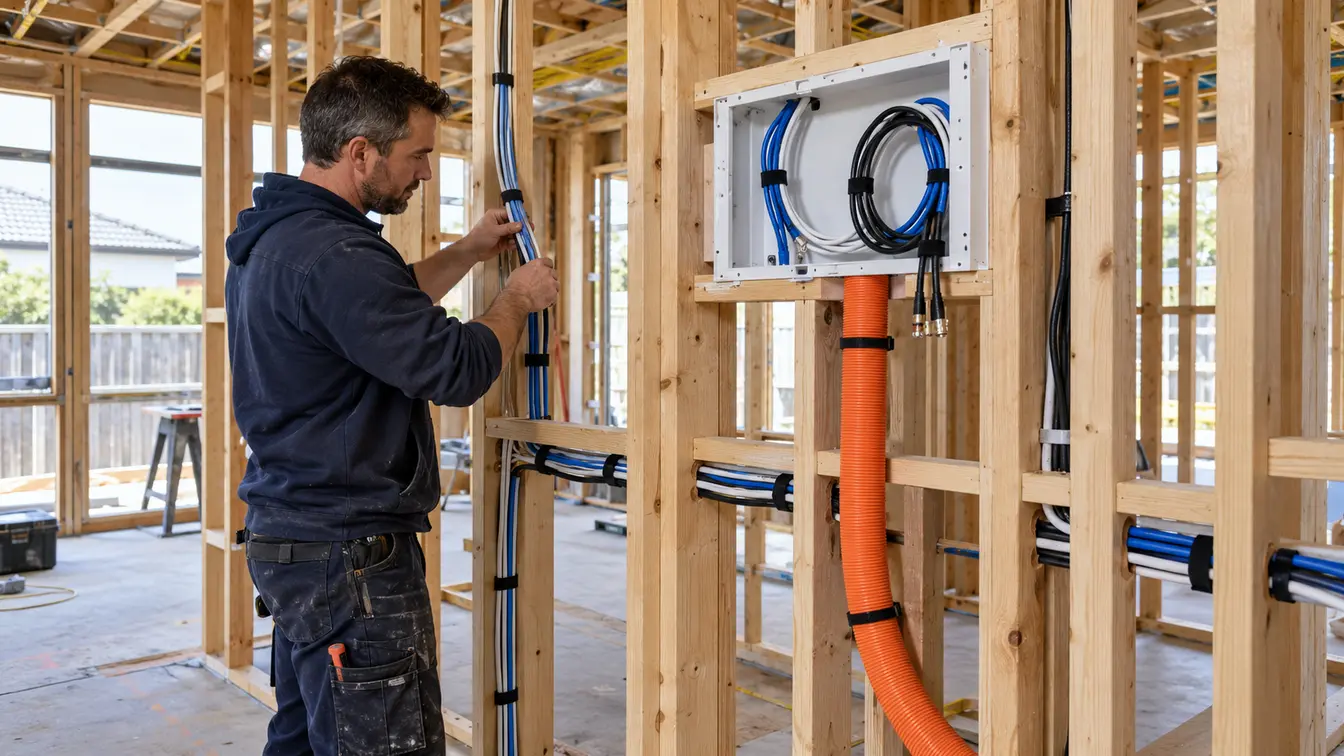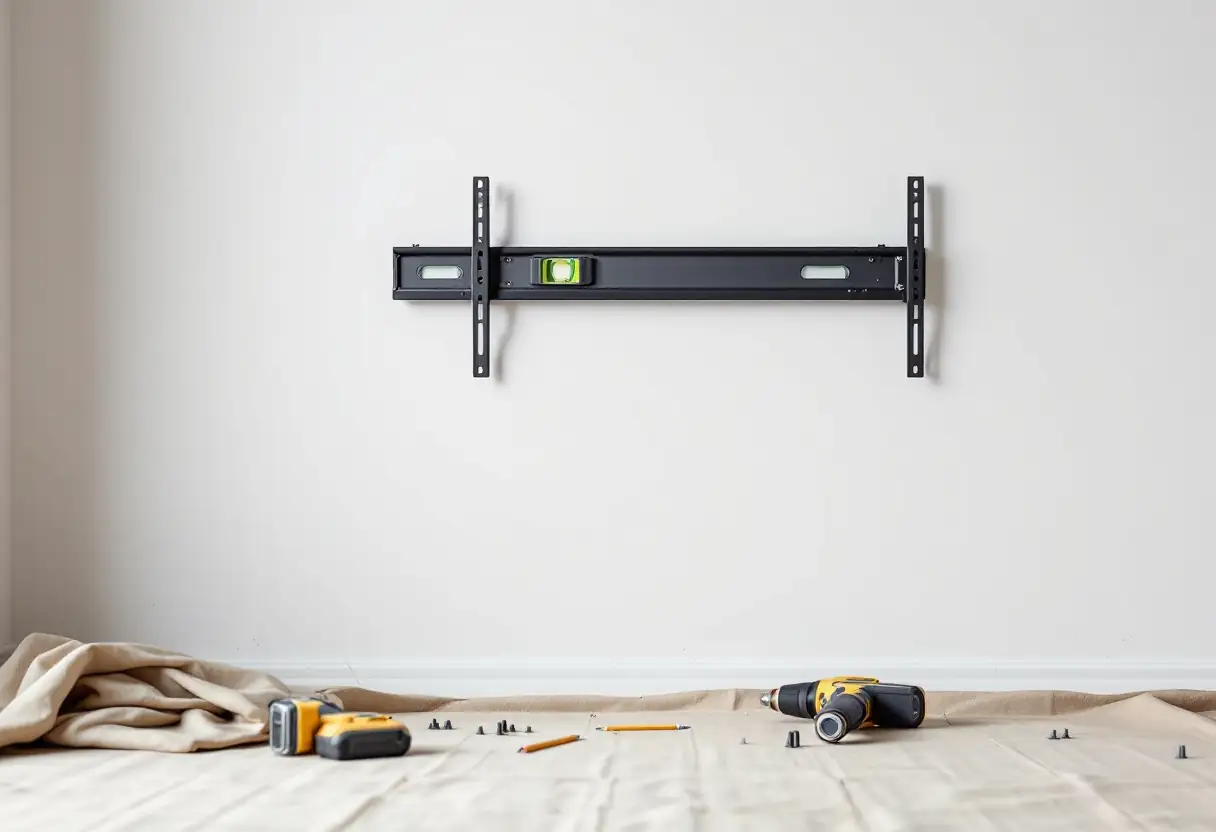
It reads like one job and it is two, separated by a truck. Taking the screen off a wall you know, and putting it on a wall you have never drilled into.
The first half is easy and people rush it. The second half is the one that actually needs thinking about, and it is usually decided weeks earlier, when nobody is thinking about televisions at all.
The short answer
- Take it down before the removalists arrive, not on the day.
- Two people, and photograph the back of the television before you unbolt anything.
- Transport it upright, on its edge. Flat is how screens get broken.
- If you are selling, say in the contract whether the bracket stays. It is the grey area that causes arguments at settlement.
- The old bracket usually suits the new wall. Whether the new wall suits the bracket is the open question.
Getting it off the wall
Most brackets hold the screen with a lip at the top and a catch, a screw or a pull cord at the bottom. Release the bottom, lift the screen up and off the lip, and it comes away. What goes wrong is doing that without knowing which of those it is, at arm's length, with the weight already in your hands.
Look behind it first. Get a torch behind the panel and find the release before anybody lifts. Two minutes with a light beats guessing.
Photograph everything. The back of the television, the arms bolted to it, the spacers, the cable positions. In four weeks, in a different house, that photograph is the difference between twenty minutes and an afternoon.
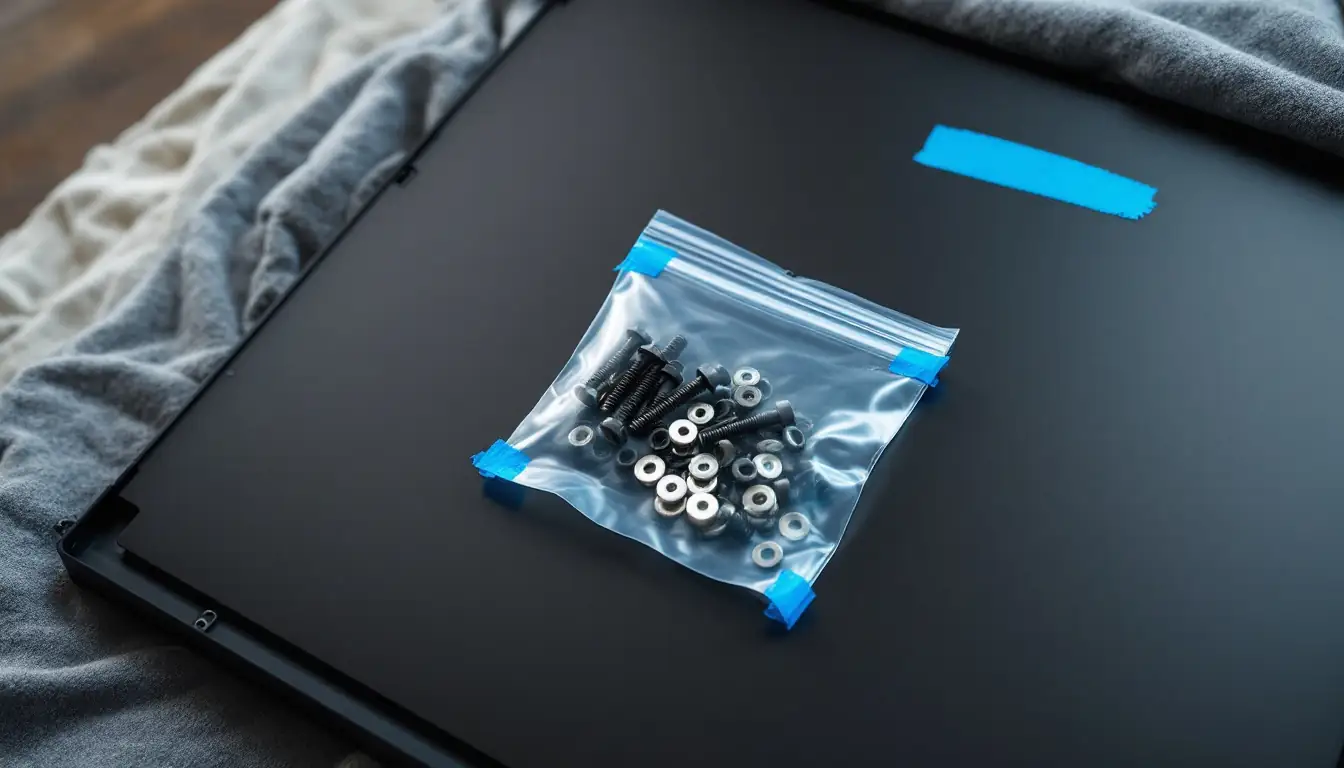
Bag the hardware and tape it to the screen. Bolts, spacers and washers are specific to that panel, and they are the first thing to vanish in a move. Our guide to VESA patterns and bracket fit covers why the right screw length matters, which is exactly the thing you cannot improvise at the other end.
Unplug and label the cables. Especially if there are several sources. Nobody remembers which lead went where.
Two people, always. The screen comes off the wall towards you, at height, and there is no putting it down halfway. On anything past 75 inches the count goes up, as we cover in mounting a large TV.
When to do it
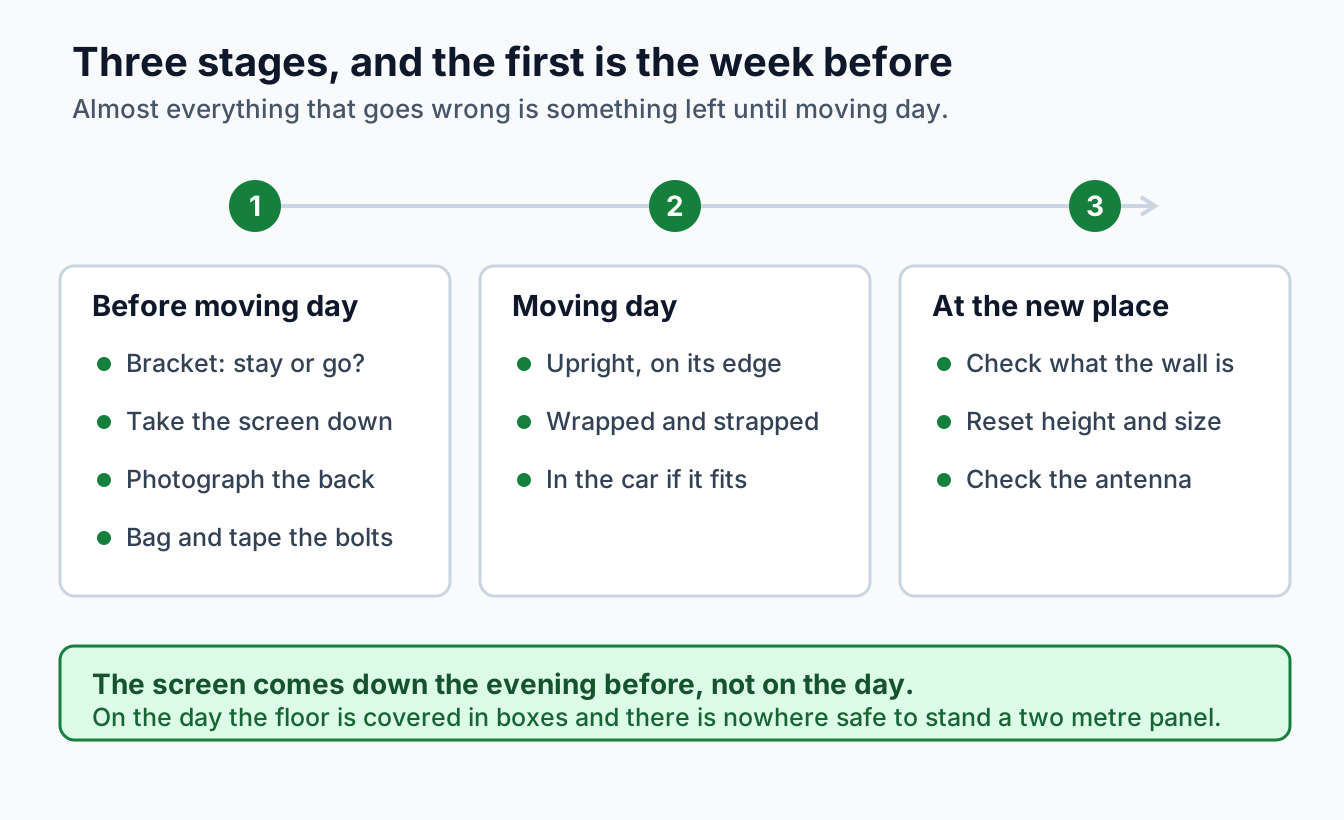
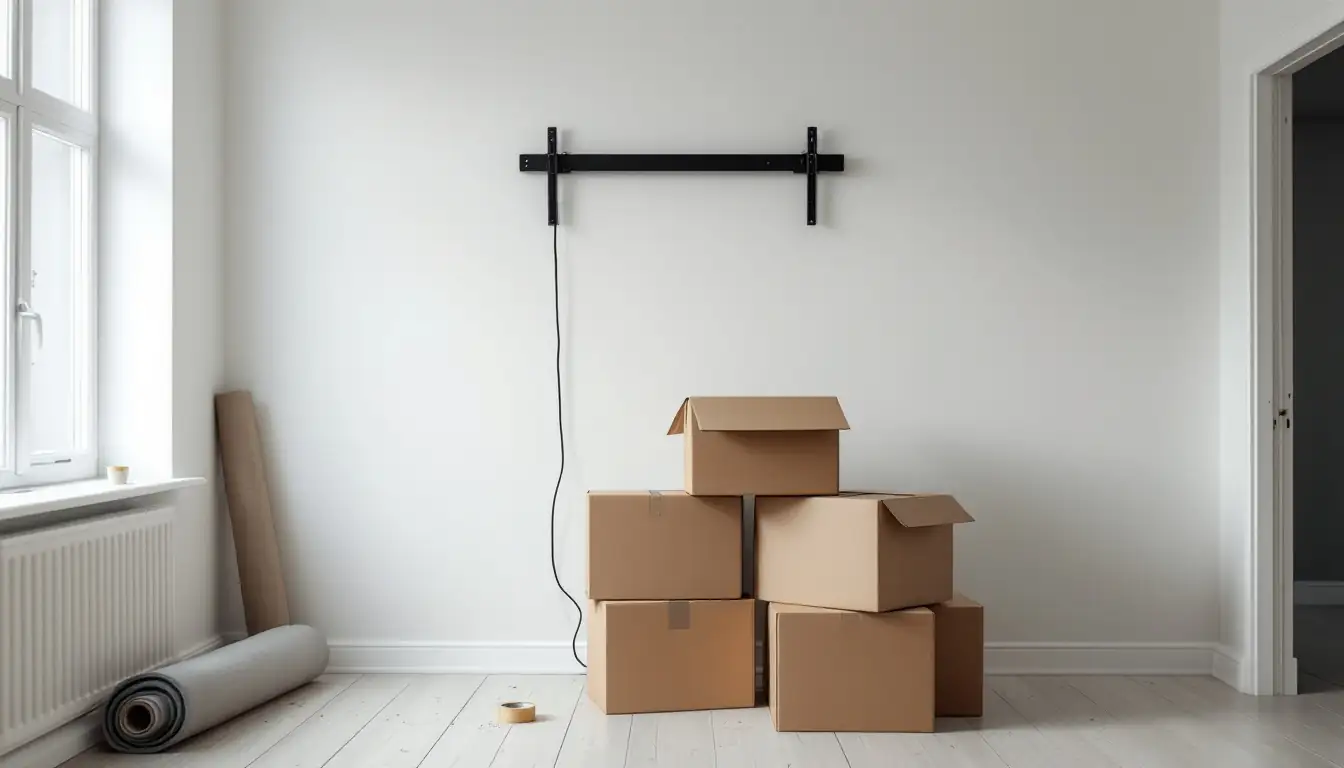
The single most useful thing in this whole article is that the screen comes down before moving day, not during it.
On the day itself the house is full of people, the floor is covered in boxes, and there is nowhere safe to put a two metre panel while somebody hunts for an Allen key. Do it the evening before, wrap it, and stand it somewhere it cannot be knocked.
Does the bracket come with you?
Usually not, and that is fine. A bracket is not expensive, it is bolted through the plaster, and taking it off leaves you carrying a lump of steel and a wall to repair anyway. Most people leave it.
What matters is saying so, in writing, before it becomes a question.
If you are renting, the bracket is part of the modification you made, and what you owe at the end of the tenancy is a separate conversation worth having early. We work through the Victorian position in wall mounting a TV in a rental.
If you are selling, this is genuinely a grey area. Things bolted to the building tend to be treated as fixtures and pass with the property, while loose items are goods the vendor can take. A television sitting on a bracket and a bracket bolted through the wall are arguably on opposite sides of that line, which is precisely why it causes arguments. Consumer Affairs Victoria's guide for buyers and sellers makes the point from the other direction, warning buyers to check whether something that looks like a fixture is actually a chattel the vendor may remove at settlement.
We install televisions rather than practise law, so the answer is not for us to give. It is one line to your conveyancer, and it settles the whole thing before anyone turns up expecting a screen that has gone.
Getting it there in one piece
Screens do not break because they are heavy. They break because they get laid down.
Upright, on its bottom edge, always. On edge the panel is stiff. Flat, it flexes under its own weight, and a panel that flexes over a bump in Nepean Highway can arrive with a cracked screen that looks like nothing at all from the outside until you turn it on.
Wrap it properly. The original carton if you still have it, otherwise padded moving blankets and straps. Corners and edges are what get hit.
Take it in the car if it fits. A screen standing upright behind the front seats, wedged so it cannot tip, is safer than the same screen in the back of a truck with a wardrobe against it.
Ask your removalist before the day. Some will not carry a television at all, some will only carry one in its original packaging, and some exclude screens from cover entirely. That is a question with a five minute answer and an expensive surprise if you skip it.
The new wall is the actual job
Everything above is straightforward. This is the part that decides whether the television goes up on the first afternoon or waits a fortnight.
You know nothing about the new wall yet. It might be timber studs at 450mm centres, in which case the bracket lands wherever you like. It might be studs at 600mm, where the plate reaches only one and the answer is a backing plate, which we go through in mounting on plasterboard. It might be double brick, render over block, or lightweight concrete, each with their own fixings, covered in brick, concrete and rendered walls. In an apartment it might be steel stud or a slab with rules attached.
Three other things change with the room, and they are worth deciding rather than defaulting to whatever the last house did.
The height. New couch position, new eye level. Our guide to mounting height has the method.
The distance, and therefore the size. A screen that suited the old lounge may be small or overwhelming in the new one, which our guide to viewing distance works through.
The cables and the power. Where the outlet is, whether anything can be concealed, and whether that has to happen before the screen goes up. Our guide to hiding cables covers the options.
And check the antenna point before you assume the picture will be the same. Reception is a property by property question, not a suburb one, and a new address can behave completely differently, as we explain in TV antenna reception in Melbourne. If there is no outlet on the wall you want, that is a job to book alongside the mount rather than after it.
Frequently asked questions
How do I take a TV off a wall mount?
Find the release at the bottom of the bracket first, with a torch, before anyone lifts. Most use a catch, a screw or a pull cord. Release it, lift the screen up off the top lip, and bring it away. Two people, and photograph the back before you unbolt the arms.
Can I transport a TV lying flat?
Better not to. On edge the panel is stiff and on its back it flexes, and flexing is what cracks screens in transit. Upright, wrapped and wedged so it cannot tip is the way, whether it is going in a car or a truck.
Should I leave the bracket for the new owner?
Most people do, and it saves you a repair. The important part is that the contract says so either way. Whether a bracket counts as a fixture that stays is the sort of question that is much cheaper to answer in advance than at settlement, so raise it with your conveyancer.
Will my old bracket work in the new house?
The bracket almost certainly still suits the television. Whether it suits the new wall is the open question, and it usually comes down to where the studs fall or what the masonry is. That is worth checking before moving day rather than discovering it with the screen in your hands.
Do removalists move wall-mounted TVs?
Some do, some will only take one in its original carton, and some exclude screens from their cover. Ask before you book. Taking it down and putting it back up is generally not part of a removalist's job in any case.
Can you do both ends?
Yes, and it is the common request. We take it down at the old place, make the wall good if that is wanted, and mount it at the new one once we have seen what the wall is.
Moving a wall-mounted television is mostly a sequencing problem. Take it down early, photograph the back, keep the hardware, carry it upright, and settle the bracket question in writing before it becomes an argument. Then treat the new wall as a fresh job, because it is. We take screens down and put them back up across Melbourne, Bayside and the Mornington Peninsula, we can do both ends of a move, and we can patch the old wall on the way out. Have a look at our TV wall mounting page, or book a job.