Reception is decided by a chain that starts at a transmitter on a hill and ends at the socket behind your TV. The antenna is one link in that chain, and in Melbourne it is often not the link causing the trouble.
When a picture starts breaking up here, the cause is usually something nobody thought to look at: a splitter feeding four rooms off a signal that was only ever good enough for two, a connector that has been quietly letting water in since the last install, or a gum tree that has put on ten metres since the antenna went up. This is what actually governs TV antenna reception in Melbourne, and which parts of it you can do something about.
The short answer
Five things decide what you get, roughly in the order they matter:
- How far you are from the transmitter serving your address, and whether anything solid sits in the way.
- Whether your antenna suits the band your local services use, and whether it is still pointed at them.
- The condition of everything between the antenna and the TV.
- How many outlets that one signal is being asked to feed.
- Weather and time of day, which matter more here than most people expect.
Only the last of those is genuinely out of your hands. The rest are fixable, and the cheapest ones to fix are usually the ones at the bottom of the list.
Where your signal is actually coming from
Most of Melbourne is served from the transmission site on Mount Dandenong, which is why so many antennas across the eastern and southern suburbs point roughly the same way. Pockets the main site cannot reach cleanly are covered by smaller infill transmitters instead, and an antenna aimed at the wrong one will never work properly no matter how good it is.
You do not have to guess which applies to your place. The mySwitch tool takes an address and returns the direction of the transmitter serving it, the predicted reception, and the frequencies your services actually use. It is the most useful five minutes you can spend before anyone climbs on your roof.
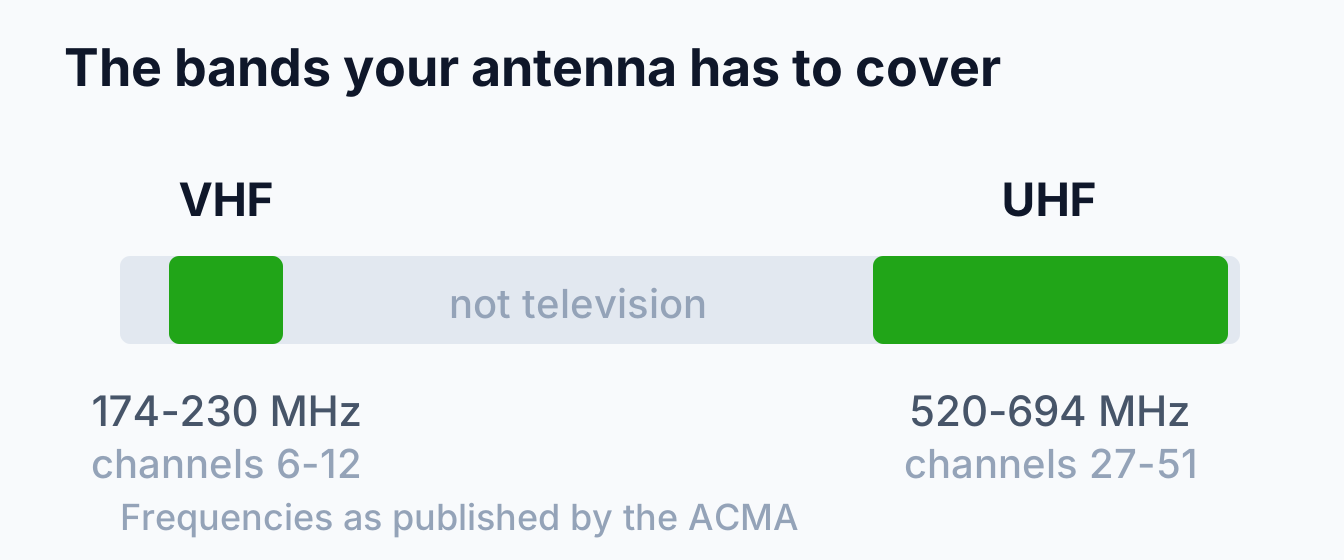
Frequency matters because Australian television is split across two separate bands. The ACMA lists "VHF television channels 6 to 12: 174 to 230MHz (inclusive)" and "UHF television channels 27 to 51: 520 to 694MHz (inclusive)". Those are very different wavelengths, and an antenna built for one is a compromise on the other. Which band your local services occupy decides what belongs on your roof. We go through those trade-offs in our guide to choosing a TV antenna in Melbourne.
Distance, terrain and everything in the path
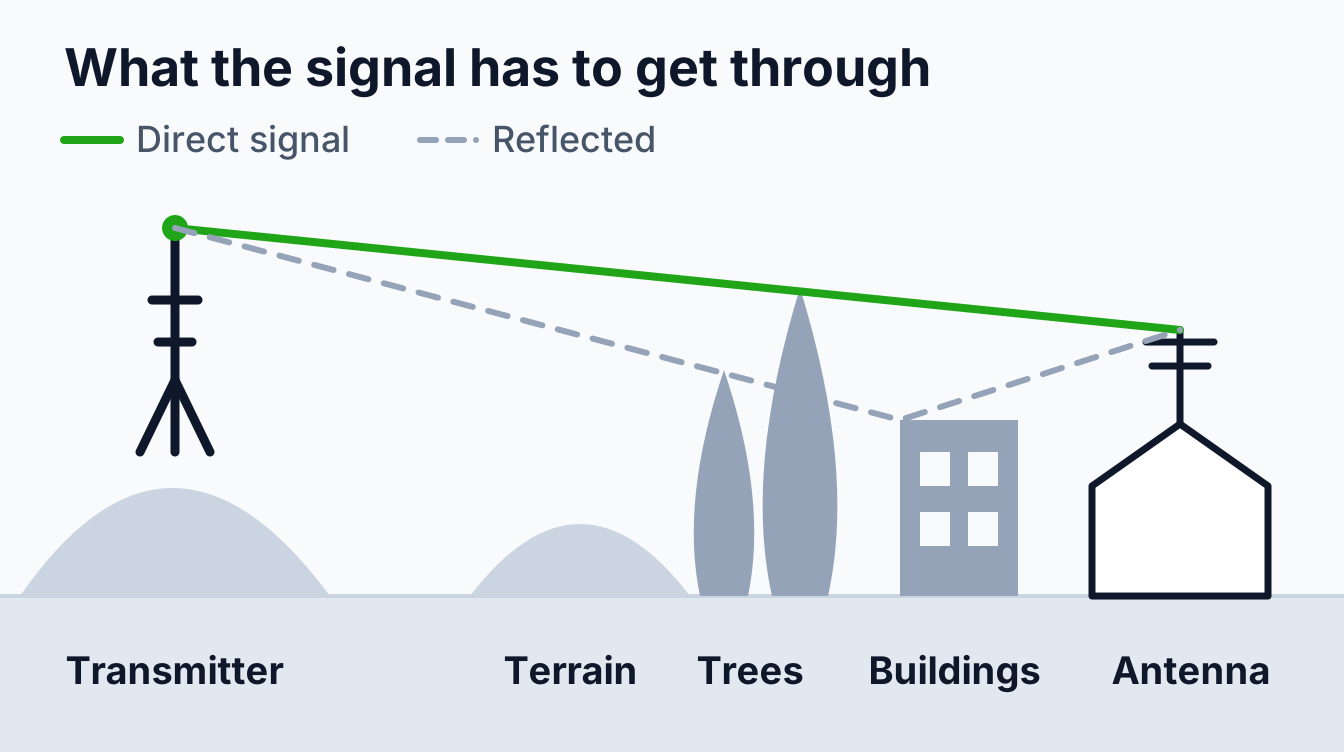
Signal weakens with distance, but distance on its own rarely ruins reception. What sits in the path does far more damage per metre than open air ever will. We go through what distance really costs you, and why the coverage map can disagree with your roof, in does distance from a TV transmitter affect reception.
Terrain. A ridge between you and the transmitter is the hardest obstacle to argue with, because you cannot go around it and you usually cannot get above it. Melbourne has plenty of them. The folds through the Dandenong foothills, the rises behind Frankston and Mount Eliza, and the valleys running down towards the bay. Two houses a few streets apart can sit either side of a crest and have completely different reception.
Trees. Foliage absorbs signal rather than reflecting it, and wet foliage absorbs considerably more, which is why some households only notice a problem after rain. Trees are also the reason for the most common complaint we hear, which is that nothing changed and the reception got worse anyway. Something did change: an established gum in the path can add a decade of growth to a line of sight that was marginal to begin with.
Buildings. A neighbouring two-storey build or a block of units does two things. It can block the direct path outright, and it can bounce a second copy of the signal into your antenna a fraction of a second behind the first. That second effect is multipath, and it is worth understanding because it behaves nothing like weak signal. The picture does not fade gently; it breaks into blocks or drops out entirely while the meter still shows plenty of strength. More gain makes multipath worse rather than better, because it amplifies the reflection along with the original.
The antenna itself: age, aim and height
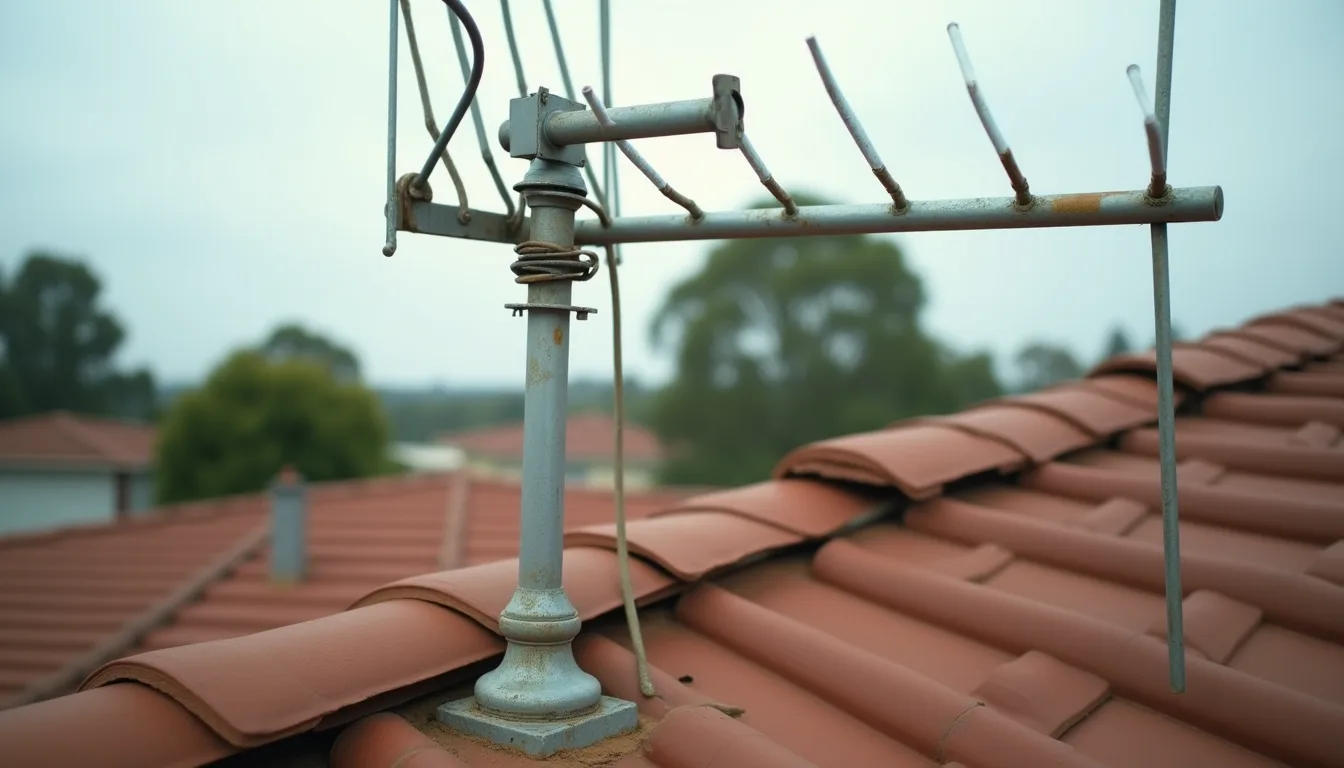
Antennas do not last forever, and they fail slowly enough that nobody notices the decline. The ACMA is direct about the lifespan: "Antennas generally only last 10 to 15 years." Elements corrode, plastic insulators go brittle in the sun, and the balun at the centre of the array is often the first thing to go.
Aim drifts too. A few seasons of Melbourne wind can move a mast enough to matter, and an antenna that is a few degrees off its transmitter will still work on a good day and fall over on a marginal one. Along the bay and down the Mornington Peninsula, salt shortens all of this. Hardware that would last fifteen years inland can be visibly corroded in a handful.
Height is the lever people forget. Raising an antenna a metre or two to clear a roofline, a fence or the top of a hedge often does more than replacing it with something larger at the same height. If the problem is an obstruction, get above the obstruction.
Everything after the antenna
A good antenna cannot make up for what the rest of the system loses, and this is where a surprising share of Melbourne reception faults actually live.
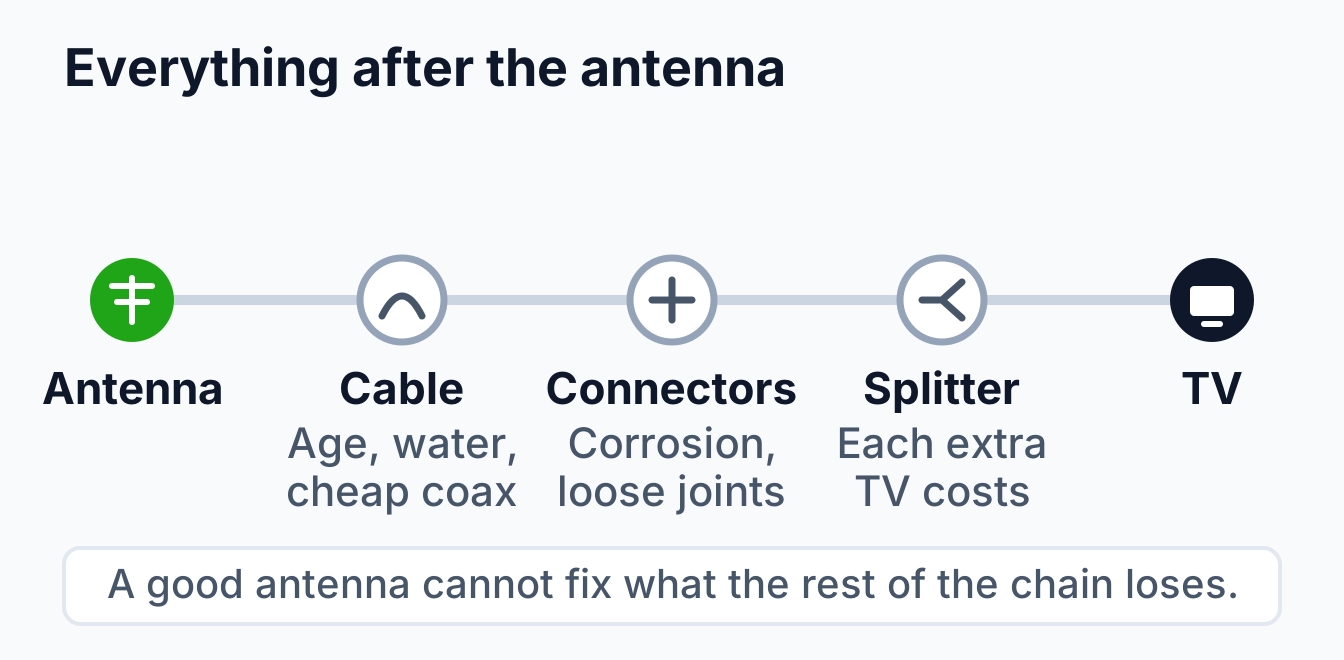
Cable. Old or cheap coaxial loses more signal per metre than good cable, and loses more at UHF than at VHF. Cable that has been baking on a roof for twenty years is not the cable that was installed.
Connectors and joints. The commonest single fault we find is water. A joint that was never weatherproofed properly lets moisture into the cable, the braid corrodes, and the loss climbs season by season until the picture goes. From inside the house it looks exactly like an antenna problem.
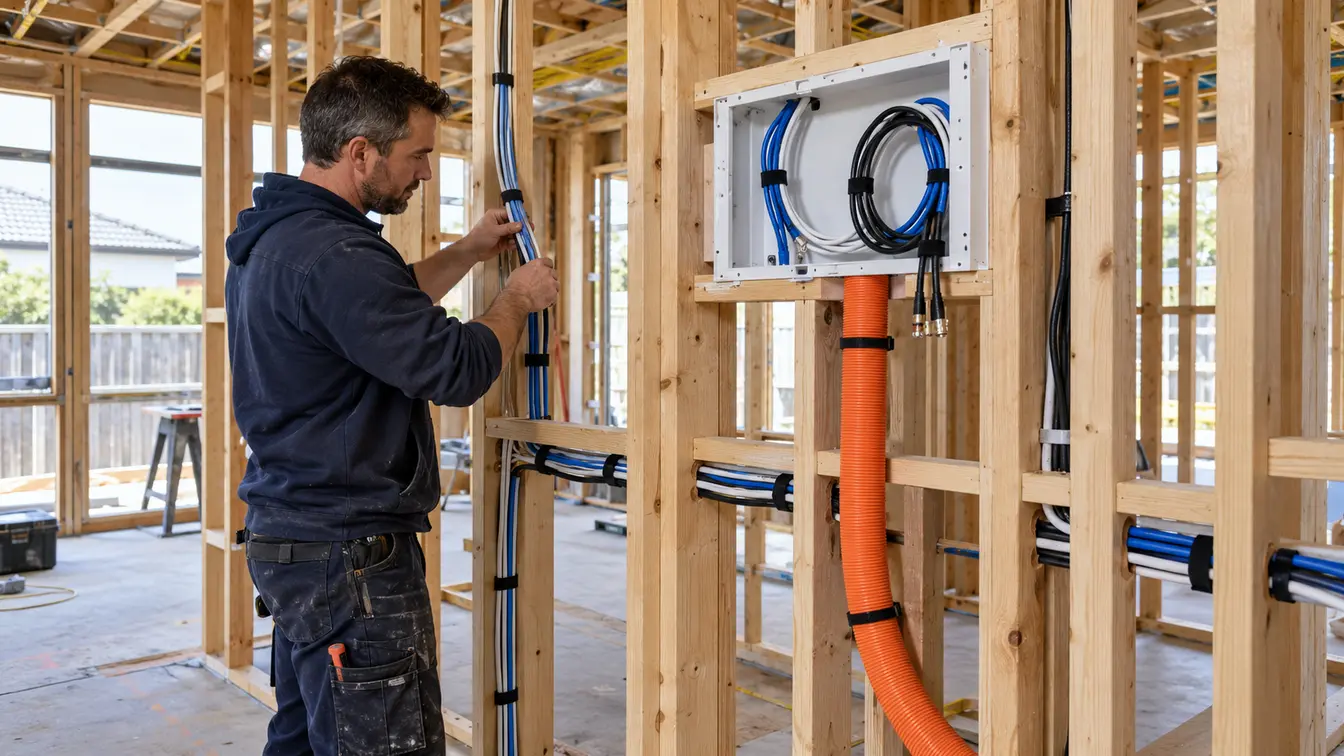
Splitters. Every outlet you add takes signal away from the others. The ACMA puts it plainly: "Don't use a connector or splitter to split the signal from your antenna to 2 or more TVs – it will reduce the signal level and may reduce reception quality." Plenty of houses have had a second, third and fourth point added over the years by different people, each one quietly taking a share. If your reception went downhill after someone put a point in the back room, that is not a coincidence.
Worth knowing before anyone starts running cable through your walls: fixed cabling is regulated work. The ACMA states that "To work as a cabler in Australia, you must be registered."
Amplifiers are not a cure for poor reception
An amplifier is the first thing most people reach for and the wrong answer more often than not. It boosts noise along with signal, so a degraded signal simply arrives louder and still degraded. Worse, in a strong-signal area it can push a tuner past what it can handle.
The ACMA's guidance is worth reading before you buy one: "Use a signal booster or amplifier only if necessary. They can overload your TV receiver with TV or mobile phone signals."
Amplifiers do have a proper job. They earn their place when you are distributing a decent signal across several outlets, or driving a long cable run, not as a first response to a picture that is breaking up. Our guide to TV antenna amplifiers goes through the types and where each one belongs.
Why it is often worse on a warm evening
If your reception is fine for months and then misbehaves on summer evenings, the atmosphere is the likely culprit rather than your equipment. Under certain conditions distant signals travel much further than usual and arrive on the same frequencies as your local ones.
The ACMA describes ducting as occurring "when distant services interfere with local services during certain weather conditions. It is more common during warmer months and usually occurs (or is noticed) more often in the early evening."
There is no fix for this at the house, and nothing has broken. A system with healthy margin rides through it; a marginal one does not, which is the real argument for not running your reception right at the edge of what works.
What you can change, and what you cannot
| Factor | Can you change it? | What helps |
|---|---|---|
| Distance to the transmitter | No | An antenna matched to the signal you actually have |
| Hills and ridges | No | Height, or an infill transmitter if one serves your area |
| Trees in the path | Sometimes | Pruning, or getting the antenna above them |
| Neighbouring buildings | No | Better rejection of reflections, not more gain |
| Antenna age and condition | Yes | Replacement once it is past 10 to 15 years |
| Where it points | Yes | Re-aiming at the right transmitter |
| Cable and connectors | Yes | New coax and properly weatherproofed joints |
| Number of TVs sharing it | Yes | Distribution sized to the number of outlets |
| Weather and ducting | No | Margin in the system, and patience |
Finding out what your address should be getting
Start with mySwitch and the predicted reception for your address. If what you are getting is well short of what is predicted, the problem is on your side of the antenna rather than in the air.
Then retune properly. Most people press auto-scan, which is not the same thing. The ACMA recommends you "Re-tune your TV or set-top box with a manual tune, rather than an 'auto-scan', using the frequencies provided on mySwitch." An auto-scan will happily lock onto a weak distant service and store it alongside your local ones.
If the picture is out right now rather than merely disappointing, work through our checklist for when a TV says no signal before calling anyone. It is worth ruling out the simple causes first, and one of them is a fault in a single TV rather than the antenna system at all.
Frequently asked questions
Why is my reception worse than my neighbour's?
Usually the antenna system rather than the location. Two houses on the same street can have very different reception if one has a newer antenna, fewer outlets sharing the signal, or a path that clears a tree the other one does not. Height and aim account for most of the rest.
Does rain affect digital TV reception?
Rain itself has little effect at these frequencies, but wet foliage in the signal path does, and water getting into a damaged cable or connector certainly does. Reception that fails reliably in wet weather usually points to a joint that is letting water in.
Will a bigger antenna fix pixelation?
Only if the cause is weak signal. If the cause is reflections, a higher-gain antenna can make it worse. The two faults look similar on screen and need opposite treatments, which is why measuring beats guessing.
How do I know whether it is the antenna or something inside the house?
Check whether every TV is affected or just one. A single bad TV points at that set, its cable or its wall point. Every TV misbehaving at once points further up the chain, at the antenna, the main cable or the distribution.
Is an indoor antenna ever good enough in Melbourne?
Occasionally, close to a transmitter with a clear path and a modern TV. In most of Melbourne it is a compromise that runs out of margin the first time the weather turns. We compare the two properly in our guide to indoor versus outdoor antennas.
Reception problems are diagnosable rather than mysterious, and the fix is often smaller than people fear: a joint remade, a splitter removed, an antenna raised half a metre. We work across Melbourne and the Mornington Peninsula, and we will measure what is actually arriving before recommending anything. Have a look at our TV antenna installation page, or book a free onsite quote and we will find out what your address is really getting.