The room decides this, not the badge. A bright open-plan living area and a dark theatre room reward opposite things, and the panel that wins in the shop is usually being judged under lighting that matches neither.
There is a second half nobody at the counter mentions: the type of panel changes how it mounts. Thickness, weight, where the sockets sit and whether there is a separate connection box all decide what bracket you need and how much cable work the wall has to hide. Here is how the three compare, in the two ways that actually matter once it is on your wall.
The short answer
- Dark room, film watching, seats spread wide: OLED.
- Bright room, windows opposite, sport and daytime television: Mini-LED.
- Sensible budget in a normal lounge: QLED does the job.
- Static content all day (a channel logo, a scoreboard, a dashboard) argues against OLED.
- The mounting differences are real but manageable. The room light is the decision.
What the three actually are
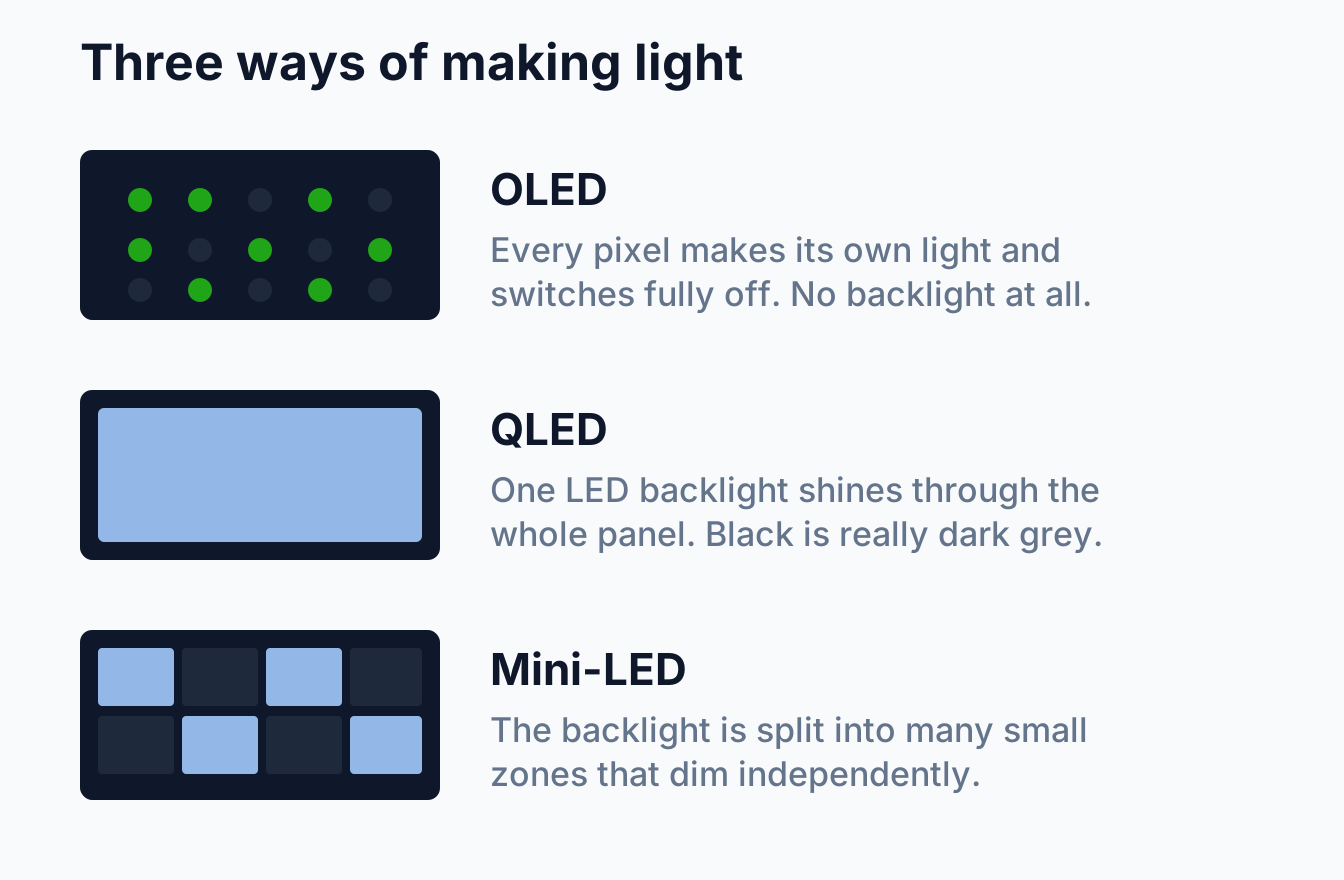
Two of these three are the same kind of television.
OLED is the odd one out. LG's explanation of what an OLED TV is describes self-emitting pixels that light up when current passes through them, each turning on or off independently, with no backlight at all. A pixel showing black is simply switched off, which is why black on an OLED is black rather than dark grey.
QLED is an LCD television with a quantum dot layer that improves colour and brightness. The light still comes from an LED backlight behind the panel, and the liquid crystal layer blocks what should not get through. It never blocks perfectly, so black is very dark grey.
Mini-LED is that same arrangement with a far better backlight. Samsung's own comparison of Mini LED and QLED puts the difference plainly: the thousands of LEDs behind the panel are replaced with much smaller ones. Samsung's are described as a fortieth the size of conventional LEDs, split into local dimming zones that brighten and dim independently.
So the trade sits there. OLED controls light perfectly at the pixel. Mini-LED controls it in zones but can go far brighter. QLED controls it least and costs least.
The room decides more than the badge
Walk into a Melbourne lounge at two in the afternoon with the blinds up and the argument settles itself.
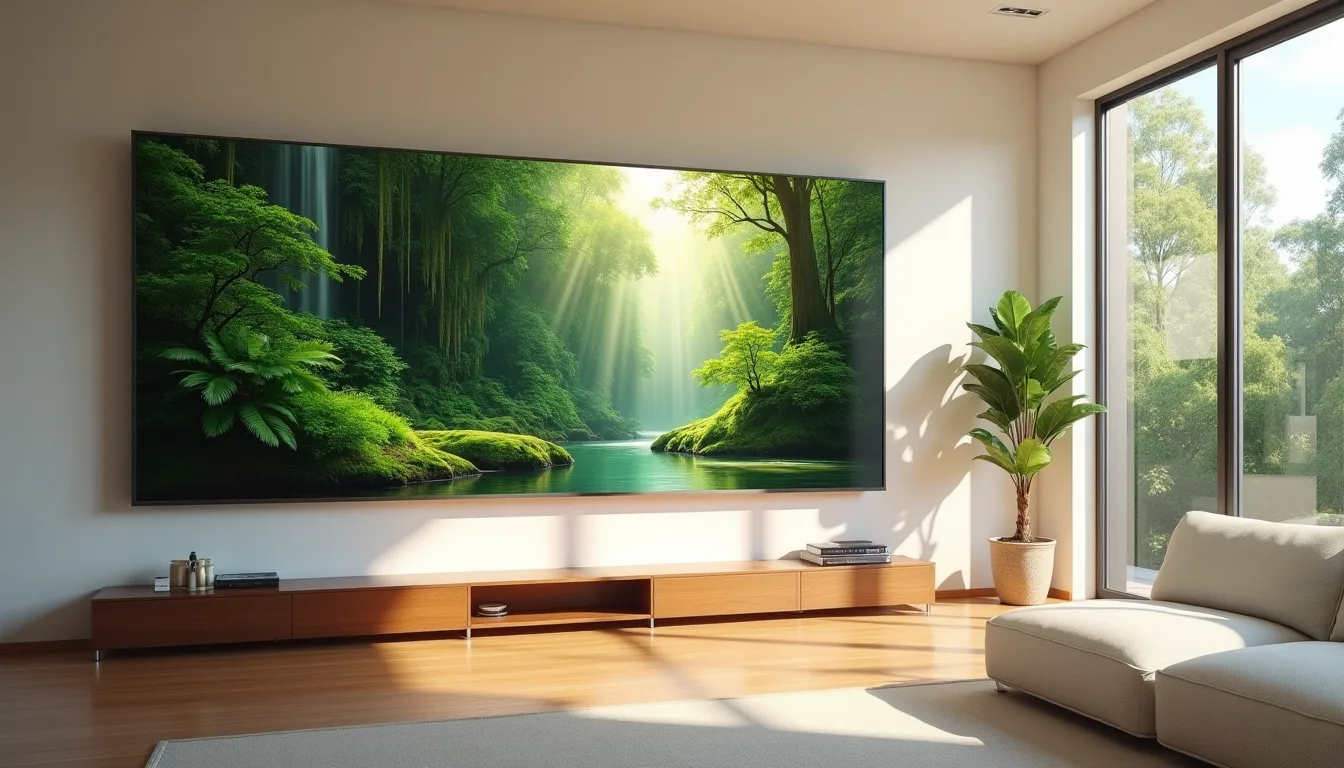
A bright room wants brightness. In a north-facing living area with big windows, or an open-plan space that runs out to a deck, the enemy is ambient light washing the picture out. Mini-LED is built for exactly this, and a bright QLED handles it better than most people expect. OLED in that room is not ruined, but you are paying for black levels you cannot see until the sun goes down.
A dark room wants control. In a dedicated theatre room, or a lounge you actually watch films in at night, OLED is the clear winner, and it is not subtle. Letterbox bars disappear into the screen instead of glowing grey. Night scenes hold detail. This is the room where people who have seen both stop arguing.
Reflections are their own problem. A window or a white wall opposite the screen puts a mirror image over everything, and no panel technology fixes that. The finish of the glass and the position on the wall do. If the only available wall faces a window, that is worth solving before choosing a television, and it is the same reasoning we apply to screens in alfresco areas, where the light is worse again.
Where everyone sits
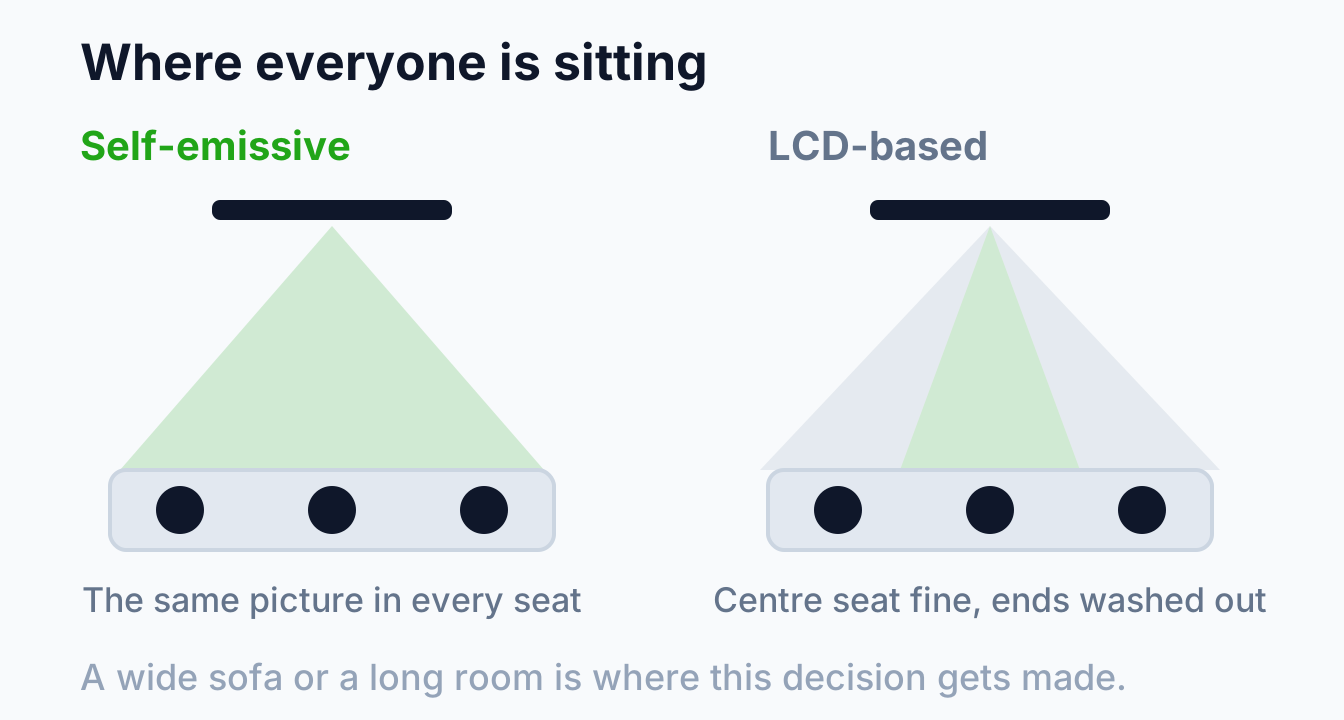
This is the point most buying guides skip and most families notice.
Because an OLED pixel emits its own light, the picture holds up when you are sitting off to one side. LCD-based panels, QLED and Mini-LED both, lose contrast and colour saturation as you move off centre, and on a wide sofa or in a long room the person on the end is watching a visibly worse picture than the person in the middle.
If your seating is one couch aimed at the screen, this barely matters. If it is an L-shaped lounge, a kitchen bench you watch from, or a room where six people sit at Christmas, it matters a great deal. It is the same reasoning that decides whether you need a full-motion bracket: count the places people actually sit before spending.
What it means for the wall mount
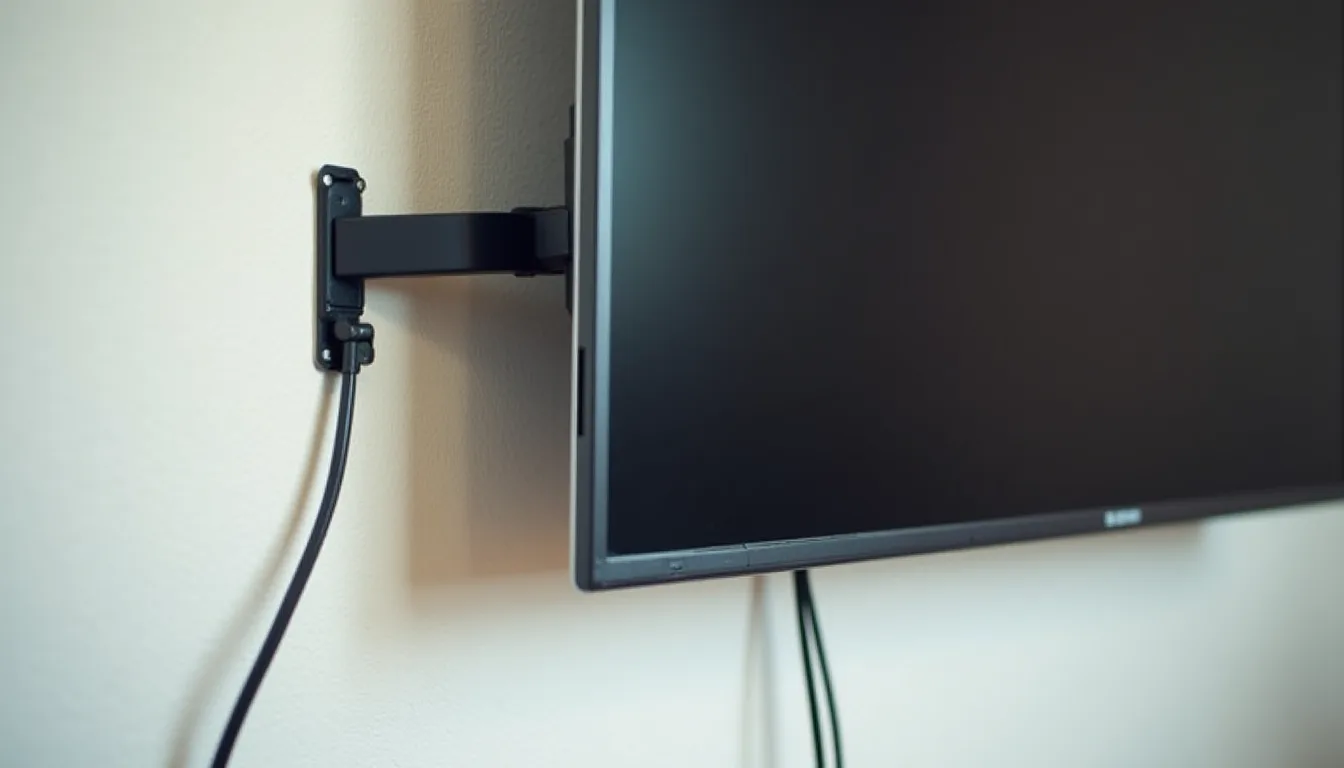
Here is where the panel type stops being a picture-quality question.
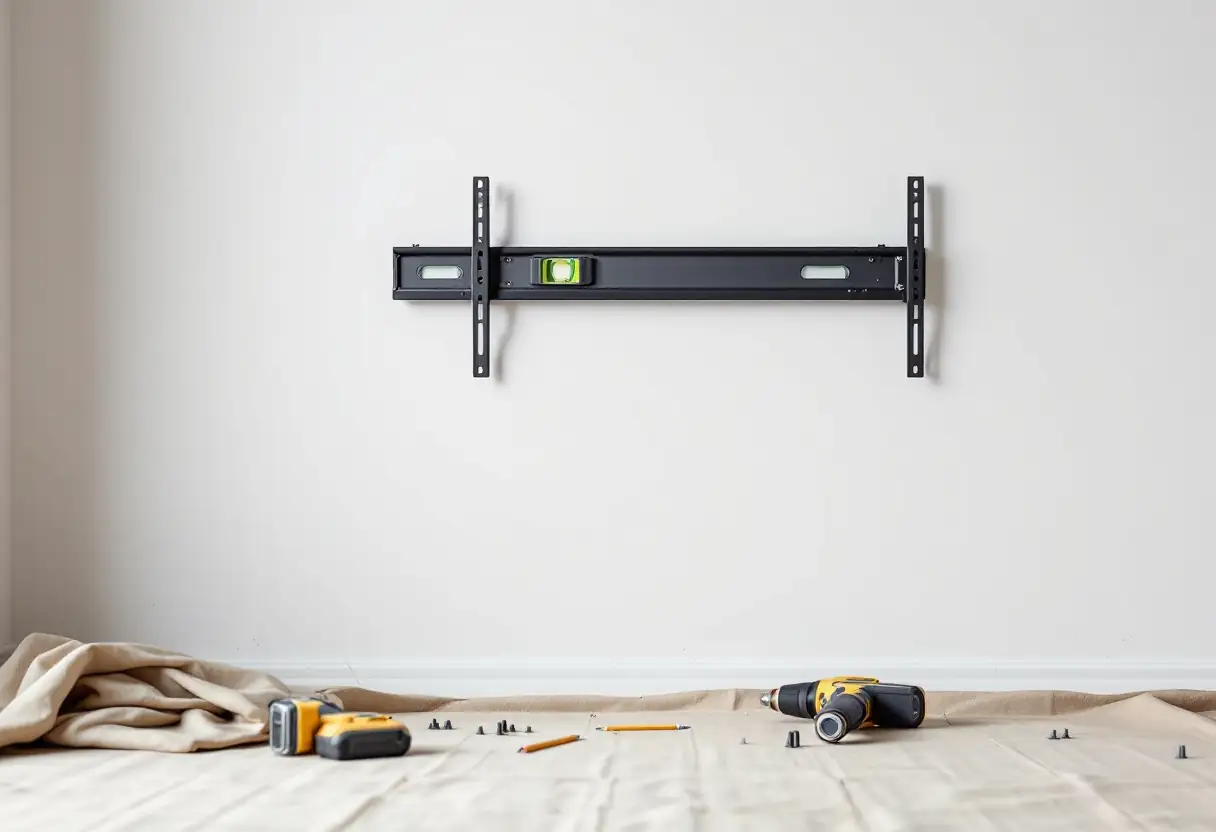
Thin does not mean flush. OLED panels are famously slim across most of their area, with the electronics in a thicker section low down. That lower box is what the bracket has to clear, and it is why an OLED can sit further off the wall than a chunkier LCD on the same slim bracket. If a flush look matters, the bracket and the panel need to be chosen together rather than one after the other.
Weight varies more than size suggests. Check the bracket's rating against the actual mass of the panel. The VESA mounting interface overview covers a very wide range of screen sizes and loads in one standard, so a bracket being "VESA compatible" tells you the hole pattern fits, not that it will hold your television.
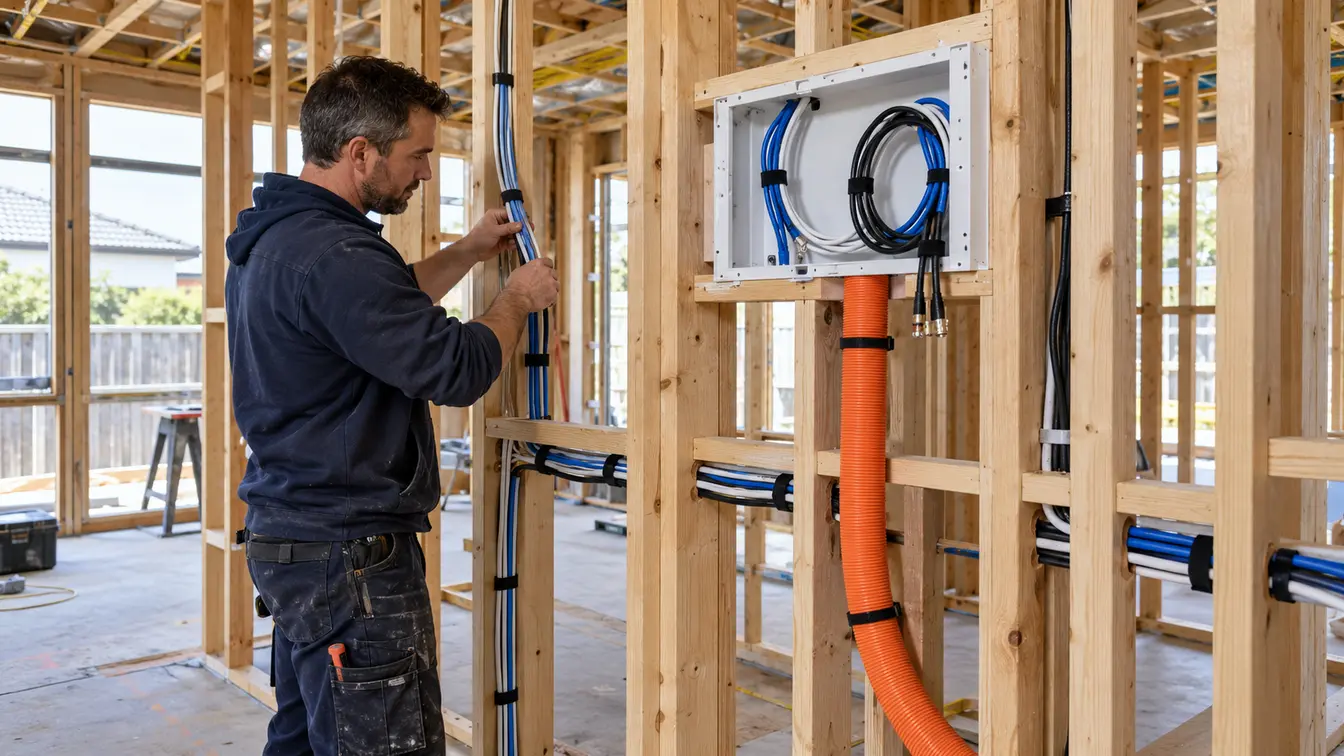
Separate connection boxes change the cable plan. Several premium models put the inputs in an external box connected by a single proprietary cable. It is a tidy idea and it changes the job: that cable has a fixed length, it may not be replaceable, and the box has to live somewhere ventilated and reachable. Plan it with the rest of the run. Our guide to hiding TV cables when wall mounting covers where the openings go.
Recesses and fireplaces need air. Every one of these panels puts out heat, and a niche built to hide the television usually traps it. Above a working fireplace the problem is worse and comes from below. If the plan is a recess, it needs clearance and a path for air, decided before the plasterer arrives rather than afterwards.
None of this rules a panel in or out. It changes the bracket, the openings and sometimes the height, and getting the height right still matters more than any of it.
Burn-in, honestly
This is the first question we are asked about OLED and the answers online are unhelpfully split between "never happens" and "do not risk it".
The honest position is that the risk is real, specific and largely managed. It comes from genuinely static bright elements left on screen for very long periods: a channel logo in the corner all day, a news ticker, a game's heads-up display, a dashboard in a shop window. Ordinary mixed viewing is not the case that causes it.
Manufacturers take it seriously enough to build countermeasures in. LG's OLED reliability page describes screen shift that moves a static image slightly, logo luminance adjustment that dims detected on-screen logos, a screen saver that appears when a still image sits there, and a pixel refresher that runs after long cumulative use.
Where we would still steer away from OLED: a television left on one news channel all day, a screen used mainly as a games console monitor with a fixed interface, and anything commercial that displays a static layout during trading hours. Everywhere else, buy the OLED and stop worrying.
Side by side
| OLED | QLED | Mini-LED | |
|---|---|---|---|
| Bright room | Adequate | Good | Best |
| Dark room | Best | Fair | Good |
| Seats off to the side | Holds up | Falls away | Falls away |
| Static content all day | Avoid | No issue | No issue |
| Cost for a given size | Highest | Lowest | Between |
Read down the columns rather than across, and the pattern is that there is no winner: only a room.
What we would put where
Open-plan living with a wall of glass. Mini-LED, mounted where it is not fighting a window, and a tilt bracket if the only wall is a bright one.
Dedicated theatre room, controlled light. OLED, every time, and worth spending the difference. It is also the room where calibration repays the most, because a panel with that much control benefits from being set correctly.
Family lounge, one couch, mixed viewing. A good QLED, with the money saved put into the sound. A television with a soundbar beats a dearer television with its own speakers, comfortably.
Bedroom. Whatever fits the wall and the budget. Viewing distances are short, ambient light is low, and the panel argument barely registers.
Shop, office or reception. LCD-based, without exception. Static layouts and long trading hours are precisely the case OLED does not suit.
Frequently asked questions
Is OLED worth the extra money?
In a room you can darken, yes, and the difference is obvious. In a bright open-plan area you are paying for an advantage the daylight cancels.
Does the panel type change the bracket I need?
It changes the fit rather than the type. Weight, the depth of the panel's lower section and the position of the sockets all decide how flush it will sit, so the two get chosen together.
Will a Mini-LED look as good as an OLED at night?
Close, and much closer than a plain QLED. Look for blooming: a faint halo around bright objects on a dark background, which is the zones being larger than the object they are lighting.
Can I put an OLED above a fireplace?
You can, and heat is the reason to be careful rather than the panel type. Check the clearance above a working fire, and remember the viewing height problem is the bigger one. We work through both in can you mount a TV above a fireplace.
How long will each last?
All three outlive their usefulness in practice. Televisions get replaced because something newer arrives, not because they fail. Brightness declines slowly on every technology.
The useful version of this comparison is not which panel wins, but which room you have. We mount every one of these across Melbourne and the Mornington Peninsula, and we would rather look at your wall, your windows and where the couch sits before anyone spends money. Have a look at our TV wall mounting page, or book a free onsite quote and we will work it out in the room.