In most Melbourne unit blocks you do not need your own antenna, because the building already has one. There is a shared antenna on the roof feeding every apartment through a network of cabling, and when reception is poor in one unit the fault is usually somewhere in that system rather than in your living room.
What makes apartments different is not the technology. It is that most of the system is not yours. Here is how to work out what you have, what is your responsibility and what is the building's, and what to do when the answer is "neither of us has ever looked at it".
The short answer
- If there is a coaxial wall point in the unit, the building almost certainly has a shared antenna system.
- The antenna, the equipment it feeds and the cabling in the risers are common property.
- Whole-building faults are the owners corporation's to fix. Faults inside your lot are yours.
- You generally cannot put your own antenna on the roof, and often not on the balcony either.
- Where there is genuinely no feed, an indoor antenna or the broadcasters' apps are the realistic options.
Start at the wall point
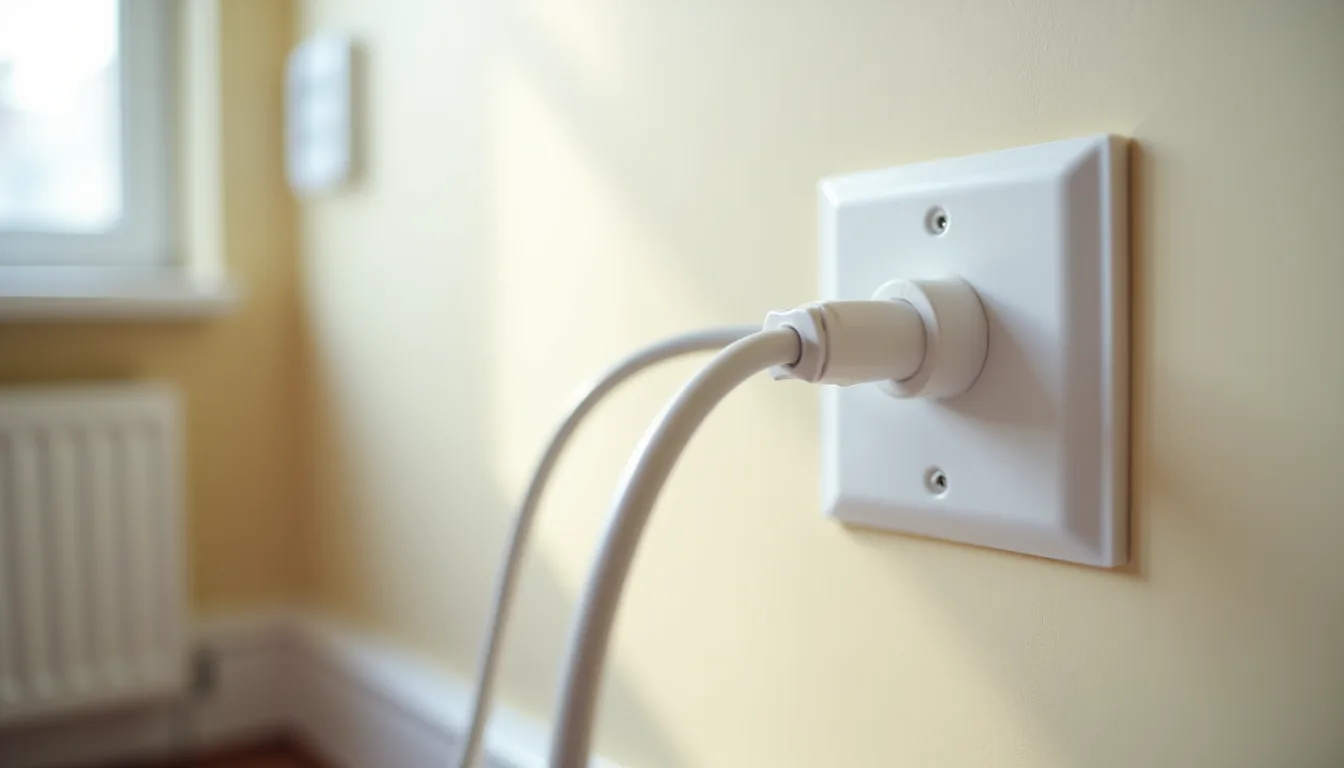
The socket in your wall answers the first question. A coaxial outlet means the building was built or retrofitted with a shared antenna system, and something upstream is meant to be feeding it.
Before assuming the building is at fault, rule out the easy things. Try a different aerial lead, since the flimsy one that came with the television is a common failure. Run a full retune rather than trusting the channel list. Try the television on another outlet if the unit has two. Our checklist for a TV showing no signal works through that order, and it applies in a unit exactly as it does in a house.
Then ask a neighbour. This is the single most useful diagnostic step in an apartment and it costs nothing. If several units have the same trouble, the problem is upstream and it is a building matter. If yours is the only one, the problem is between your wall point and your television, or in that outlet itself.
How a shared antenna system works
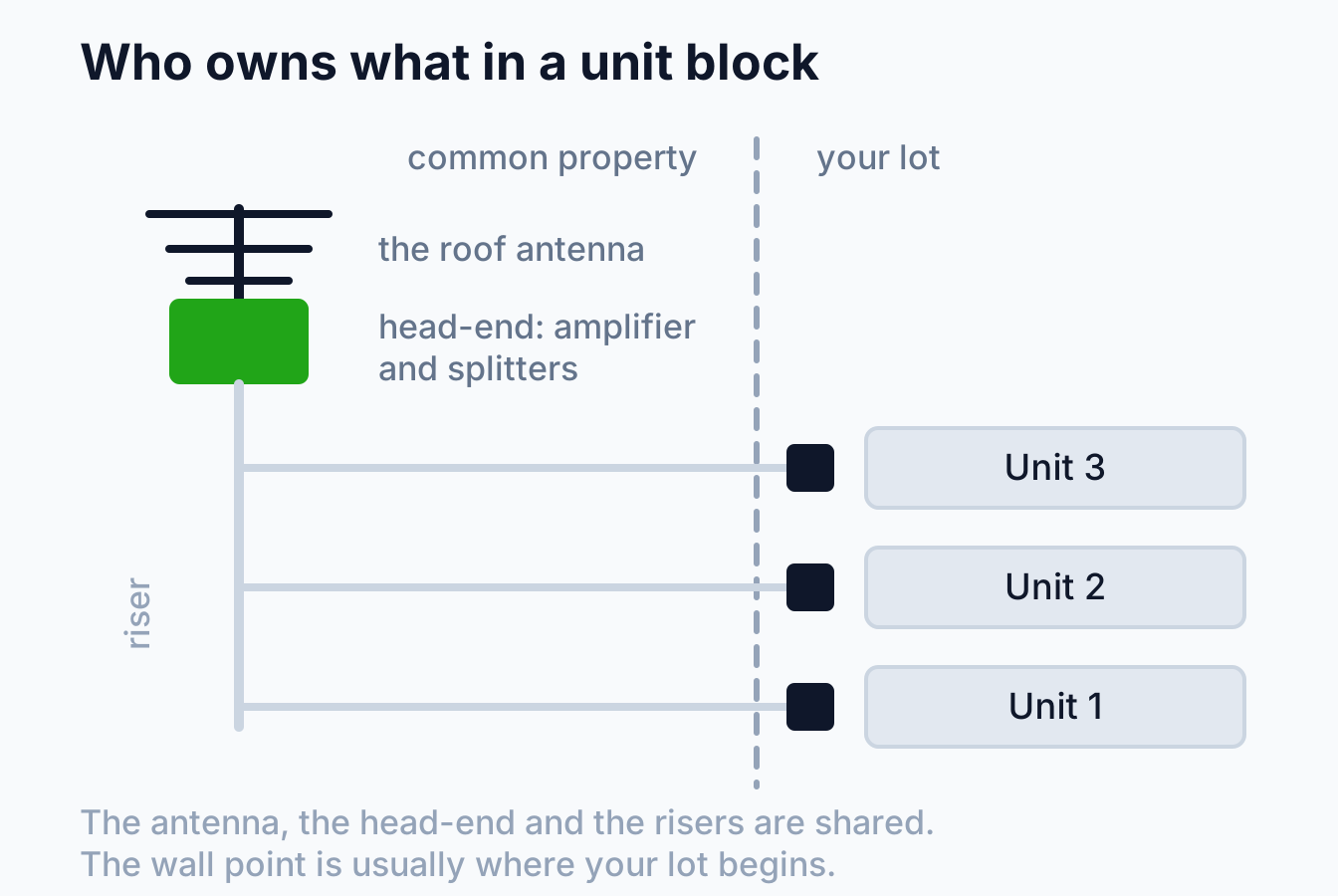
The arrangement is the same in a six-unit block in Brunswick and a forty-storey tower in Southbank, only the scale changes.
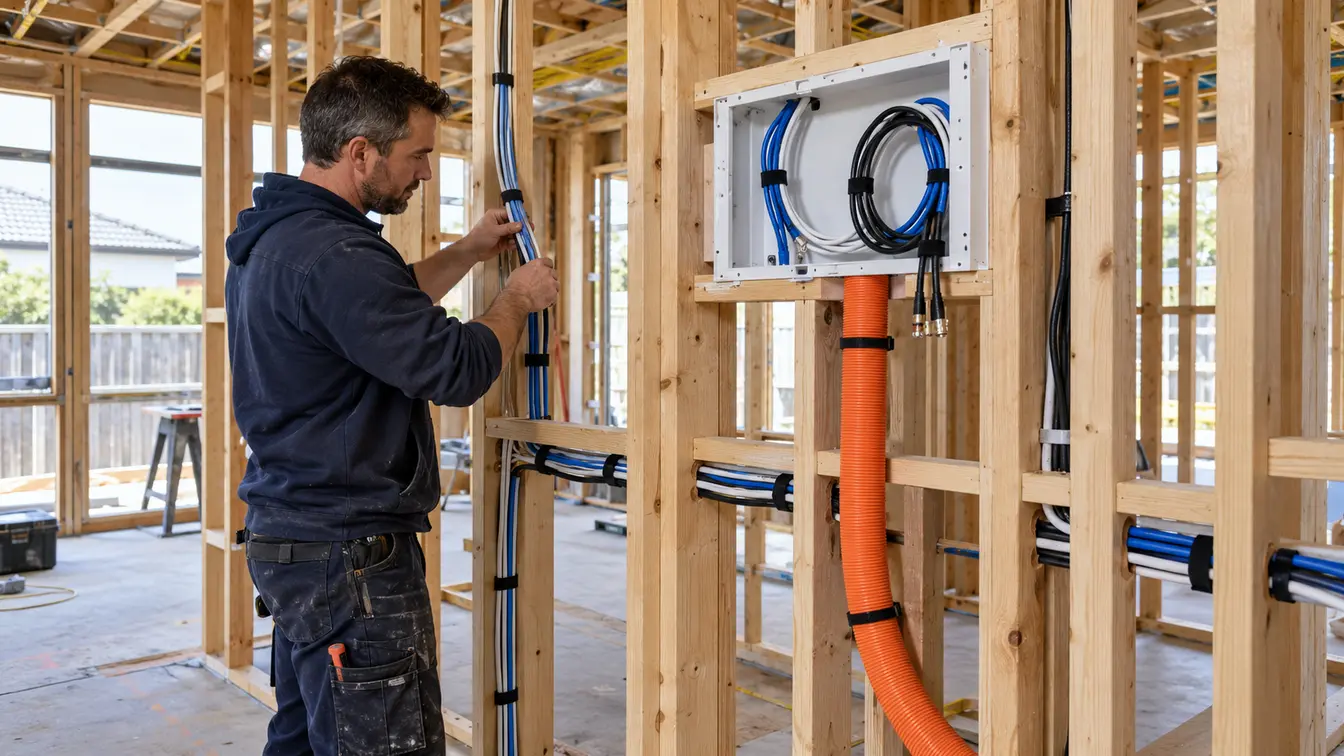
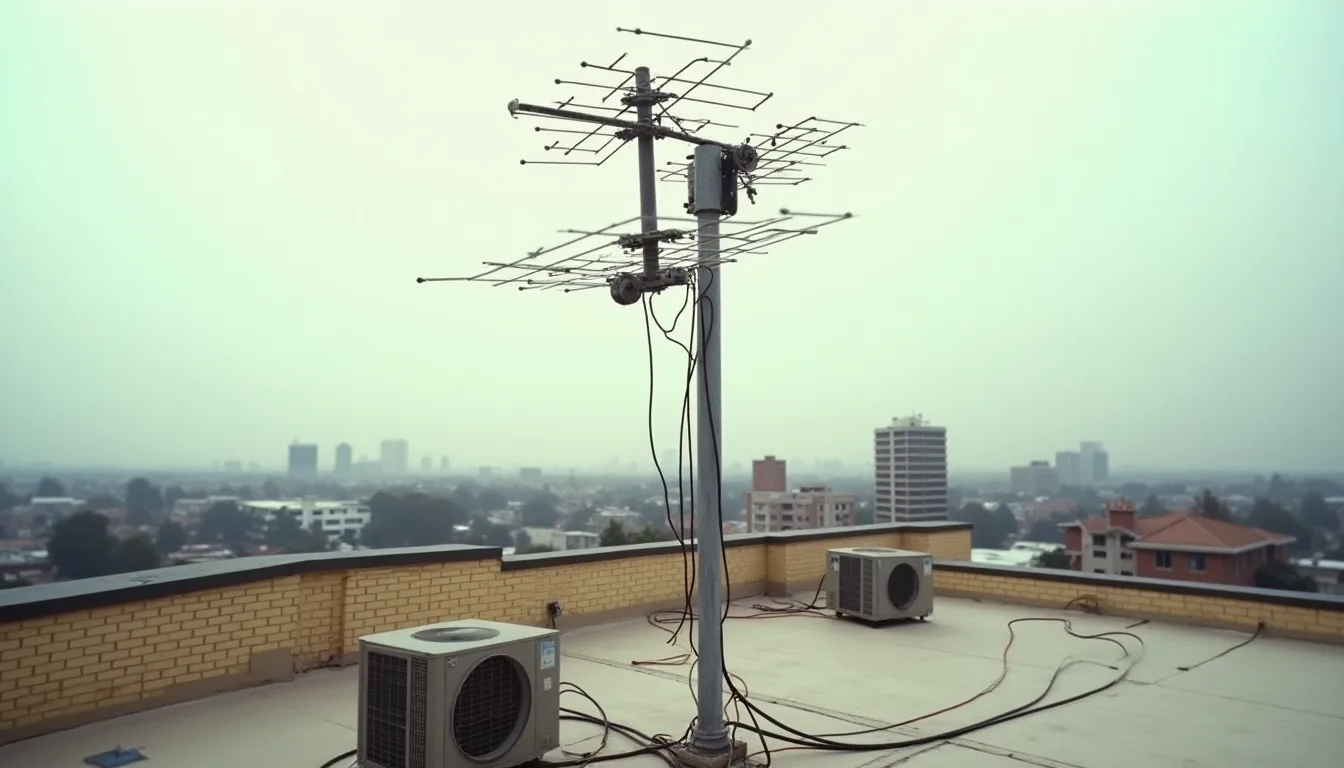
One antenna on the roof feeds a head-end: an amplifier and splitters, usually in a locked cupboard or a plant room. From there a riser carries the signal through the building, branching off to each unit's wall point. Everything is shared until it reaches your outlet.
That design is why these systems fail the way they do. Every split reduces what reaches each outlet, so the whole thing depends on the head-end amplification being right for the number of units. Add outlets over the years without reworking the distribution, or let a twenty-year-old amplifier drift, and the units at the end of the run start dropping out first. The same principles apply as in a house, only multiplied. We cover them in our guide to TV antenna amplifiers.
It is also why "the antenna must need replacing" is usually wrong. The antenna is the one part that rarely fails on its own.
Who owns what, and who pays
This is the part that decides how the problem gets solved, and it is worth understanding before you ring anybody.
The shared antenna, the head-end equipment and the cabling running through the building are common property. Consumer Affairs Victoria is clear about who looks after that: an owners corporation must repair and maintain the common property. A degraded shared antenna system is maintenance, and the cost is shared through the owners corporation rather than paid by whichever owner complained.
Inside your own lot the position reverses. The outlet plate, anything you have added behind it, your leads and your television are yours, and so is the cost of sorting them out. Where the boundary falls exactly is set by the plan of subdivision rather than by common sense, and Consumer Affairs Victoria's guidance on maintaining and renovating individual lots is the place to start if you need certainty.
In practice the sequence that works is: rule out your own end, ask a neighbour, then report it to the owners corporation manager in writing. Ask for the system to be tested rather than for a specific repair, because the fault may not be where anyone assumes. A written report with signal readings at the wall points is what turns "the TV is bad in unit 12" into a job the committee can act on.
What you can and cannot install
The instinct when reception is poor is to put up your own antenna. In a unit block that is usually not available to you.
The roof is common property, and installing anything on it needs the owners corporation's approval. Balconies are more complicated than people expect: many are common property that the lot owner has exclusive use of, and rules commonly restrict what can be fixed to the walls or visible from outside. Drilling through an external or party wall raises separate issues again, since those walls may be structural or fire-rated.
None of that means the answer is no. It means the answer comes from the owners corporation rather than from a hardware shop, and asking first is considerably cheaper than removing an installation later.
Renters have a further layer, and it is not the one people assume. The landlord's permission does not override the building's rules. For the tenancy side, Consumer Affairs Victoria sets out what a rental provider can and cannot refuse when a renter wants to make changes to the property. If the unit has a working wall point, though, none of this arises: you plug in and retune.
If there is no feed at all
Some older blocks, and some conversions, have no shared system or have one that was abandoned years ago. Three options are worth weighing.
Ask the owners corporation to reinstate it. Slower than you want, but it is the answer that fixes it for everyone and spreads the cost. A quote and a short written case help more than a complaint does.
An indoor antenna. Apartments are the one setting where these genuinely work: high up, close to the transmitter, with a window facing the right way. They are also the setting where they most often disappoint, and the difference is location rather than the price of the antenna. Our comparison of indoor versus outdoor antennas is honest about which is which.
Skip broadcast entirely. Every free-to-air network runs its own app, and for a household that mostly streams this is a reasonable answer rather than a defeat. What you give up is live sport arriving first and a service that keeps working when the internet does not, which we set out in do smart TVs still need an antenna.
Why inner-city reception is its own problem
Height is not the advantage people expect. A high apartment with a clear view can receive beautifully, but a unit surrounded by towers often receives the same broadcast twice, once directly and once bounced off a neighbouring building a fraction later. That is multipath, and it produces a picture that breaks into blocks while the signal meter still reads plenty of strength.
More gain makes multipath worse rather than better, because the reflection gets amplified along with the original. The fix is directional: an antenna aimed to favour the direct path and reject the reflection, which on a shared system is a job at the roof rather than in your unit. The symptoms are the ones we describe in why a TV signal breaks up or pixelates.
Before any of that, it is worth checking what your address is predicted to receive at all. The mySwitch tool takes an address and returns the expected reception and the transmitter serving it, which is a useful sanity check when a building's system has never worked properly.
What we actually do on an apartment callout
We meter the wall point first, because the numbers decide everything that follows. Level and quality at the outlet tell us immediately whether the unit is being fed properly, and comparing two outlets in the same unit, or the same unit against a neighbour's, isolates where the loss is happening.
If the readings at the outlet are good, the work is inside the unit and we can finish it there. If they are poor and consistent across several units, we write it up for the owners corporation with the readings attached, including access to the head-end, which usually needs to be arranged through the manager rather than found on the day.
The honest part: in a building where nobody has been into the head-end cupboard for fifteen years, the first visit is often diagnosis rather than repair. That is still the visit that gets the problem moving.
Frequently asked questions
Can I put an antenna on my balcony?
Sometimes, with permission. Balcony rules vary between buildings and many restrict anything fixed to a wall or visible from the street, so check the owners corporation rules before buying hardware.
Who pays when the building's system fails?
The owners corporation, because the shared system is common property and maintaining it is its responsibility. Costs are shared through the corporation rather than borne by one owner.
My reception is bad but my neighbour's is fine. Whose problem is it?
Almost certainly yours, and usually a cheap fix: a lead, an outlet, a splitter someone added, or a retune. That is the case where calling us directly makes sense.
Does an amplifier in my unit help?
Rarely, and it can make things worse. If the signal arriving at your outlet is weak because the building's distribution is undersized, boosting it in your lounge amplifies the noise with it.
I am renting. What can I actually do?
Everything that does not involve permanent changes: leads, retuning, an indoor antenna, a set-top box. Anything fixed to the building needs both the rental provider and the owners corporation on side.
Apartments are the jobs where the technical fault is usually simple and the ownership question is not, so it is worth knowing which one you have before spending money. We work on units and unit blocks across Melbourne and the Mornington Peninsula, from a single outlet in one apartment to a whole building's distribution, and we are happy to test and write it up for a committee. Have a look at our TV antenna installation page, or book a free onsite quote and we will start at your wall point.