The soundbar is the easy half of the job, right up until you notice that almost everything about it was decided by the television that is already on the wall.
How much room it has, whether it blocks the remote, whether it can be mounted at all, and whether an up-firing bar has anywhere to fire. All of that is set by the screen height, which is why the bar belongs in the conversation before the bracket goes up rather than after.
The short answer
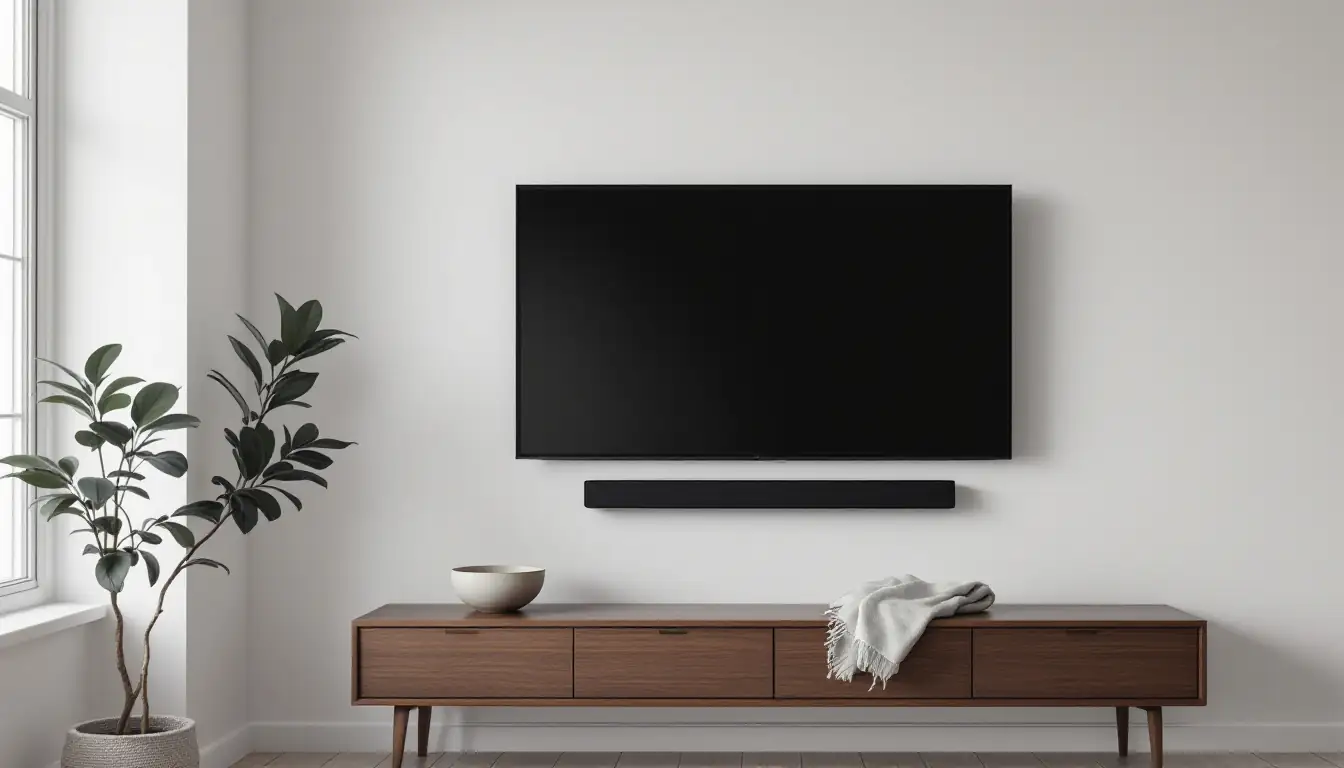
- Centre the bar on the screen, not on the wall or the furniture.
- Leave clear air between the two. A bar tucked hard under the panel usually blocks the remote sensor.
- Three honest ways to hold it up: its own wall bracket, a bracket hung off the television, or a shelf.
- An up-firing Atmos bar needs an open path to the ceiling. A shelf or a recess above it undoes the point of buying one.
- Decide all of this before the screen height is fixed, because afterwards it is new holes.
Three ways to hold it up
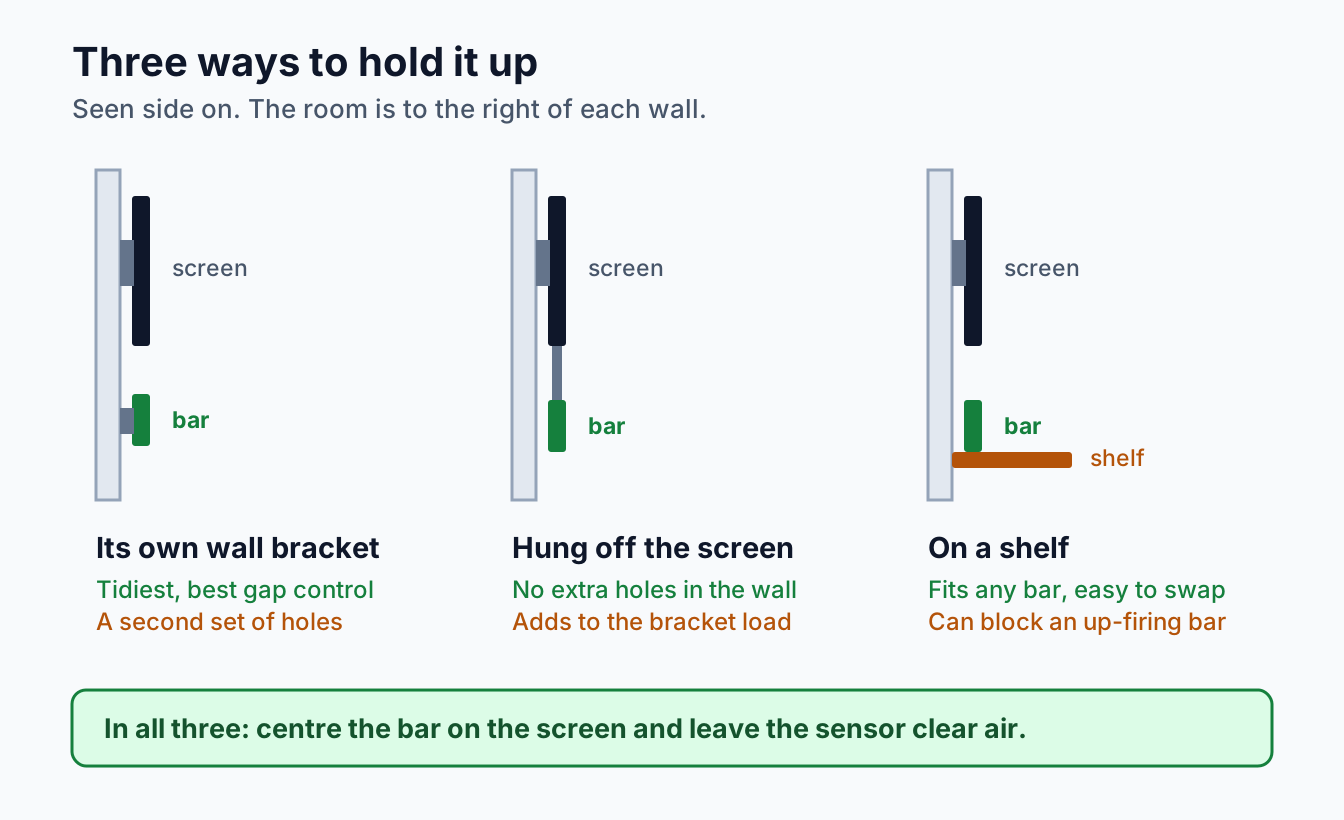
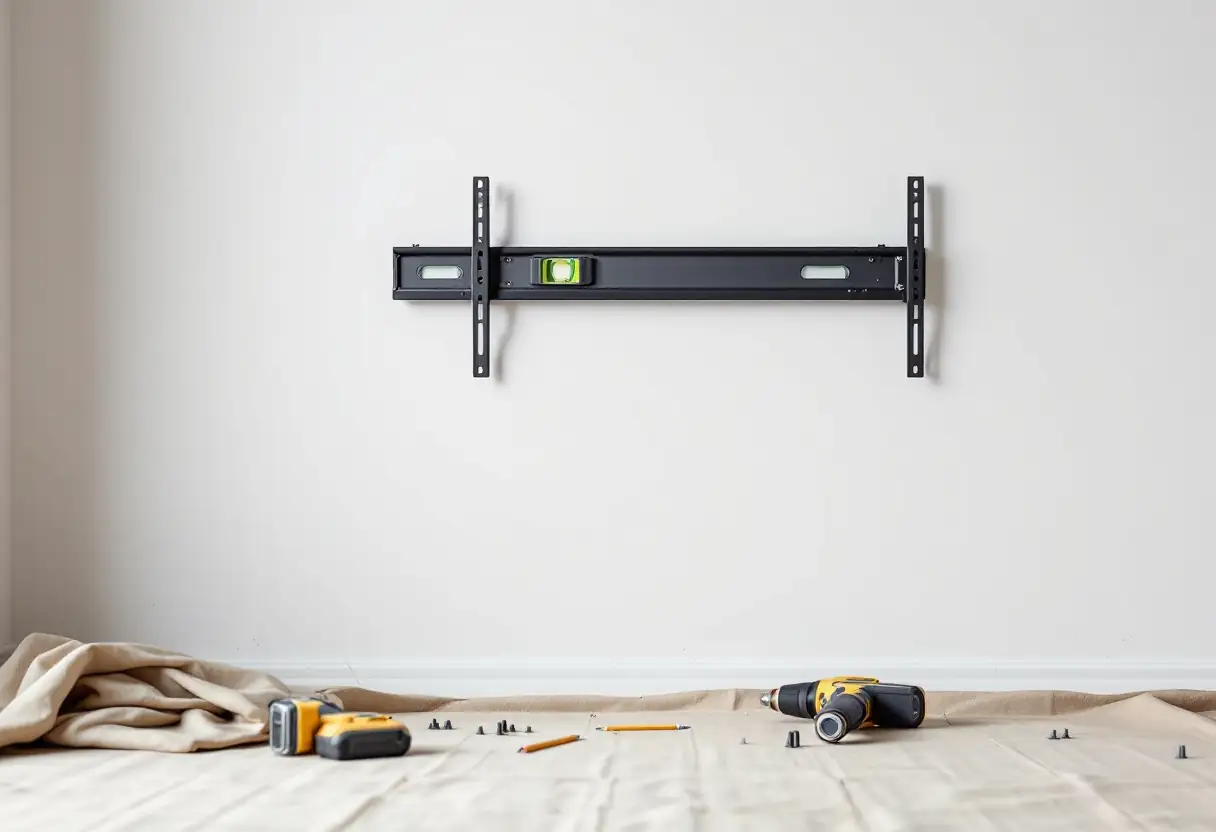
Its own wall bracket. Most bars ship with one, or with keyhole slots in the back. Fixed straight to the wall, independent of the television. It gives the tidiest result and the most control over the gap, and it means two sets of holes in the wall rather than one.
A soundbar is light enough that the fixing conversation is genuinely different from the television's. Hollow wall anchors, which are not remotely adequate for a screen, are usually fine for a bar. We go through where that line sits in mounting on plasterboard.
A bracket hung off the television. An arm that bolts to the panel's own mounting holes and carries the bar under it. No extra holes, and the bar moves with the screen, which matters on a full-motion mount where the two would otherwise part company. The cost is that the load now goes through the television's bracket and its fixings, which is worth checking against the numbers rather than assuming, as we cover in what a load rating really means.
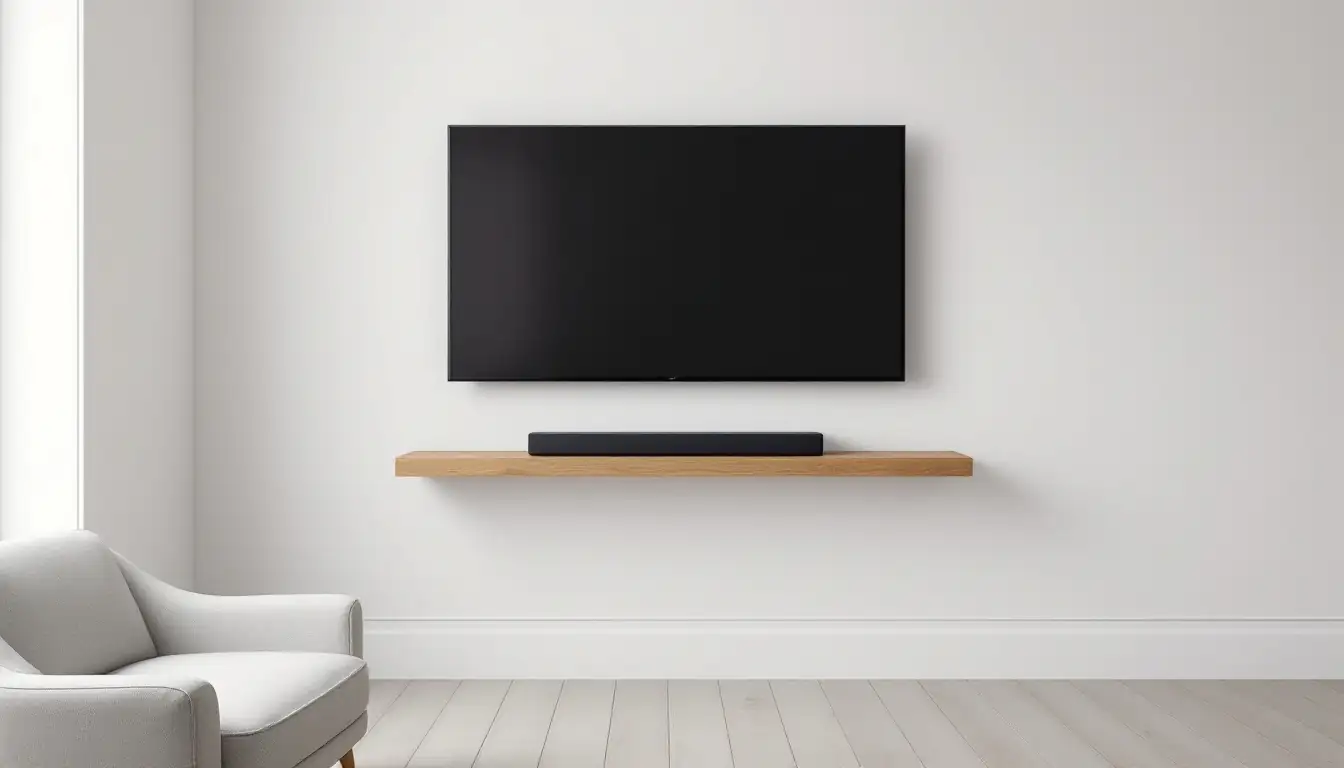
A shelf. A floating shelf below the screen, with the bar sitting on it. Suits any bar regardless of what it shipped with, takes no fixings in the bar itself, and is the easiest to change later when the bar does. It uses more wall, it puts a horizontal line under the screen that has to look deliberate, and it is the one option that can genuinely spoil an up-firing bar.
The gap, which is not only cosmetic
A soundbar under a panel looks right when the gap is even and deliberate, and like an afterthought when it is not. That much is taste. The rest is not.
It can block the remote sensor. Most televisions put their infrared receiver in the centre of the bottom edge, which is exactly where a soundbar goes. Push the bar up tight and the remote starts needing to be aimed, or stops working from the couch entirely. This is the single most common complaint we hear about a bar that somebody fitted themselves.
It can clip the picture. On a low-profile mount the bottom bezel sits close to the wall, and a tall bar in front of it eats the bottom of the image from a low seated position.
It affects the sound. A bar jammed against a panel has a reflective surface right behind and above it. Not ruinous, but a little air is better than none.
The test takes a minute. Sit where you actually watch, have somebody hold the bar where you are considering putting it, and try the remote. If it needs aiming, drop the bar. Our guide to mounting height covers the screen side of the same decision.
If the geometry will not give you the room, an infrared repeater moves the sensor somewhere the bar is not. It works, but it is a second box and a second power supply, so it is a fix rather than a plan.
Up-firing bars need somewhere to fire
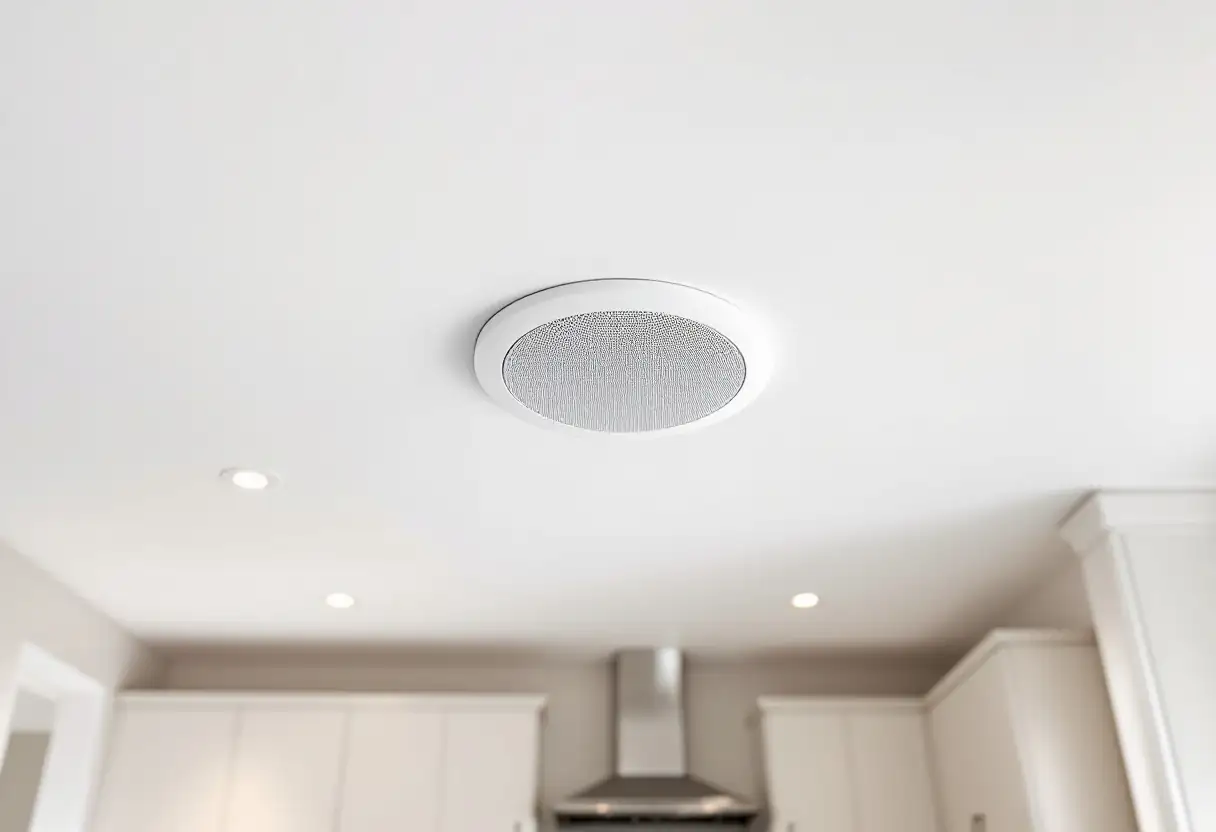
A bar with Atmos height channels works by bouncing sound off your ceiling. Dolby's own setup guide for soundbars is blunt about the requirement: the upward-firing drivers must have clear line of sight to the ceiling.
Two things close it. A shelf with a cabinet, mantel or shelf above the bar puts a lid on the up-firing drivers. And tilting the bar, which people do to aim it at the couch, points the height drivers at the wall instead of the ceiling.
The ceiling matters too. Dolby asks for a flat one rather than vaulted or raked, in a reflective material rather than acoustic tile, and nominates roughly 2.3 to 3.7 metres as the height that works best. Plenty of Melbourne rooms sit inside that without anyone thinking about it, and a period house with three and a half metre ceilings is at the edge of it.
So keep the bar level, keep the air above it open, and know what the ceiling will give you. None of that is a reason to avoid an up-firing bar. It is a reason not to put one under a shelf. What the height channels are doing is in our guide to speaker placement.
Cables and power
A soundbar needs two things: one cable to the television and its own power.
The cable is a single HDMI in almost every modern case, and which socket it goes to matters more than people expect. We work through that in HDMI ARC, eARC and optical, and it is worth settling before anything is concealed rather than after.
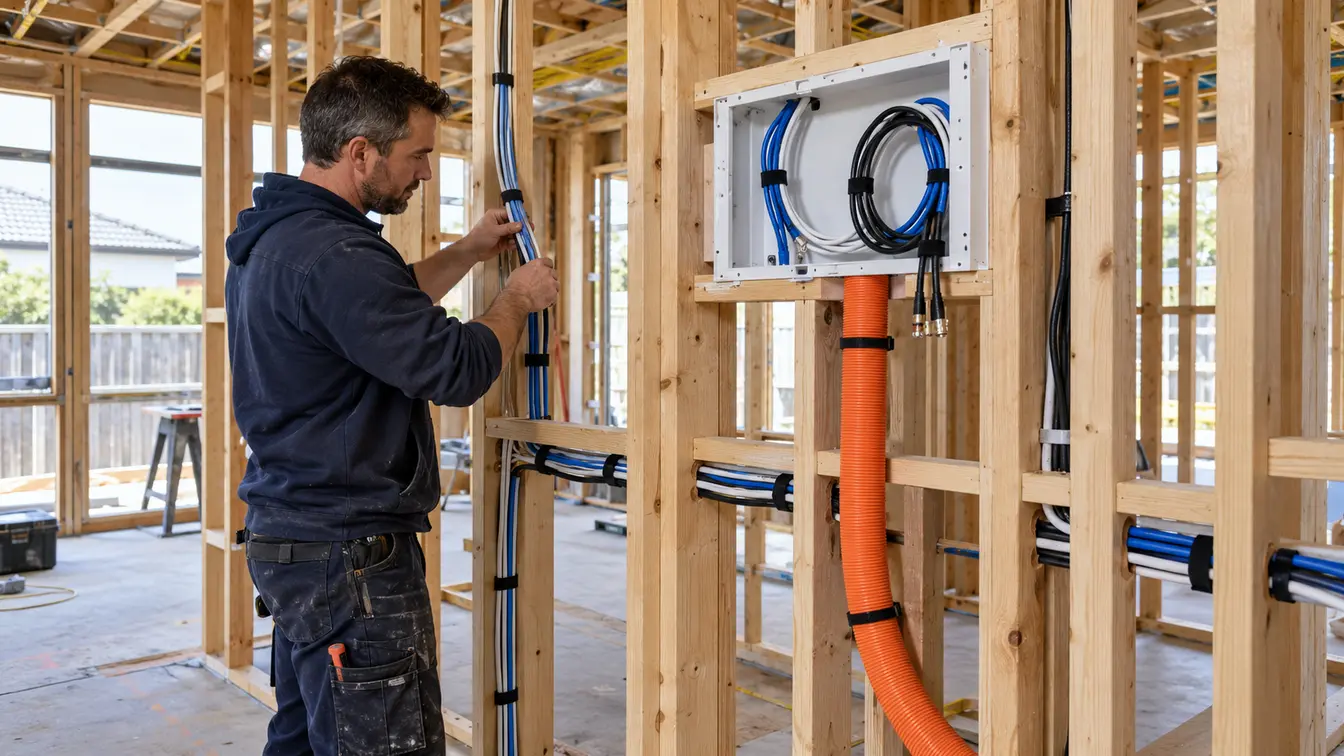
Power is the one people forget. The bar needs an outlet of its own, and if it is going on the wall, that outlet wants to be behind it rather than at the skirting with a lead hanging down. A new one is electrical work, which we cover in recessed power points behind a TV. Concealing the run is in hiding cables behind a wall-mounted screen.
Getting the order right
This is short and it saves the most trouble.
Decide whether a bar is going under the screen, and roughly which one, before the television height is set. Set the height with the bar accounted for, mount the television, then mount the bar to the screen rather than to the room, centred on the panel and level to it.
The other way round means the bar arrives, the gap is wrong, and fixing it means moving a television already on the wall. Still weighing a bar against separates? That belongs before all of this, in soundbar versus 5.1 and 7.1.
Frequently asked questions
How far below the TV should a soundbar go?
Far enough to clear the remote sensor and to look deliberate, which usually means a visible, even gap rather than tucking it hard underneath. There is no universal figure because bar heights and bottom bezels differ. Test the remote from your seat before you drill.
Can I mount a soundbar to the TV itself?
Yes, with a bracket that bolts to the television's own mounting holes. It is the neatest answer on a full-motion mount because the bar travels with the screen. Check the combined weight against the television bracket's rating rather than assuming there is room in it.
My remote stopped working after I fitted the soundbar. Why?
The bar is almost certainly sitting in front of the television's infrared receiver, which is usually centred on the bottom edge. Lower the bar if you can. If the geometry will not allow it, an infrared repeater relocates the sensor.
Does a soundbar need its own power point?
Yes. It is a separate appliance with its own supply, so a wall-mounted bar wants an outlet behind it rather than a lead running down to the skirting.
Can a soundbar go on a shelf instead?
Certainly, and it is the most flexible option. The exception is an up-firing Atmos bar, which needs open air above it, so a shelf with anything over it defeats the height channels you paid for.
Will hollow wall anchors hold a soundbar?
Usually, yes. A bar is a fraction of the weight of a television and it does not hang forward on a lever the way a screen does. That is the one place in this job where anchors are a reasonable answer, and it is not the television.
The bar itself takes twenty minutes. What takes the thinking is the gap, the sensor behind it and the ceiling above it, and all three are easier to get right before a television is on the wall than after. We mount screens and bars together across Melbourne, Bayside and the Mornington Peninsula, and we set the height with the bar in mind rather than discovering it later. Have a look at our home theatre installation page, or book a free onsite quote.