Yes, but not in the way most people expect. Distance does not decide whether you get a picture. It decides how much margin you have before something else takes it away, and that is a different problem with a different fix.
A house close to the transmitter can lose half its signal to a bad splitter and never notice. The same fault forty kilometres out puts the picture on the floor. Here is what distance actually does, and what genuinely helps at the far edge.
The short answer
- Distance weakens the signal, but on its own it rarely stops reception outright.
- What it removes is headroom. Far out, small faults that a close-in house shrugs off become the whole problem.
- Coverage predictions assume an antenna 10 metres above the ground. Your roof is probably not 10 metres.
- Height usually buys you more than a bigger antenna does.
- Two houses the same distance out can behave completely differently, and that is terrain and trees rather than distance.
What distance actually does
Radio spreads out as it travels, so the further you are from the transmitter the less of it arrives at your roof. That much is obvious. What is less obvious is how a digital signal behaves as it weakens.
Analogue used to fade: snow, then more snow, degrading in step with the signal. Digital does not. It decodes perfectly until it cannot decode at all, so the useful question is not how strong the signal is but how far it is above the point where the television gives up. That is your margin, and distance is what quietly spends it.
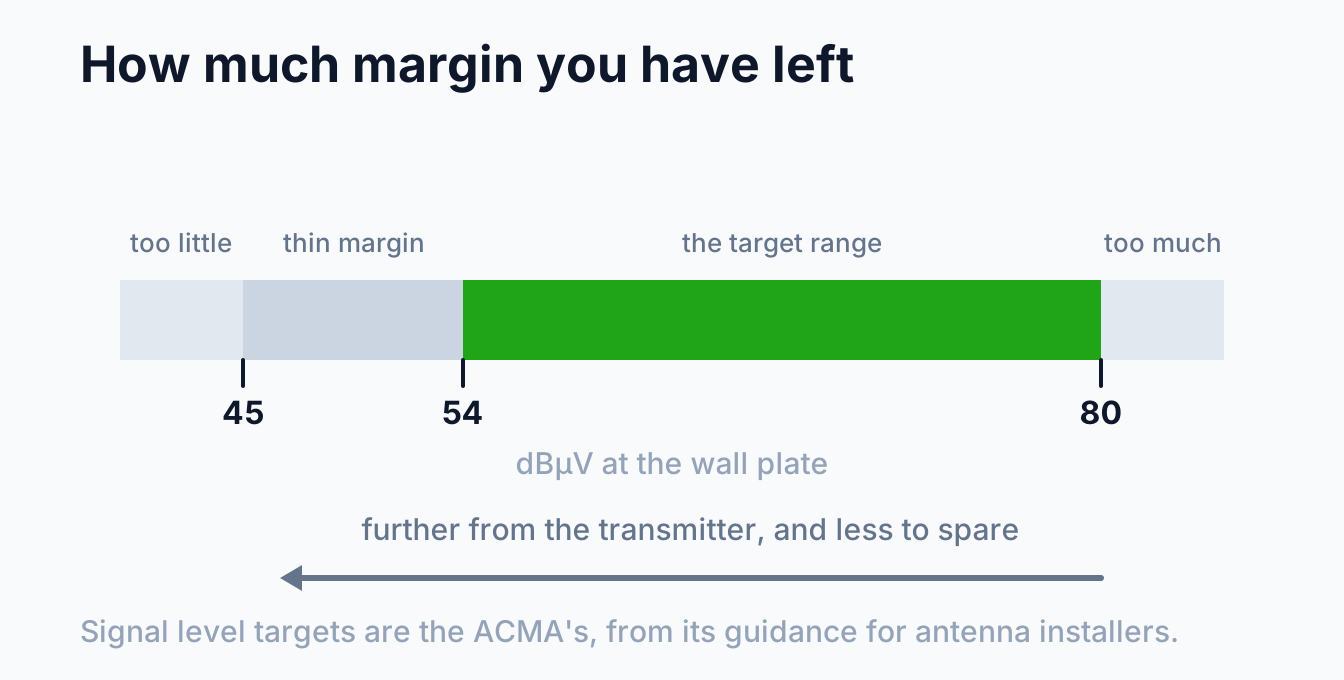
The ACMA's guidance for antenna installers puts a good signal level at the wall plate at around 54 dBµV, and says levels below 45 dBµV or above 80 dBµV are not suitable for TV reception. Those figures are why we meter rather than guess. A house sitting at 47 is working today and has almost nothing in reserve; a house at 60 can lose a good deal and still be fine.
Distance is what decides which of those two you are, before anyone touches the antenna.
Why the coverage map and your roof disagree
This is the part that catches people out, and it explains most of the "but the map says I am covered" conversations we have.
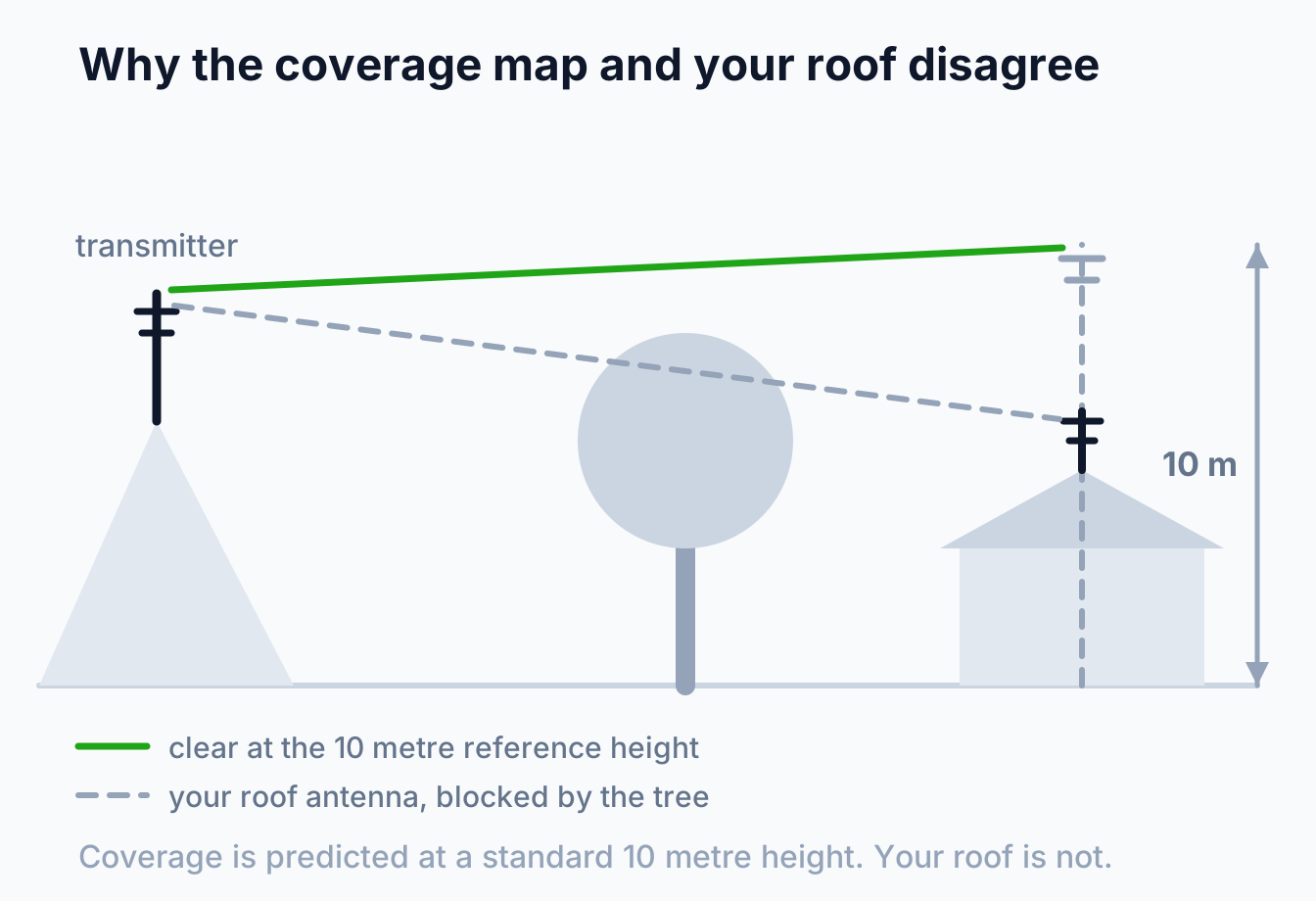
Coverage predictions are not made for your antenna. Field strength is measured and modelled at an internationally agreed height of 10 metres, because measurements at that height are statistically repeatable and comparable between sites. It is a sensible engineering convention and it is not a description of your house.
A typical roof antenna sits well below that. The map is telling you what a mast in your backyard would receive, while your antenna is a few metres lower and often behind exactly the tree the reference height would clear. Both things are true at once: the address is inside the coverage area, and the antenna on the roof cannot see the transmitter.
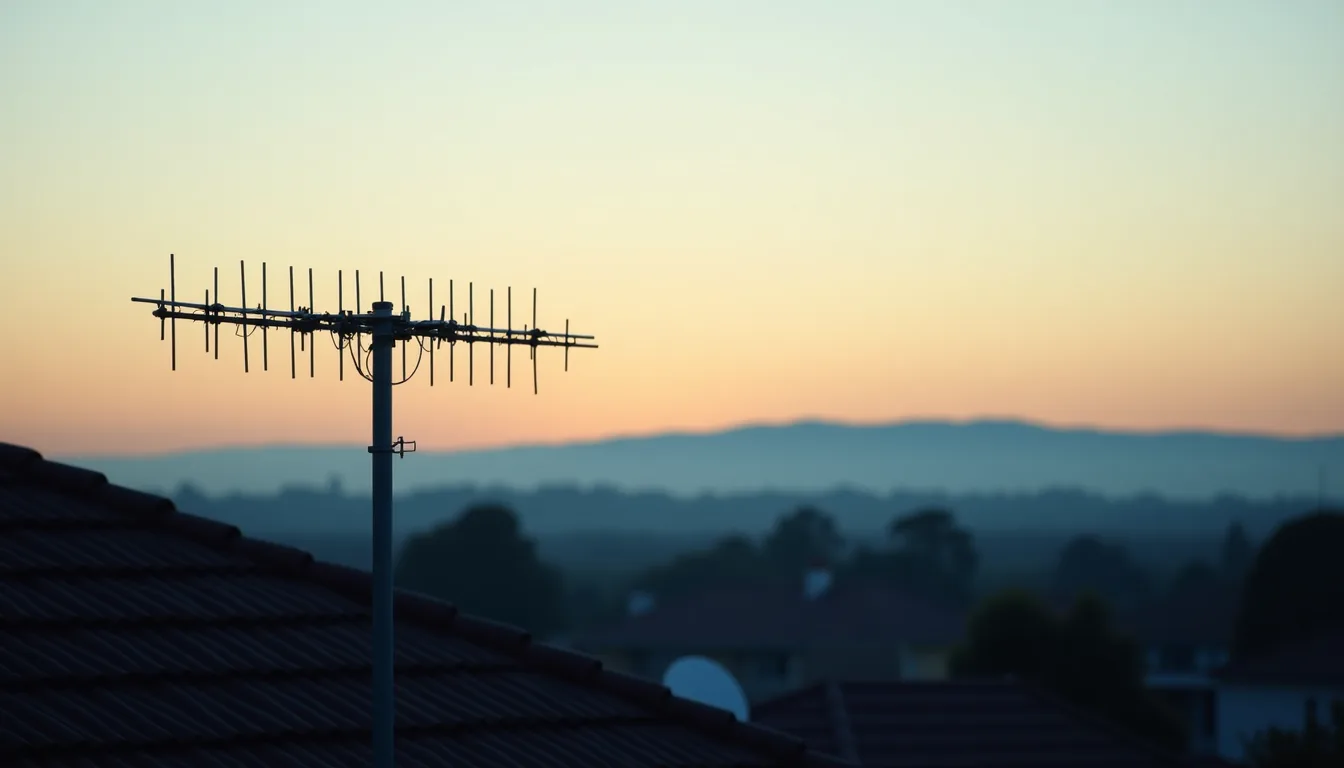
That gap is also the good news, because height is the cheapest lever you have. Adding a metre or two of mast changes what the antenna can see, and what it can see matters more than how much gain it has. A high-gain antenna pointed into a tree is still pointed into a tree.
It is also why two houses the same distance out can behave completely differently: one sits on the high side of a crest, one behind it, one has a clear line and one has a fifteen-year-old gum in the way. We cover those factors in what affects TV antenna reception in Melbourne and the harder parts of the city in Melbourne reception problems and blackspots. Distance sets the budget; the path spends it.
It is worth checking what your address is predicted to get. The mySwitch tool takes an address and returns the expected reception and the transmitter serving it. If you are weighing up whether to bother at all, we go through that in whether you still need an antenna for free-to-air.
What the reading at your wall plate means
If a technician has been out with a meter, this is how to read what they tell you.
| Reading | What it means | What it needs |
|---|---|---|
| Below 45 dBµV | Not suitable for reception, on the ACMA's own figures | Work at the front end: aim, height, antenna, cable and connectors |
| Around 45 to 54 | Above the floor but below the target, so it works until anything changes | Find the losses. This is where rain, a tree or an extra outlet tips it over |
| Around 54 | The level the ACMA describes as good | Nothing. Leave it alone |
| Above 80 dBµV | Too much, and the tuner can be overloaded by it | Reduce it rather than boost it, which is common close to a transmitter |
The middle row is where most of the far-out houses we visit sit, and it is why a household can tell us honestly that nothing changed and the reception got worse anyway. Nothing changed at the antenna. The margin ran out.
What actually helps when you are a long way out
In the order we work through it on site.
Aim it at the right transmitter, and verify it. The nearest transmitter is not always the one serving your address, and an antenna a few degrees off throws away signal it could have had for nothing. This is the most common fix in outer suburbs.
Height before gain. Getting the antenna above the roofline, the neighbour's build or the tree is worth more than a longer boom in the same bad position.
Match the antenna to the band you need. Australian television uses VHF and UHF, and the ACMA publishes the frequencies for each. A wideband antenna compromises across both, and on a marginal site an antenna suited to the band your services actually use is a real gain rather than a marketing one.
Fix the cable, not just the antenna. The ACMA recommends quad shield RG6 coaxial. Old, cheap or water-damaged cable loses more per metre and loses most at the higher frequencies, so UHF services fail first. A long run from a marginal antenna is the worst combination there is.
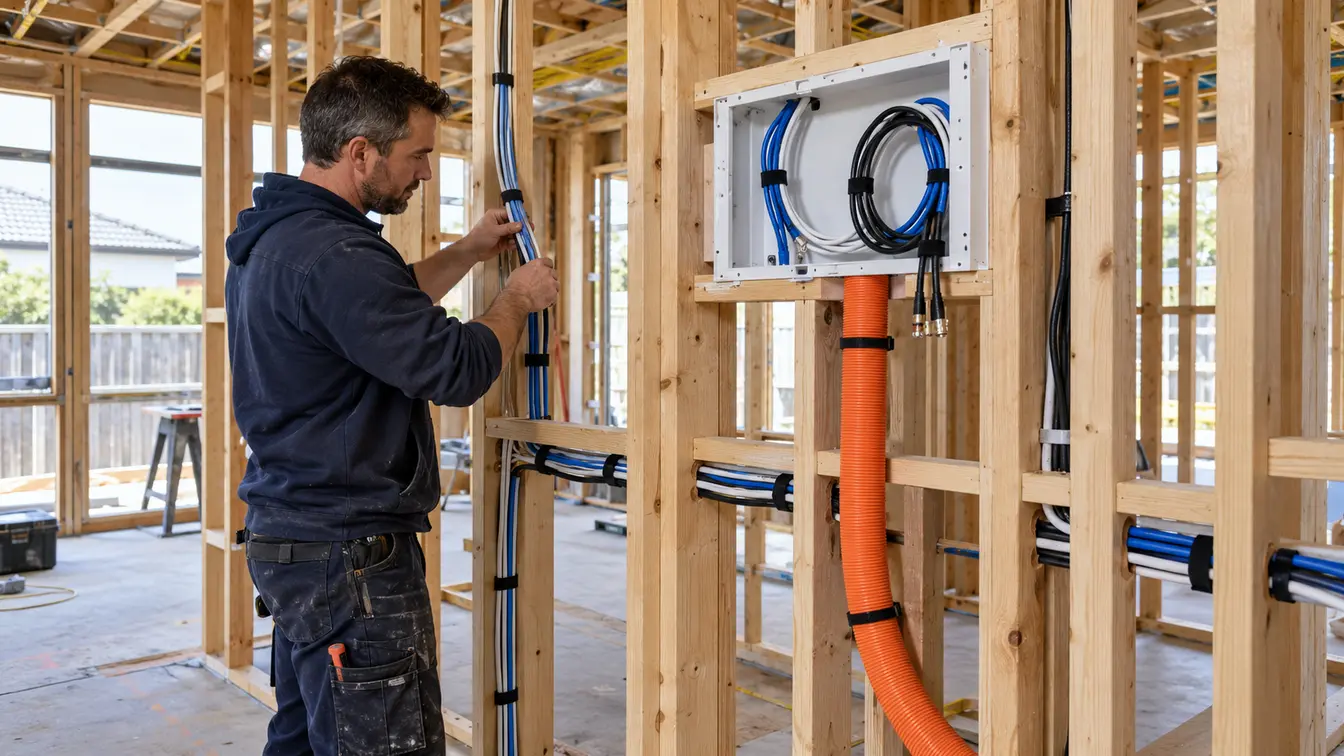
Stop dividing what little you have. Every split takes a share, survivable close in and decisive far out. Several outlets need distribution designed for the number, as we set out in running one antenna to several TVs.
Amplify only if the problem is loss. An amplifier puts back what cable and splitters took away. It cannot create signal that never arrived, and it raises the noise with everything else, which is why the ACMA is cautious about them. Our guide to when an amplifier helps covers the distinction.
If you are genuinely outside coverage, the answer is not a bigger antenna. The VAST satellite service exists for households terrestrial television cannot reach, and it is a better outcome than years of marginal reception.
When distance is not the problem
Most callouts where distance gets the blame turn out to be something at the house: a connector that has let water in, a splitter someone added, an antenna knocked out of line by wind, a television never properly retuned. Rule those out before spending on hardware, and most you can check yourself. Our checklist for a TV showing no signal works through them in order, and the pattern the picture makes when it fails is itself a clue, which we cover in why a TV signal breaks up or pixelates.
Frequently asked questions
How far can a TV antenna be from the transmitter?
There is no single number, and anyone who gives you one is guessing. It depends on the transmitter's power, the terrain in between, and how high your antenna is. mySwitch will tell you what your address is predicted to receive, which is more useful than a distance in kilometres.
Will a bigger antenna fix being a long way out?
Sometimes, and less often than people hope. A higher-gain antenna helps where the signal is simply weak and the path is clear. It does nothing about a ridge or a tree, and it narrows the beam, so aim matters more rather than less.
Why does my neighbour get better reception than me?
Because you are not on the same path, even at the same distance. A metre of height, a different roof pitch, one tree and a better set of connectors will separate two houses on the same street completely.
Does rain make it worse if I am a long way out?
It can, and the reason is usually foliage rather than the rain itself. Wet leaves absorb far more signal than dry ones, so a marginal path through a tree that works in January stops working in July. Weather-dependent reception means you are living on the margin.
My address is outside the coverage area. What now?
Get it measured before accepting that: predictions are conservative and a well-placed antenna sometimes beats the model. If the reading confirms it, VAST is the proper answer rather than an ever-larger antenna.
Distance is a budget rather than a verdict. Far out you have less to spend, so the aim, the height, the cable and the number of outlets all have to be right, where a house close in can get away with any of them being wrong. We install and repair antennas across Melbourne and the Mornington Peninsula, and we take a reading on site rather than quoting from a map. Have a look at our TV antenna installation page, or book a free onsite quote and we will tell you what your roof is actually receiving.