One antenna can feed every television in the house. That is what antennas have always done, and there is nothing exotic about it. What decides whether it works is the plan: how many outlets the system was designed for, how the signal is divided, and whether the cabling runs the way it should.
Most of the multi-point systems we are called to were never planned at all. They grew (a point here in 2011, another when the study became a bedroom), and each addition quietly took a share from the rest. Here is how the job is done properly, whether you are adding one outlet or wiring a new house.
The short answer
- Decide every outlet you want before any cable is run, including the ones you want later.
- Run each outlet back to one central point. Do not loop cable from room to room.
- Four or more points usually wants a distribution amplifier rather than a plain splitter.
- Good coaxial and properly made connectors matter more than the brand of anything.
- Adding a point to a system with no margin left will degrade the outlets you already have.
Plan the outlets before the cable
The cheapest TV point you will ever install is one you run while the cable is already being pulled. The dearest is the one added three years later through a finished wall.
So the first conversation is about rooms rather than equipment. The lounge and the main bedroom are obvious. The ones people forget are the second bedroom that becomes a study, the rumpus room downstairs, the kitchen bench where the small screen ends up, and the alfresco area. A point outside counts against the same signal as every other, which is worth deciding before the wall is closed up rather than after, as our guide to outdoor TV installation sets out.
It costs very little to run a spare cable to a room while the roof space is open and leave it coiled and labelled. It costs a great deal to fish one through afterwards.
Star, not daisy chain
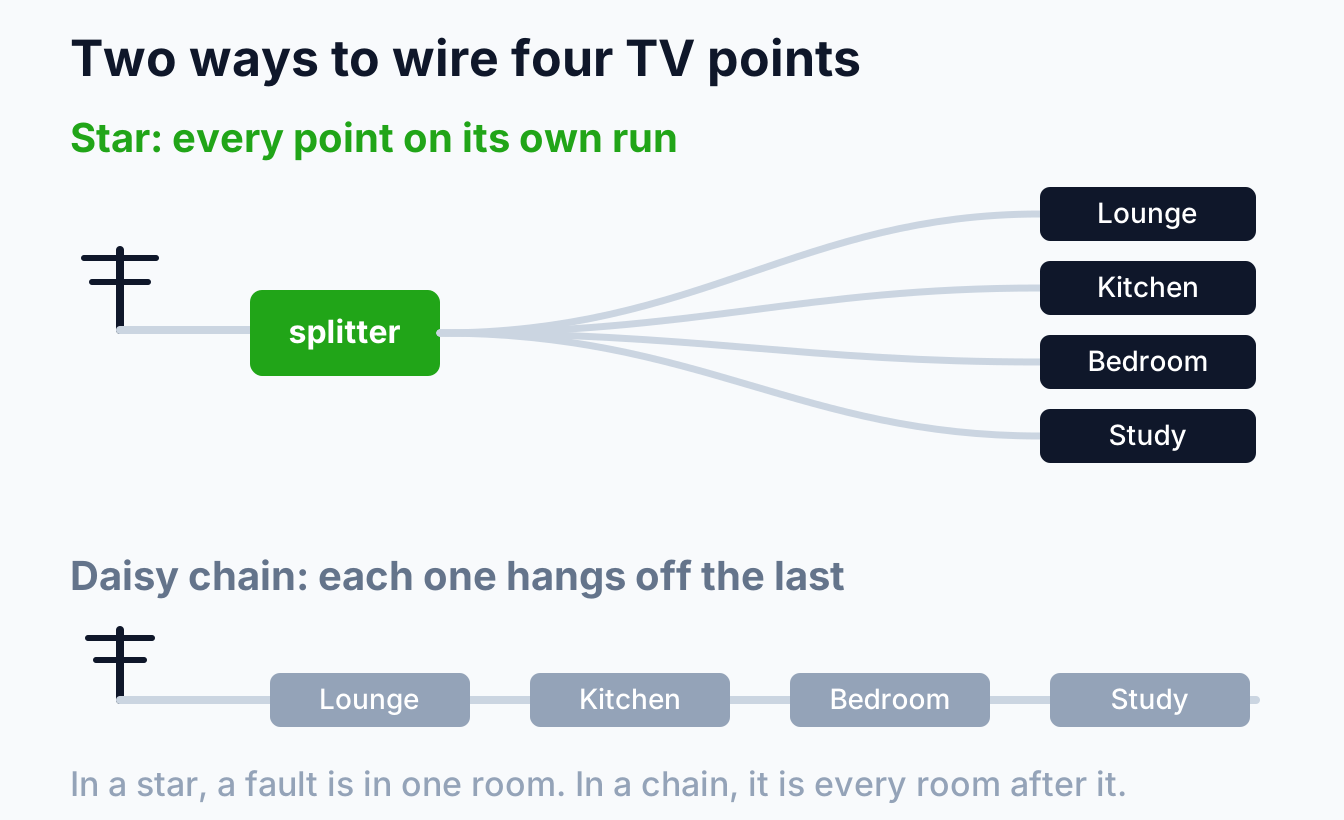
This is the single decision that separates a system that behaves from one that never quite does.
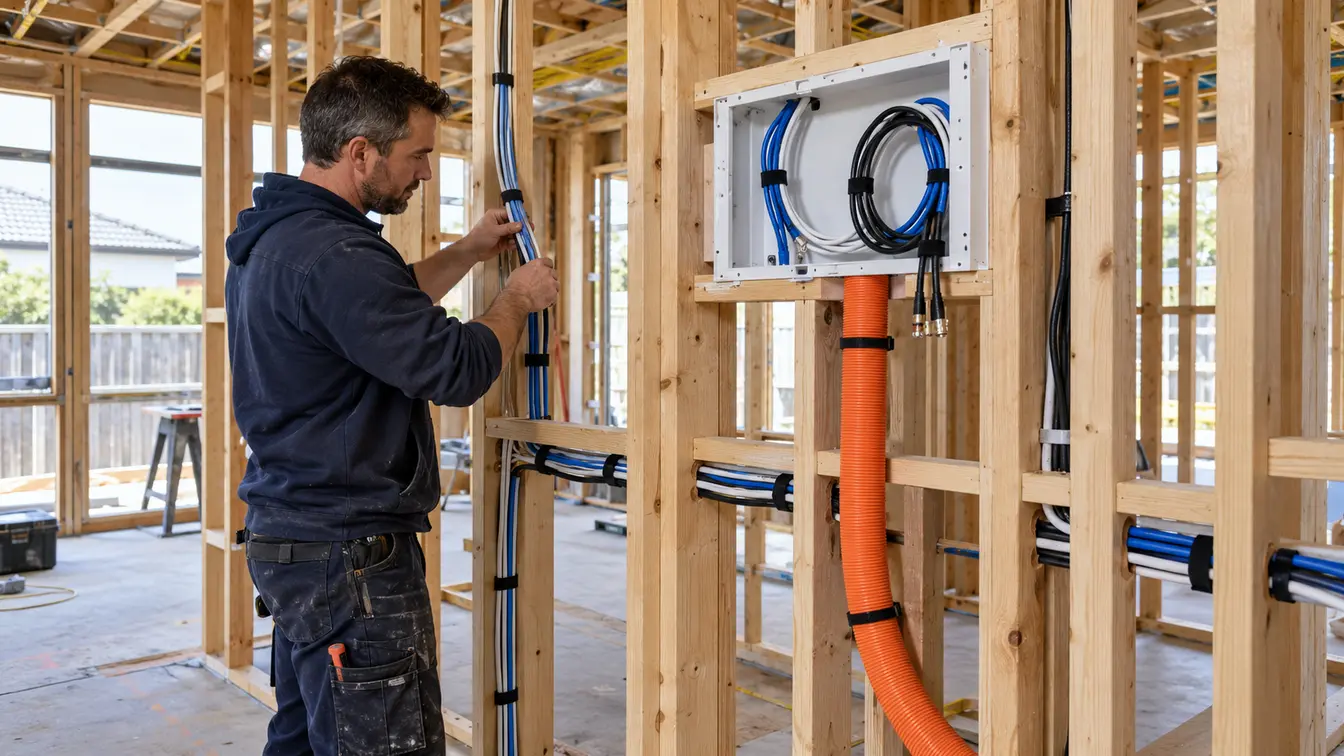
Star wiring takes the antenna's downlead to one central point, usually a splitter or a distribution amplifier in the roof space, and runs a separate cable from there to each outlet. Every point is independent.
Daisy chaining runs the cable to the first outlet, then on to the second, then the third. It is quicker to install and it is how a lot of houses were wired by whoever was handy at the time. It causes two problems that never go away: the signal drops with every point along the chain, so the far end of the house is always the worst, and a fault anywhere in the chain takes out every room after it.
Fault-finding tells the story. On a star system we can meter each outlet at the central point and know within minutes which run is at fault. On a chain, the answer is somewhere in a cable that disappears into three walls.
If your house already has a chain, that is not a reason to rewire everything today. It is a reason to convert it to a star the next time a wall is open or an outlet needs work.
Splitting the signal: passive or powered
Every split costs signal. A two-way splitter leaves each outlet with a bit under half of what went in, and a four-way rather less than a quarter, because the splitter takes a small share itself. It is also why adding a fourth outlet is a different job from adding a second, which we price out in our Melbourne antenna cost guide. That arithmetic is the reason a house can be fine with two points and marginal with four, as we explain in what affects TV antenna reception in Melbourne.
With a strong signal and two outlets, a plain splitter is often all that is needed. Once you are at four or more, or the runs are long, the sums stop working and you need to put back what the splitting takes away, which is the proper job of a distribution amplifier, and one of the few cases where amplification is the right answer rather than a reflex. We set out when it helps and when it makes things worse in our guide to TV antenna amplifiers.
The thing to avoid is stacking splitters. A two-way feeding two more two-ways is four outlets with an extra device and an extra pair of connectors in the path. One properly sized splitter or amplifier at one central point is both tidier and better.
Where the central point lives
It wants to be near where the antenna cable enters the building, usually in the roof space, and it wants three things: access, power if there is an amplifier, and somewhere the cables can be dressed and labelled rather than heaped.
Access matters more than people expect. A distribution amplifier above a manhole is a five-minute job to test; the same amplifier buried under insulation at the far end of a hip roof is an hour before anyone has touched it. If an amplifier is going in, its power point is electrical work, the same rule that applies behind a wall-mounted TV.
Labelling the tails is a two-minute habit that saves an hour on every visit afterwards, including by whoever owns the house next.
Cable, connectors and outlets
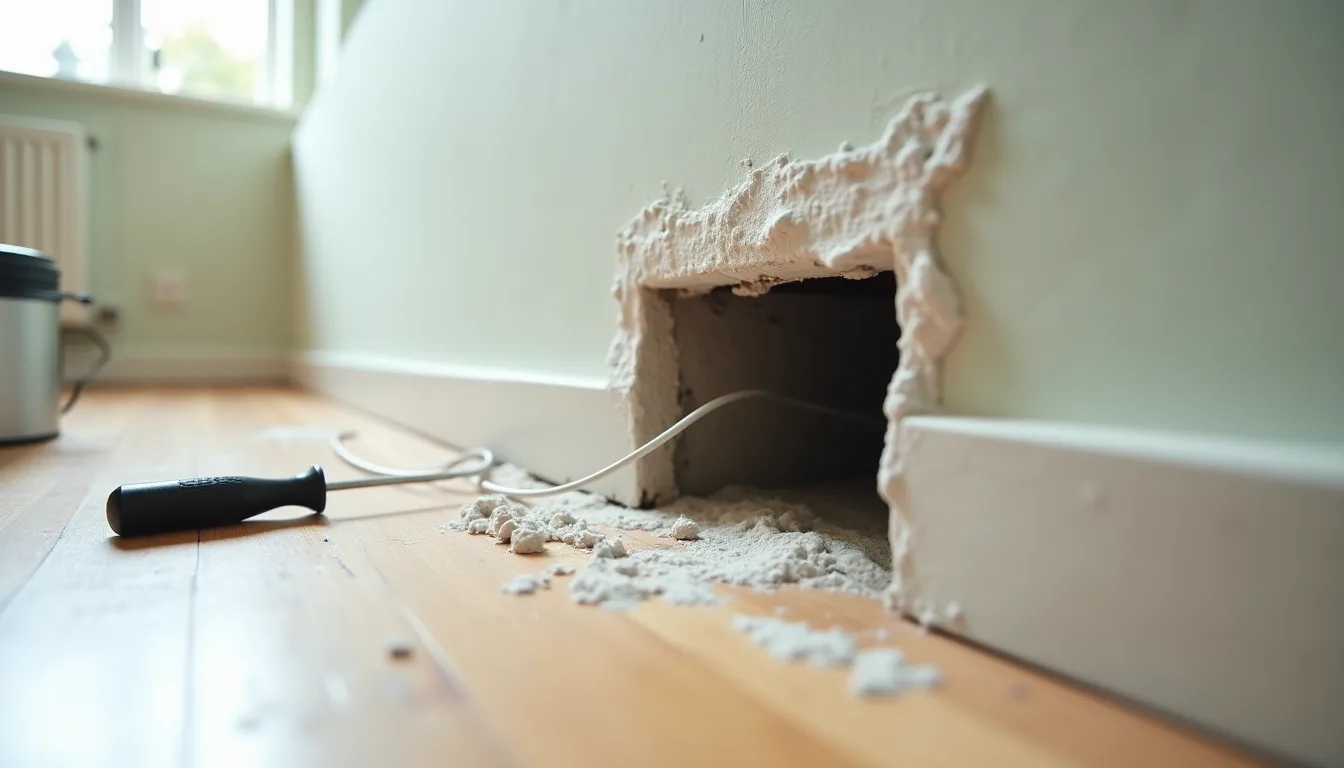
Cable. Use quality coaxial rated for the job, and use it for the whole run rather than joining offcuts. Old or cheap cable loses more per metre and loses more at the higher frequencies, which is why the UHF services are the first to break up as a system ages.
Connectors. This is where most systems actually fail. A poorly made connection lets signal out and interference in, and outdoors it lets water in as well. Water tracking down inside a sheath will ruin a run that looks perfect from the ground.
Outlets. Fit a proper wall plate rather than leaving a bare cable poking out of a hole. It looks finished, it protects the termination, and it means the next person can unplug a lead without pulling the cable out of the wall.
New build against retrofit
In a new build or a renovation the answer is simple: run everything while the frame is open, run more than you think you need, and centralise it. Antenna is only part of what should go in at that stage, and the rest is in pre-wiring a new build. Coaxial to every likely screen position, data cable alongside it, all of it home-run to one point. The material cost is trivial compared with the labour of adding it later.
Retrofitting an existing house is a question of what the building will allow. A single-storey house with a roof space and stud walls is straightforward: cable drops down inside the wall from above. A two-storey house is harder, because the first floor blocks the easy path and the cable has to find a route through cupboards, wardrobes or a bulkhead. Double brick and solid masonry mean surface conduit or a chase cut into the wall. A concrete slab with no roof access is the hardest of all.
None of these are impossible. They are just different amounts of work, and the honest quote depends on which one you have, which is why we look at the house rather than quoting a number over the phone.
Who is allowed to do the work
Fixed cabling inside a building is regulated work, not a weekend project. The ACMA is direct about it: "To work as a cabler in Australia, you must be registered."
In practice this is also the difference you can see. A registered cabler's work is fixed, terminated and labelled; the other kind is a lead pushed through a hole and a splitter hanging in the roof space by its own cables.
Signs a multi-point system was never planned
- One room is always the worst, and it is the furthest from where the cable enters.
- Reception got worse for everyone after a point was added.
- There are splitters feeding splitters, or a splitter with a spare port left open.
- A television plugged directly into the antenna lead works better than any wall point.
- Nobody can say where the cable runs, including the person who installed it.
If that sounds like your house, the fix is usually less dramatic than a rewire: a properly sized amplifier at one central point and a couple of remade connections. Our checklist for a TV with no signal covers the first things to rule out.
Frequently asked questions
How many TV points can one antenna feed?
More than most houses need, provided the distribution is designed for the number. The limit is not the antenna but the signal left at each outlet after splitting and cable loss.
Can I just use a splitter from the shop?
For two outlets on a strong signal, often yes. Beyond that you are dividing a signal that may not have the margin, and the outlets you already have will get worse.
Do I need a point in every room?
No, but run the cable while it is cheap to run. An unused outlet costs almost nothing; retrofitting one costs real money.
Can the antenna cable share a wall plate with data?
Yes, combined plates are common and tidy. Keep the coaxial run itself separate from power cabling, and have the whole lot terminated properly.
Will adding a fourth TV wreck the other three?
It can, if the system has no margin left. That is exactly the case where the distribution needs reworking rather than another splitter added to the end of it.
A multi-point system is mostly planning: decide the outlets, run them all back to one place, size the distribution for the number, and terminate everything properly. Do that and it works for twenty years without anyone thinking about it. We wire TV points across Melbourne and the Mornington Peninsula, in new builds and in houses where the cabling is a mystery. Have a look at our TV antenna installation page, or book a free onsite quote.