A TV antenna amplifier is a cure for loss, not for weakness. Where a decent signal is being worn down by a long cable run or divided across several TV points, an amplifier puts back what the wiring took. Where the signal reaching the antenna is already poor, it hands you a louder version of a poor signal, often a worse picture than you started with.
That distinction settles most cases. Here is how to tell which one you have, what the different amplifiers do, where each belongs, and how to recognise too much gain.
The short answer
- Amplifiers overcome losses. Long cable runs, several outlets, ageing cabling.
- They do not improve a weak, noisy or reflected signal; they raise the problem along with everything else.
- Where one sits in the chain matters more than how much gain it has.
- Too much gain breaks a picture up in much the same way as too little.
- If one TV is bad and the others are fine, an amplifier is not the answer.
What an amplifier does, and what it cannot do
An amplifier adds gain, measured in decibels, to everything reaching its input. The signal you want goes up. So does the noise beside it, the reflection arriving a fraction behind it, and the mobile transmission in the next slice of spectrum.
What decides whether your tuner can decode a picture is not how strong the signal is but how far it stands above the noise around it. Adding gain after the fact does not change that ratio, which is why an amplifier so rarely rescues genuinely poor reception. We go through the reasoning in full in our guide to what affects TV antenna reception in Melbourne.
The regulator says much the same thing in fewer words. The ACMA's advice on TV reception problems and fixes is to "Use a signal booster or amplifier only if necessary. They can overload your TV receiver with TV or mobile phone signals."
Level or quality: the question that decides it
Two quite different faults look identical on screen. In one, too little signal reaches the tuner. In the other, there is plenty of signal but it is dirty: noise, interference, or the same broadcast arriving twice by different paths. An amplifier helps the first and worsens the second.
A signal meter reads both numbers separately, which is why a technician can answer in minutes what guesswork cannot. Without one, two clues help.
The first is how the picture fails. A level problem tends to affect the whole house and get worse as you add outlets. A quality problem is fussier. It comes and goes with the weather, with passing traffic, or at particular times of day, and it often hits some channels while leaving others perfect. Our guide to why a TV signal breaks up or pixelates works through the patterns.
The second is timing. A third TV point added last month points at loss; a picture that has degraded gradually over years points at the antenna and the cabling, and no amount of gain will restore either.
Where it goes matters more than how big it is
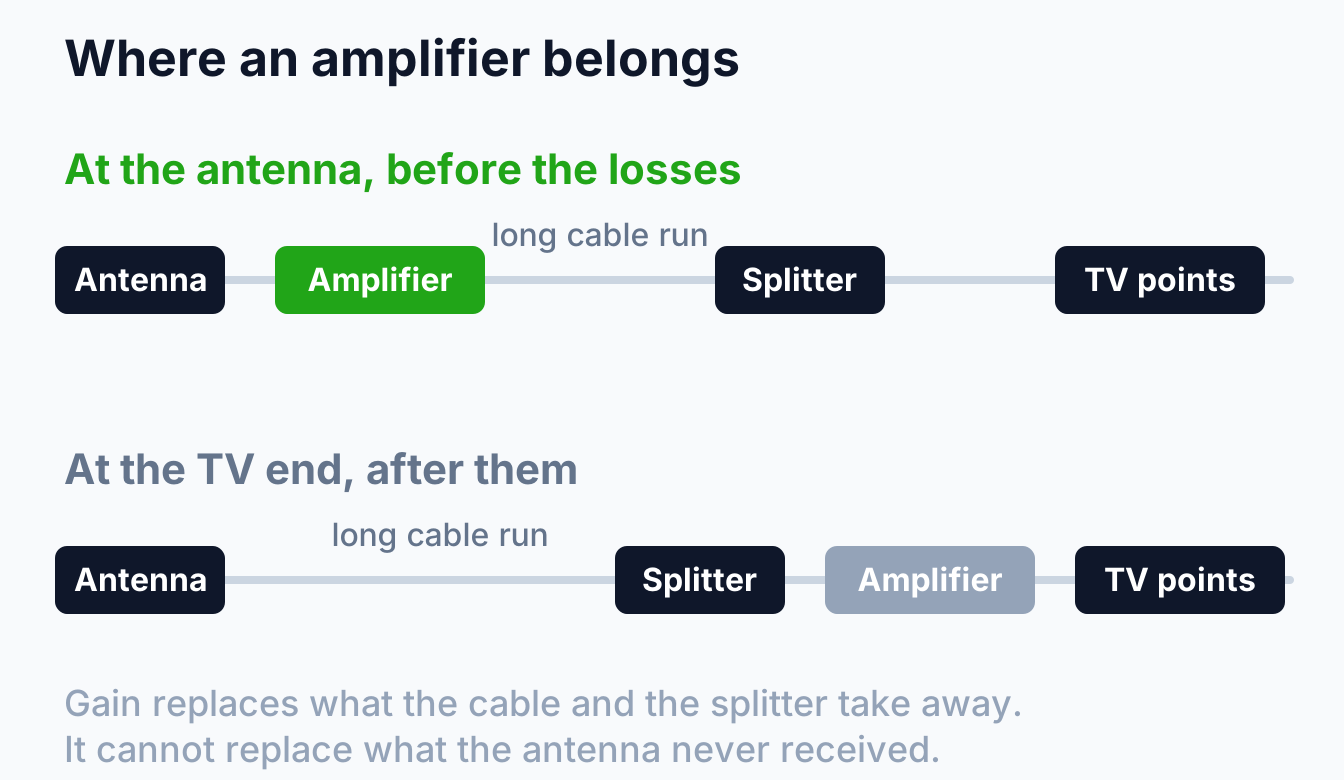
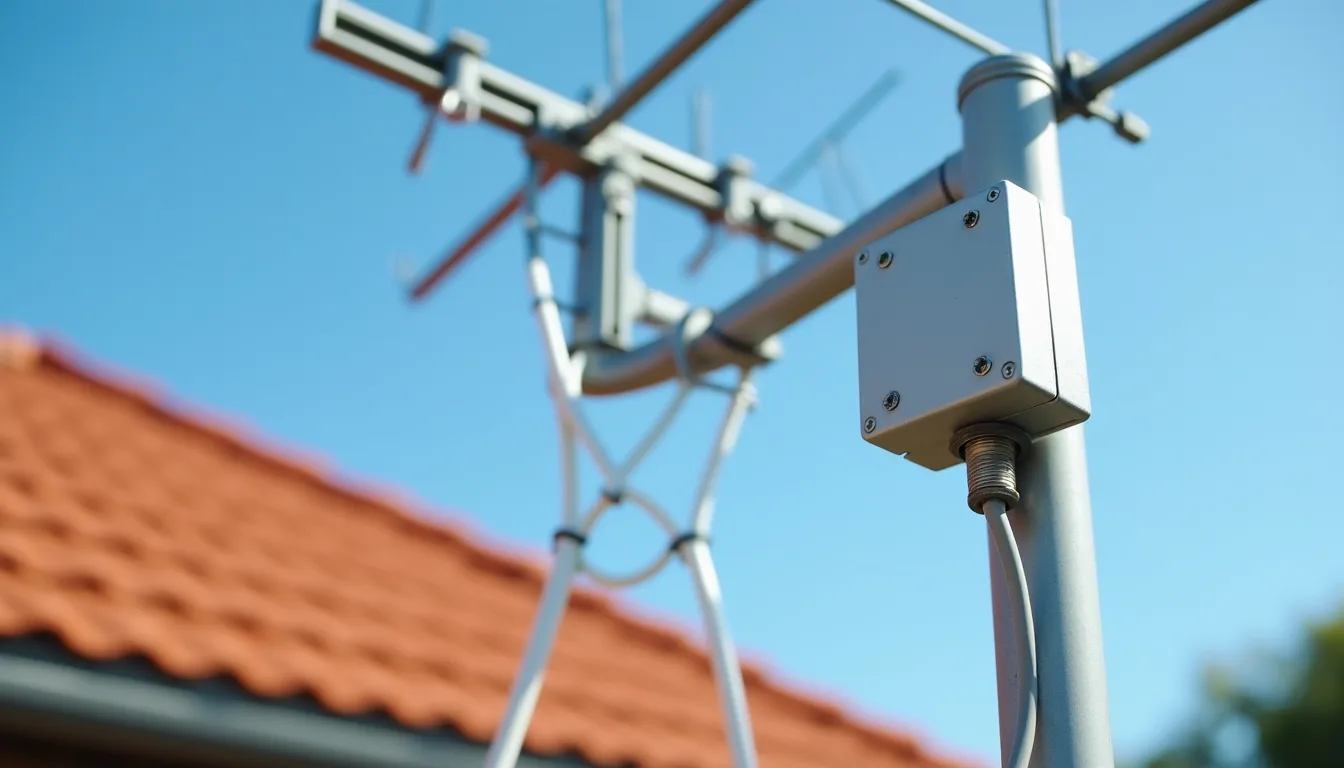
An amplifier belongs upstream of the losses it is there to overcome. At the mast, it lifts the signal while it is at its cleanest, and everything that follows (the run down the wall, the splitter, the wall points) takes its toll on an already-strong signal.
Fit the same amplifier at the far end instead and it is amplifying a signal that has already been degraded. It raises the level, but the ratio it arrives with is the ratio it leaves with.
This is why the amplifier's own noise figure matters, and why it matters most at the mast. Every amplifier adds a little noise of its own; the first device in the chain sets the floor for everything after it.
The three you will be offered
| Type | Where it sits | What it is for |
|---|---|---|
| Masthead amplifier | On the mast, at the antenna | Lifting the signal before a long run or a heavy split, where the antenna itself is already sound |
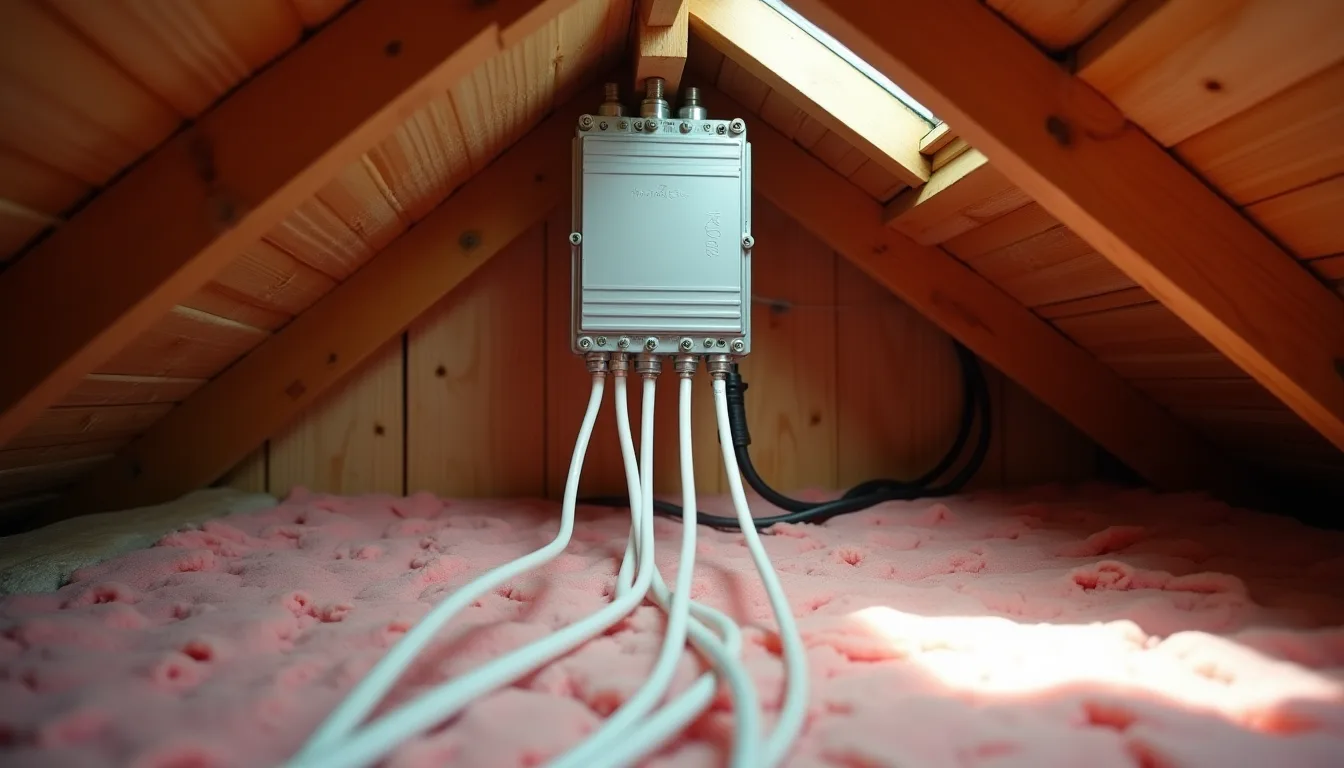
| Distribution amplifier | Indoors, usually in the roof space, where the cabling fans out | Feeding four, six or eight outlets from one antenna without each losing signal to the split |
| Inline booster | Behind a single television | A last resort on one long dead-end run, and the usual reason a house ends up over-amplified |
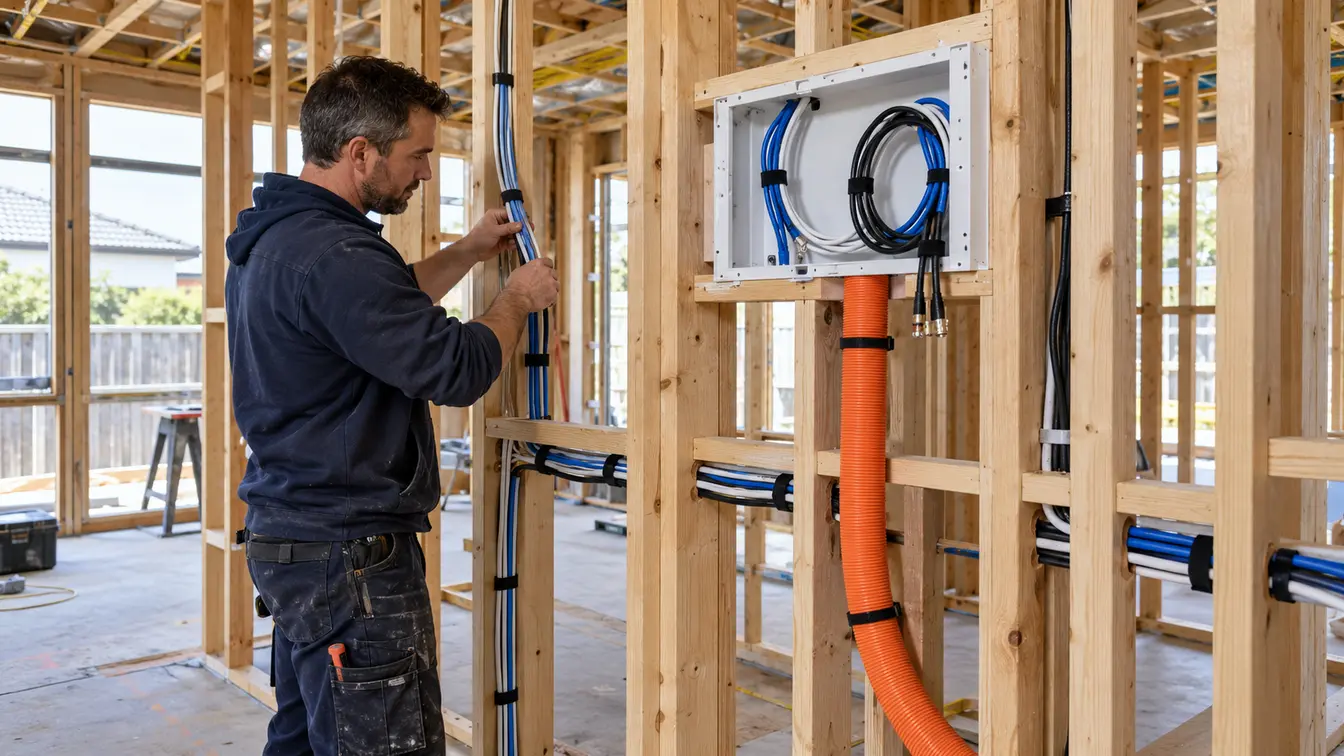
Most Melbourne houses with reception trouble need none of these. Most houses with four or more TV points need the middle one. Our guide to running one antenna to several TVs covers how that system should be laid out.
Powering a masthead amplifier
A masthead amplifier has no power at the mast. It is fed direct current up the same coaxial cable that carries the signal down, from a small plug pack inside the house: commonly in the roof space, a hall cupboard, or behind the main television.
Two things follow, and both cause callouts. When the plug pack dies, every television in the house loses signal at once while nothing on the roof is wrong at all: the most common whole-house failure we see, and among the cheapest to fix. Our checklist for a TV showing no signal puts it fourth for that reason.
The power also has to have a path back up. Ordinary splitters block direct current on all but one port, so an amplifier powered through the wrong leg of a system simply never switches on, and looks, from the lounge room, exactly like a dead amplifier.
Filtering matters as much as gain
Broadcast television occupies two defined slices of spectrum. The ACMA lists "VHF television channels 6 to 12: 174 to 230MHz (inclusive)" and "UHF television channels 27 to 51: 520 to 694MHz (inclusive)". Above that upper edge sit services that have nothing to do with your television.
A wideband amplifier does not know the difference. It raises whatever it is given across its range, which is the mechanism behind the ACMA's warning about boosters overloading a receiver "with TV or mobile phone signals". An amplifier with proper filtering, rolling off above the television bands, is doing half the work you are paying it for.
It is also why an amplifier fitted a decade ago, before the current pattern of use above 694MHz, can be the reason a system that once worked is now marginal.
Signs you already have too much
Over-amplification is common and rarely suspected, because from the sofa it looks identical to weak signal. Worth considering if any of this sounds familiar:
- The picture is worse on the strongest channels rather than the weakest.
- Reception improves in the evening or on cold days, and falls apart in the heat.
- A TV plugged straight into the antenna lead, bypassing the amplifier, works better than the wall points.
- Someone fitted a booster and the picture got worse, so a second one was added.
The fix in these cases is usually less gain, not more: a lower-gain unit, an attenuator, or removing the amplifier altogether.
When you need one, and when you don't
An amplifier is generally the right call where the antenna and cabling are sound and you are asking the signal to do more work: four or more TV points from one antenna, a long run from a rooftop to the far end of a large or two-storey house, or a master antenna feeding several dwellings.
It is generally the wrong call where the picture breaks up on one television and not the others, where reception has drifted downwards over years, or where the antenna is old, badly aimed or wrong for the local band. Those are antenna and cabling problems wearing an amplifier's clothes, and our guide to choosing a TV antenna in Melbourne is the more useful starting point.
The one thing we would not do is buy an amplifier to find out. In a strong-signal suburb that experiment can turn a working system into a broken one.
Frequently asked questions
Will an amplifier fix my pixelating picture?
Only if the cause is loss. A long run or too many outlets. If the cause is noise, interference or reflections, amplifying it raises the interference too and often makes the picture worse.
Masthead or distribution amplifier, which do I need?
Masthead if the signal needs lifting before it travels; distribution if a healthy signal needs sharing across several outlets. Plenty of houses have both, and plenty need neither.
Can I fit one myself?
An inline booster behind a TV, yes. A masthead amplifier means roof work, a power feed up the coaxial cable, and a gain choice made against a meter reading rather than by eye.
How much gain should it have?
Enough to cover the losses you are overcoming, and no more. Gain chosen to be safe rather than measured is how systems end up overloaded, particularly close to a transmitter.
My amplifier is 15 years old. Is it worth replacing?
Often, yes. The electronics drift as they age, and an older unit may have no filtering above the television bands. If a system has become marginal without anything obvious changing, the amplifier is a reasonable suspect.
Amplifiers are useful and routinely misused, and the difference is a measurement rather than an opinion. If you have been quoted for one, our antenna cost guide shows where that sits against the rest of the job. Across Melbourne and the Mornington Peninsula we are just as likely to take one out of a system as put one in. Have a look at our TV antenna installation page, or book a free onsite quote and we will measure what your place is actually receiving.