Nobody wants a price guide that says "it depends". So here are real numbers first, and the reasoning afterwards.
These are the ranges we see across Melbourne and the Mornington Peninsula in 2026. They are indicative rather than a quote, because two houses on the same street can be different jobs, and the rest of this page is about why. What we will not do is give you a number over the phone and change it on the roof.
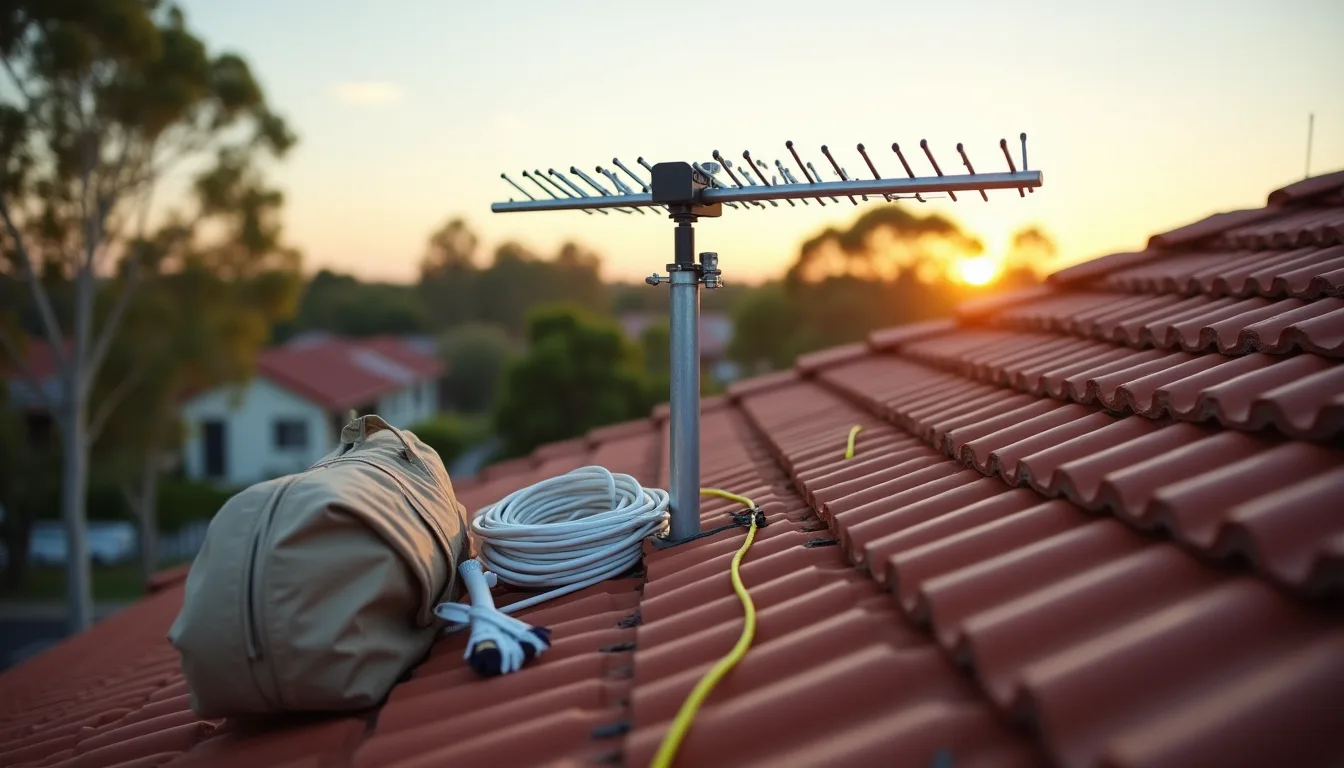
What antenna work costs in Melbourne
| Antenna service | Indicative Melbourne cost |
|---|---|
| Reception inspection or minor service call | $150 to $250 |
| Replace antenna using suitable existing mast and cabling | $250 to $450 |
| Standard new antenna supplied and installed | $300 to $700 |
| Difficult two-storey or complex installation | $450 to $1,000 and up |
| Additional TV point | $90 to $300 per point |
| New TV point with difficult wall access | $180 to $500 |
| Masthead amplifier or signal distribution equipment | $150 to $400 and up |
| Multiple TV points and distribution system | $500 to $1,000 and up |
Most standard suburban homes land in the third row. The rows above and below it are where the interesting questions live.
The short answer
- A standard antenna supplied and installed on an ordinary suburban house is usually $300 to $700.
- The antenna itself is a small part of that. Access, cabling and the number of outlets are what move the number.
- If your mast and cabling are still sound, replacing just the antenna is the cheaper job in the table.
- A two-storey or steep roof costs more because of how the work has to be done safely, not because the antenna is different.
- Sometimes a service call is the whole answer, and nothing needs replacing at all.
Why the ranges are as wide as they are
An antenna quote is mostly a quote for getting to a place, working there safely, and getting a signal from that place into your rooms. The hardware on the mast is the least variable part of it.
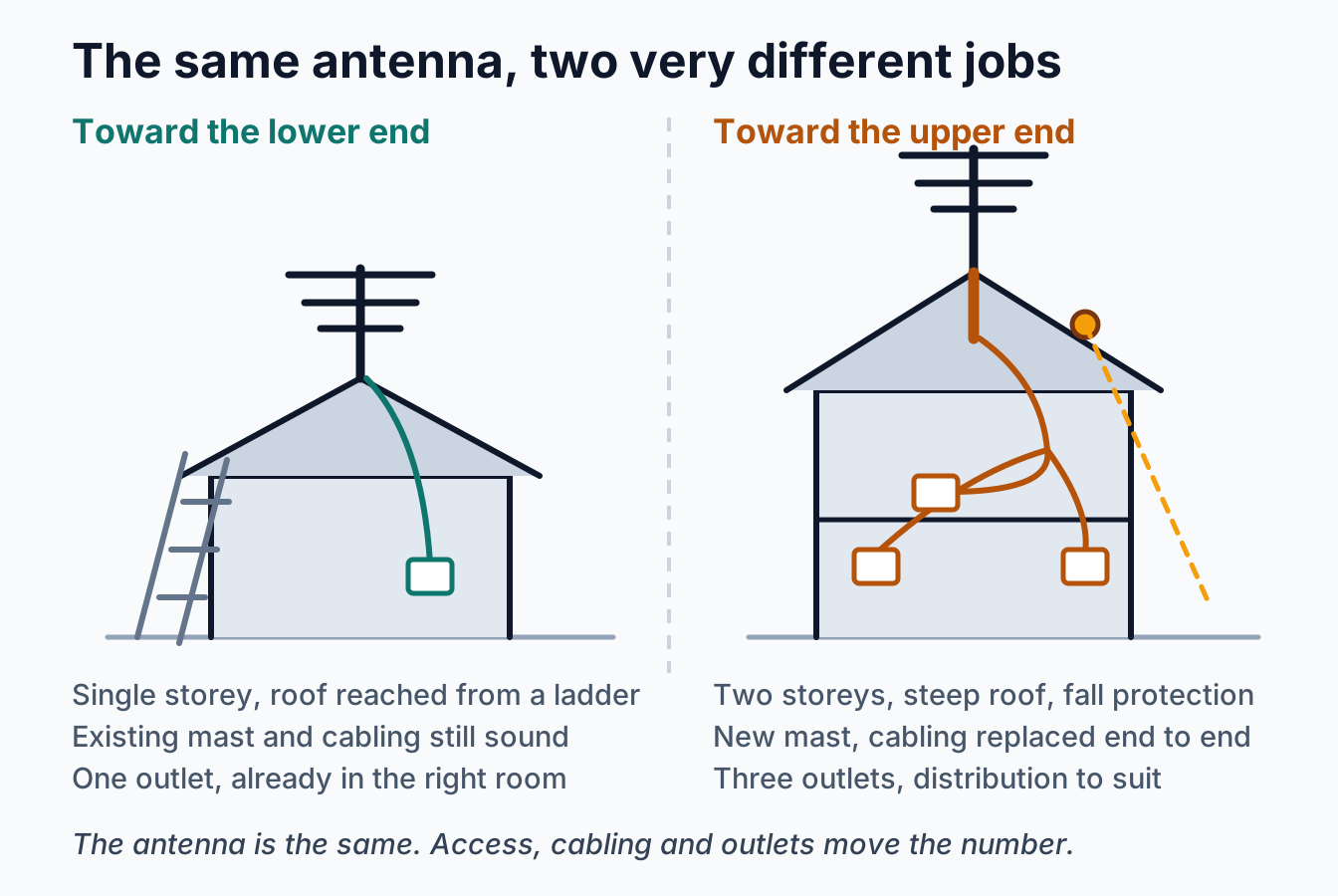
Read that and the table stops looking arbitrary. The same antenna goes on both roofs. Everything else about the two jobs is different.
How hard the roof is to work on
This is the single biggest driver, and it is the one people are most surprised by. A single-storey house with a shallow tile roof can be reached from a ladder and worked on in an hour. A two-storey house, a steep pitch, brittle old tiles or a roof with nowhere safe to stand is a different piece of work with different equipment, and it takes longer before anyone has even touched the antenna.
That is not padding. Working at height is regulated, and WorkSafe Victoria's compliance code on preventing falls makes clear that duties to control the risk apply even at two metres or less. Anyone quoting a second storey as though it were a bungalow is either not doing that part properly or intends to find the extra later.
What is already up there
If your mast is straight, unrusted and properly fixed, and the cable running from it is in good condition, then you are buying an antenna and an hour of work. That is the $250 to $450 row, and it is the best outcome available.
Often the mast is the actual problem. Rust at the base, a bracket that has worked loose, a perished cable boot letting water in. Replacing an antenna on a mast that is failing means being back within a couple of years, so we would rather tell you now and do it once.
Cable matters more than most people expect. Old, cheap or water-damaged coaxial loses signal, and loses most of it at the higher frequencies, so UHF services fail before anything else does. The ACMA recommends quad shield RG6 for good reason. Replacing a bad run is real work and real cost, and it is also the difference between a picture that holds and one that breaks up every time the weather turns.
How many rooms want a picture
The first outlet is part of the install. The second is usually straightforward. By the fourth, you are no longer running cables, you are designing a distribution system, because every split divides the signal you have. That is why the table has both an "additional TV point" row and a "multiple TV points and distribution system" row, and why the second is not simply four times the first. We go through the reasoning in running one antenna to several TVs.
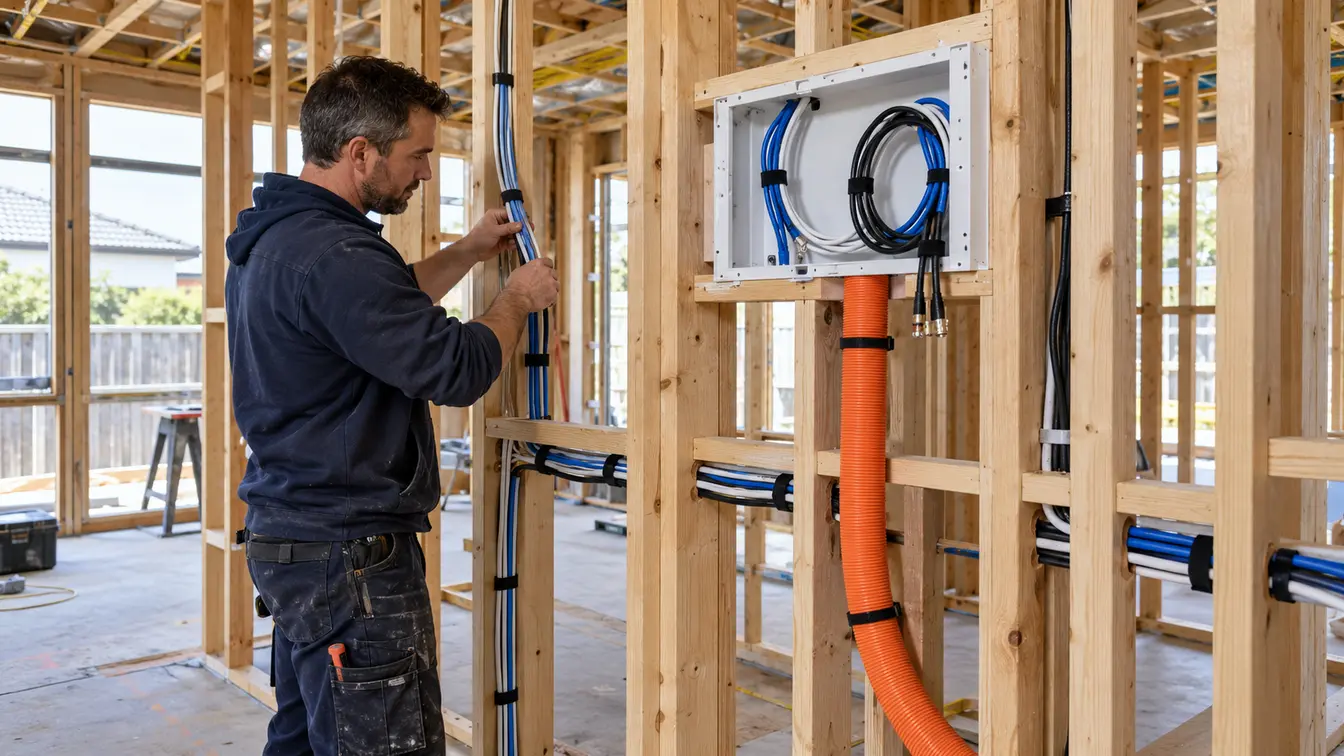
Wall construction decides the rest. A timber stud wall with roof space above it is an easy path. Double brick, a rendered wall, a downstairs room with no cavity above, or a finished room where nothing may be cut is where the "difficult wall access" row comes from.
When you need an amplifier, and when you are being sold one
The $150 to $400 row is genuinely necessary on plenty of jobs and completely unnecessary on plenty of others, so it is worth understanding before you agree to it.
An amplifier puts back signal that cable length and splitters have taken away. That is a real job and it is the right fix for a large house with several outlets. What an amplifier cannot do is create signal that never reached the antenna, and turning one up on a weak, noisy input amplifies the noise along with everything else. If the front end is the problem, the fix is aim, height or cable, and an amplifier just makes an expensive version of the same fault.
There is an opposite failure too. Close to a transmitter the signal can be too strong, and the ACMA's guidance for antenna installers puts a good level at the wall plate at around 54 dBµV, with levels below 45 or above 80 not suitable for reception. Add an amplifier to a house already sitting near the top of that and you make the picture worse. This is exactly why we take a reading rather than guess, and our guide to when an amplifier actually helps goes into it properly.
Sometimes the answer is the cheapest row
A fair number of the calls we go to do not need a new antenna. A connector that has let water in, a splitter somebody added when they got a second television, an antenna nudged out of line in a storm, a television that was never retuned. Those are the $150 to $250 row, and it is a good day when that is all it is.
Before you book anything, it is worth ten minutes with our checklist for a TV showing no signal, and if the picture is breaking up rather than failing outright, what pixelation is telling you narrows it down further. Some of these you can fix yourself for nothing.
The judgement call is repair against replace. An antenna that is corroded, bent or twenty years old can often be nursed along for another season, and we will say so if you ask. But if we are already on the roof and the hardware is at the end of its life, doing it once is cheaper than a service call now and a replacement in eighteen months. We will tell you which one we think you are looking at and let you decide.
What makes a cheap quote expensive
Antenna work is easy to underquote, because the parts a customer can see are not the parts that cost money. A few things worth checking in any quote, ours included.
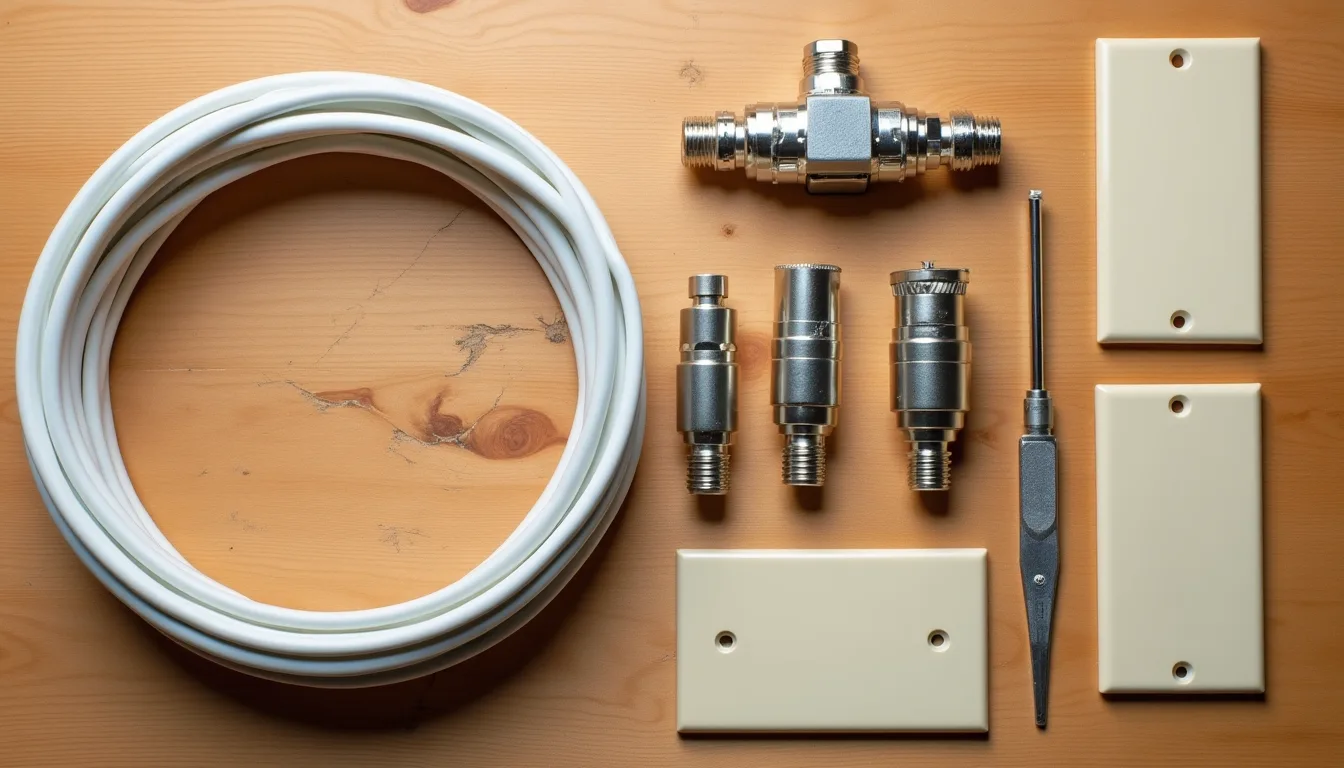
Is the cable included, or assumed? "Supply and install antenna" can quietly mean the existing cable stays, whatever condition it is in. If that cable is the reason you called, the job has not been done.
Is anyone measuring anything? A signal reading before and after is the only evidence the work achieved something. Without it, the test is whether the picture looks fine on the day, which is not the same as having margin to spare. Our guide to distance and reception explains why the margin is the thing that matters.
Who is allowed to do what. Fixed cabling is not open slather: the ACMA requires that "To work as a cabler in Australia, you must be registered." If a new power outlet is needed behind the television, that is electrical work, and Energy Safe Victoria is blunt that it is not a job to do yourself.
What happens if it does not work. Reception has variables nobody controls. What you want is somebody who will come back, not somebody who has already been paid.
Apartments, units and rentals
Two situations where the cost question has a different answer entirely.
If you rent, the antenna is generally part of the property rather than something you are expected to fund. Consumer Affairs Victoria sets out the process for repairs in rental properties, and a request in writing to the rental provider is the right first step. We are happy to quote to an agent or owner directly.
If you are in an apartment or a unit block, the antenna and the cabling down through the building are usually common property, and the wall point inside your place is where your lot begins. That changes who authorises the work and who pays for it before it changes the price. Our guide to antennas and reception in Melbourne apartments covers where that line sits.
Getting an accurate number for your house
You can shorten the conversation considerably by having a few things ready.
- Single or double storey, and what the roof is: tile, tin, slate, flat.
- Whether there is an antenna up there now, and roughly how old it is.
- How many rooms want a television point, and which ones already have one.
- What the symptom is: nothing at all, some channels missing, breaking up sometimes, or only in bad weather.
- Whether it started suddenly or got worse gradually. Sudden usually means something broke; gradual usually means something has been marginal for a while.
- Your address, so we can check what your area is predicted to receive. The mySwitch tool will tell you the same thing.
That is usually enough to say which row of the table you are in. The exact number comes from looking, and the quote is free.
Frequently asked questions
How much does a TV antenna installation cost in Melbourne?
A standard new antenna supplied and installed is generally $300 to $700. A straight replacement onto a sound existing mast and cable is less, around $250 to $450, and a difficult two-storey or complex job runs from $450 upwards. The figures on this page are indicative, and we confirm the price before starting rather than after.
Why is a two-storey house more expensive?
Because of the access, not the antenna. Height changes what equipment is needed to work safely and how long the job takes, and both of those are real costs. The hardware going on the mast is usually identical to the single-storey version.
Do I need a new antenna, or just a repair?
Often just a repair. Water in a connector, a splitter added years ago, an antenna knocked out of alignment or a television that needs retuning are all common and none of them need new hardware. Working through the no-signal checklist first will sometimes save you the callout entirely.
How much is it to add a TV point to another room?
Between $90 and $300 for a straightforward one, and $180 to $500 where the wall or the route is difficult. If you are adding several at once, it is usually cheaper per point and it is worth designing the distribution properly rather than splitting what you have.
Is a more expensive antenna worth it?
Sometimes, and less often than you would think. On a marginal site an antenna matched to the bands your services actually use is a real improvement. On a house with decent signal already, a bigger antenna in the same position changes very little, and a metre of extra height would have done more. Our look at which antennas actually perform goes through it.
Do you charge for a quote?
No. Onsite quotes are free, and that includes telling you when you do not need the work.
The honest summary is that most Melbourne homes are a $300 to $700 job, the ones that are not are usually about access or cabling rather than the antenna, and a fair number of calls turn out to be a service call instead. We install and repair antennas across Melbourne and the Mornington Peninsula, we meter before and after, and we tell you which row of that table you are in before we start. Have a look at our TV antenna installation page, or book a free onsite quote.