Most people only think about their TV antenna when the picture starts breaking up. By then the question is not really "which antenna is best". It is "which antenna suits my house, my roof and how far I am from the transmitter." Those are different questions, and the second one is the one that actually determines whether you get a clean picture.
This guide covers how antennas differ, how to work out which type your place needs, and what separates a good install from one that works until the first decent windstorm.
First, the Australian bit that most guides get wrong
A lot of antenna advice online is written for the American market. It is worth knowing that Australia broadcasts digital free-to-air on the DVB-T standard, not the ATSC standard used in the United States. An antenna sold as an "HDTV antenna" for the US market is designed around different frequency allocations, and articles recommending American models to Australian readers are recommending the wrong hardware.
In Australia, free-to-air television is carried on VHF Band III and UHF. Most of Melbourne's metropolitan services transmit from Mount Dandenong, with a number of smaller translators covering areas the main site cannot reach cleanly. Which band your local services sit on matters, because an antenna optimised for UHF will underperform badly on VHF channels, and vice versa.

The three antenna types worth knowing
Log periodic
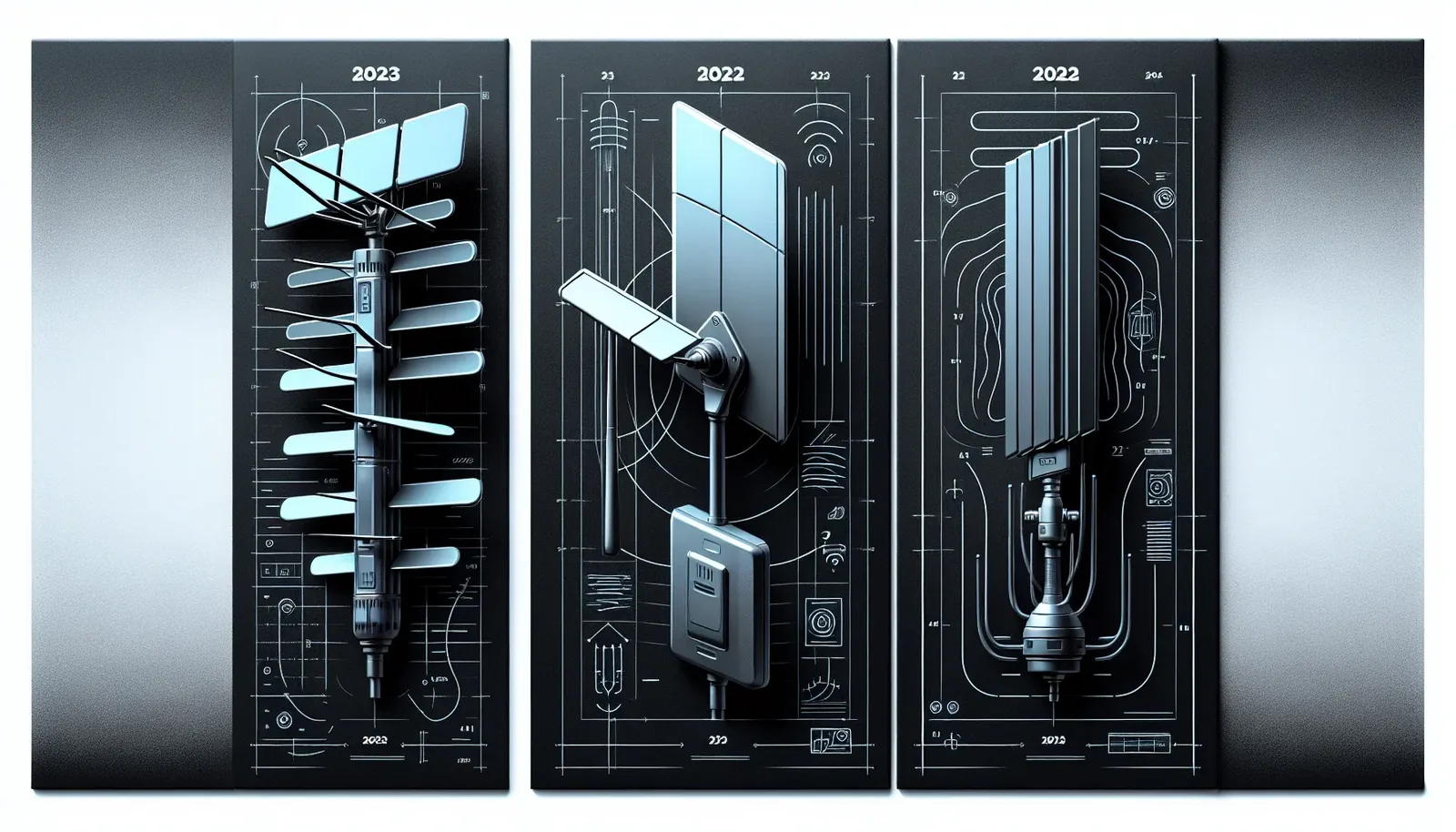
The one most people picture when they think of a modern TV antenna: a tapering array of elements along a central boom. Log periodics are directional, have a fairly flat response across a wide frequency range, and handle multipath reasonably well. In built-up areas where signal bounces off buildings before reaching you, that matters. For most metropolitan Melbourne homes at moderate distance from the transmitter, this is the sensible default.
Yagi
Higher gain than a log periodic across a narrower frequency band, and more directional. That combination makes a Yagi the right choice when you are a long way from the transmitter and pulling in a weak signal from one direction. The trade-off is that it needs to be aimed accurately. A Yagi a few degrees off will perform worse than a well-aimed log periodic.
Phased array
A grid of elements rather than a single boom. Phased arrays have a broader acceptance angle and cope well in areas with reflections. They are bulkier and catch more wind, which is a real consideration on an exposed roof or near the coast.
Indoor antennas exist and occasionally work, usually in an apartment with a clear line of sight and strong local signal. In most houses they are a false economy. If reception is marginal enough that you are researching antennas, an indoor unit is unlikely to fix it.
What actually determines your reception
Antenna choice is one variable among several, and rarely the dominant one. We go through all of them in our guide to what affects TV antenna reception in Melbourne.
- Distance from the transmitter. Signal strength falls off with distance. Under about 20km from Mount Dandenong, most properties get a strong signal and the install is straightforward. Past 40km, antenna selection and aim start to matter a great deal.
- What sits in the path. A ridge line, a stand of mature trees, or a two-storey build next door can cost you more signal than another 20km of distance would. Trees are the sneaky one, because they grow. Reception that was fine five years ago can degrade without anything obvious changing.
- Reflections. In dense suburbs, signal arriving via two paths at slightly different times causes multipath interference. This shows up as pixelation rather than a weak picture, and more gain does not fix it. Better rejection of off-axis signal does.
- Everything after the antenna. Corroded connectors, water in a joint, cheap coaxial, or a splitter feeding four TVs off a signal that could support two. Plenty of "antenna problems" are cable problems.
Gain, and why more is not automatically better
Gain is the figure most often quoted in antenna marketing, and the most often misread. Gain does not create signal: it concentrates sensitivity in one direction at the expense of others. That is exactly what you want when you are distant and the signal arrives from one bearing. It is not what you want if your problem is reflections, and a high-gain antenna in a strong-signal area can overload a tuner front end and produce a worse picture than a modest antenna would.
The same applies to amplifiers. An amplifier boosts noise along with signal. If the signal reaching the amplifier is already degraded, you get a stronger degraded signal. Amplifiers earn their place where you are splitting a decent signal across several outlets, or driving a long cable run, not as a first response to poor reception. There is more on choosing and siting an amplifier in its own guide.
Materials, because the coast is unforgiving
Across Melbourne's bayside suburbs and down the Mornington Peninsula, salt carried on the wind corrodes hardware far faster than it does inland. A galvanised bracket that would last fifteen years in Box Hill can be visibly rusted in a few years at Rosebud, and corrosion at a coaxial connection degrades the picture long before anything looks obviously broken.
Anywhere near the water, marine-grade fixings and properly sealed connections are not an upgrade. They are the difference between an install that lasts and one you pay for twice. It is also worth specifying bird spikes. On the Peninsula in particular, an antenna makes an attractive perch, and the droppings end up on your roof and, if you are on tank water, in your tank.
Mounting and aiming
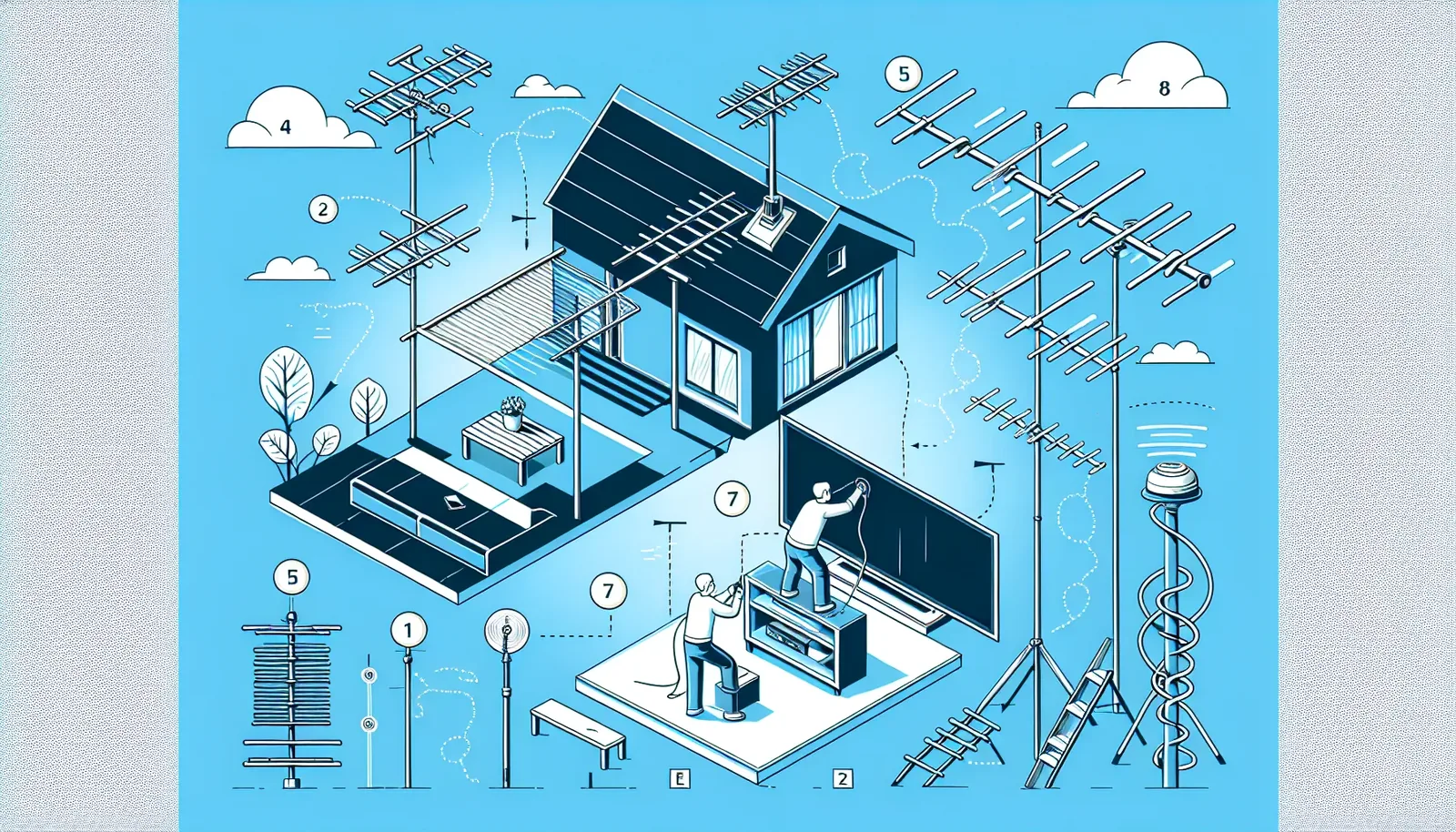
Height helps, but only up to the point where it clears the obstruction. Beyond that you are adding cable length and wind load for nothing. The right height is the lowest one that gives a clean signal, because every extra metre of mast is more leverage on the mounting point in a storm.
Aiming is measured, not eyeballed. A signal meter reads strength and, more importantly, signal quality. The two are not the same, and a strong signal with poor quality still pixelates. The best position is often not the one that looks obvious from the ground.
Grounding matters on an exposed roof. So does using outdoor-rated coaxial and sealing every joint properly; water tracking into a connector is one of the most common causes of reception that degrades slowly over a couple of years.
When to repair rather than replace
Not every reception problem needs a new antenna. Worth checking first:
- Connections at both ends, and any joins in between, for corrosion or moisture
- Whether the antenna has shifted. A storm can move it a few degrees, which is enough
- Whether an amplifier or splitter has failed, which is common and cheap to fix
- Whether a tree has grown into the signal path
- Whether the tuner needs retuning, particularly after a change to local transmission
A site reading tells you which of these it is in a few minutes. Replacing parts and hoping is the expensive way to find out.
What we would do at your place
We take a reading before recommending anything, because the answer genuinely varies street to street. Two houses a hundred metres apart can need different antennas if one has a ridge behind it. We carry Australian and European antennas, boosters and filters so we can fit what the site needs rather than what is on the van.
Quotes are free and onsite. If your existing antenna is fine and the problem is a connector, we will tell you that.
More on what we do: TV antenna installation across Melbourne. If your picture is breaking up right now, our guide to TV reception problems covers the common causes.
Apartments, units and shared buildings
If you are in an apartment or a unit block, you may not be able to put an antenna on the roof at all. Many buildings run a master antenna system: one antenna feeding every apartment through a distribution amplifier. When that system is old or badly balanced, individual apartments get poor reception even though the antenna itself is fine.
In that situation the fix is usually at the distribution end, not yours, and it is a body corporate matter rather than something you can resolve in your own unit. Worth establishing before you spend money on hardware you may not be permitted to install.
Frequently asked questions
Do I still need an antenna if I have a smart TV?
If you want free-to-air television, yes. A smart TV connects to the internet for streaming apps, but free-to-air channels arrive over the air and need an antenna. Some broadcasters stream their channels online, which works if your connection is reliable, but that is a substitute for free-to-air, not the same thing.
How long should a TV antenna last?
A well-made antenna, properly installed, should give you fifteen to twenty years inland. Near the coast, expect less. Salt corrosion is the limiting factor rather than the electronics. Connections usually fail before the antenna does.
Will a bigger antenna fix my pixelation?
Often not. Pixelation is frequently caused by multipath interference or a marginal connection rather than weak signal, and a higher-gain antenna does nothing for either. A signal reading will tell you which problem you have before you spend anything. We go through the causes in our guide to why a TV picture keeps pixelating.
Can one antenna feed several TVs?
Yes, with a splitter, and often a distribution amplifier depending on how many outlets and how strong the incoming signal is. Every split reduces the signal reaching each outlet, so a system that worked with two TVs can start dropping out when you add a third or fourth.
Does bad weather affect digital reception?
It can. Heavy rain attenuates signal slightly, and wind can move a marginally secured antenna. But if your picture drops out every time it rains, that usually points to water getting into a connection rather than the weather itself, which is a fixable fault, not something you have to live with.
How do I know which direction my antenna should point?
Broadly towards the transmitter serving your area. For most of Melbourne that is Mount Dandenong. That is a starting point rather than an answer, because the best position depends on what obstructs that line from your particular roof. In some locations a different transmission site gives a better result.