A TV stand is not the cheap option and a wall mount is not automatically the better one. Both do the same job, and which one suits your place comes down to four things: who lives in the house, what the wall is made of, whether you own it, and where people actually sit.
Here is how each of those falls, and the one consideration that settles it outright for a lot of families.
The short answer
Mount it if there are small children in the house, if the room is tight, or if the TV is going to live there for years. Use a stand if you rent and cannot get consent, if you move often, if the wall genuinely will not take it, or if you want the gear on show and easy to reach. Neither answer is wrong; they just suit different houses.
| TV stand | Wall mount | |
|---|---|---|
| Tip-over risk | Real unless both TV and unit are anchored | Effectively removed |
| Screen height | Fixed by the furniture | Set to your seating |
| Cables | Hidden by the furniture, mostly | Fully concealed if run in-wall |
| Floor space | Takes a footprint | None |
| Access to the ports | Easy | Needs planning before the final fix |
| Suits renting | Yes | With consent, and making good later |
| Moving house | Comes with you | The bracket does; the holes stay |
Moving day is its own small project either way, and we go through it in moving house with a wall-mounted TV.
The safety argument, which decides it for a lot of families
This is the part that gets skipped in most comparisons, and it is the strongest single reason to mount.
The ACCC's product safety guidance records that "Toppling furniture has killed at least 28 people in Australia since 2000 and causes nearly 20 injuries every week," and that "Children under 5 years old are most at risk of serious harm from toppling furniture or TVs." Its list of what to do includes, in as many words, "Consider wall-mounting your TV."
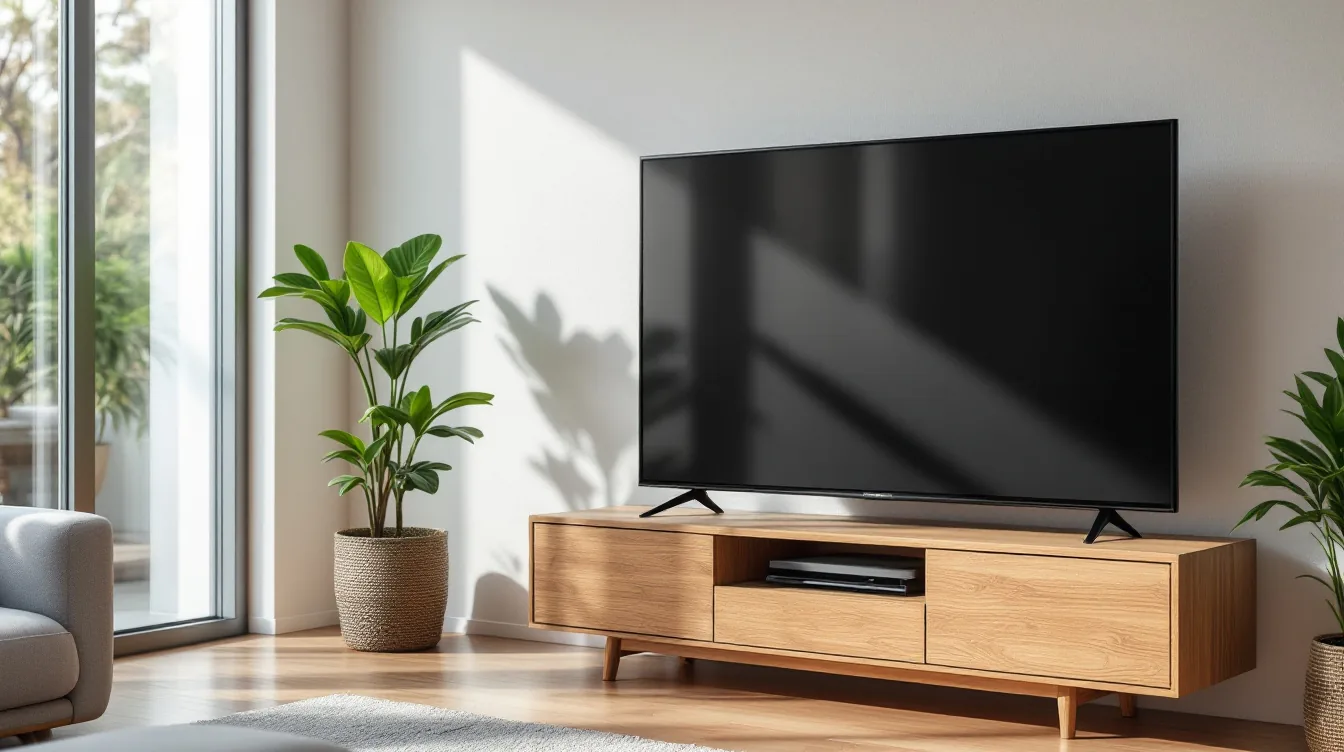
A modern screen is light for its size and stands on a narrow pedestal or two thin feet. A toddler pulling itself upright on the edge of a media unit is applying force in exactly the direction the TV is least stable in.
None of that means a stand cannot be made safe. It means it has to be made safe deliberately. The same ACCC guidance is specific about how: "Don't put TVs on furniture that isn't intended for this purpose, such as a chest of drawers," and "If you secure the TV to a piece of furniture, make sure the furniture is also secured to the wall." Two anchor points, not one. An anti-tip strap on the TV alone still leaves the whole unit free to come forward.
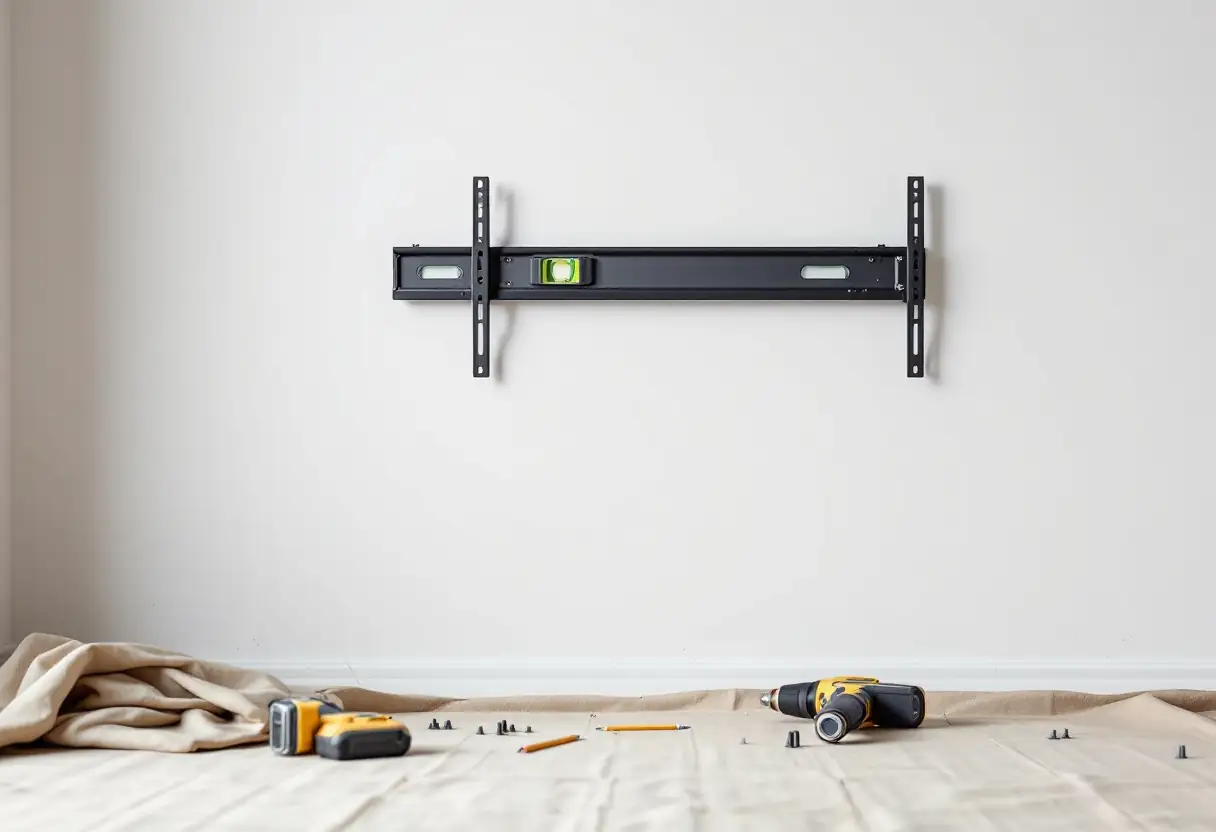
The one condition on the mounted side: the fixings have to reach something structural. A bracket screwed into plasterboard alone is not a safety improvement over a stand. It is a worse one.
Height is the thing people get wrong in both directions
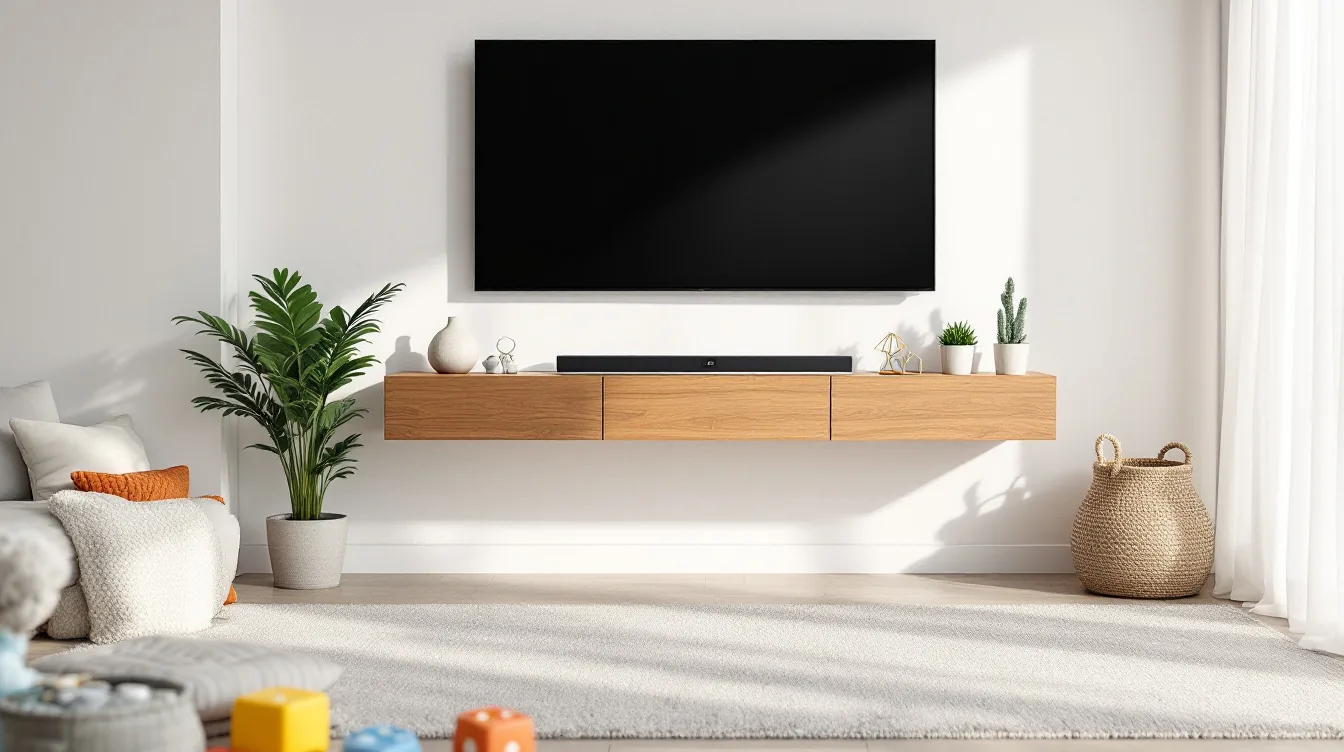
A stand fixes your screen height at whatever the furniture happens to be. That is usually a bit low, which is comfortable enough, though people often end up looking over a coffee table or someone's head.
Mounting lets you choose, and the mistake nearly everyone makes is choosing too high. The centre of the screen wants to be roughly at eye level from where you actually sit, which for most lounge seating puts it about 100 to 110cm off the floor, lower than instinct says, and considerably lower than above a mantelpiece. Our guide to TV mounting height covers how to measure it from your own seat. If a TV has to go high, a tilting bracket improves the angle but does not fix the height, which we go through in our comparison of fixed, tilt and full-motion brackets.
Worth being honest about this: a stand at the right height beats a mount at the wrong one. Height is the real advantage of mounting, and only if you use it.
What a stand still does better
Access. Everything is reachable. Adding a console, swapping a cable or plugging in a laptop takes seconds rather than lifting a screen off a bracket.
Storage. A media unit holds the gear, the remotes and whatever else accumulates. Mount the TV and that has to live somewhere else, which is why a floating shelf usually ends up going in underneath anyway.
Flexibility. Rearranging a room with a stand takes ten minutes. With a mount it takes new fixings and two patches in the plaster.
Difficult walls. Some walls genuinely are not worth mounting on. An old chimney breast with no consistent structure, a wall with services running everywhere behind it, or a heritage feature you do not want cut into.
If you are renting
This is more workable in Victoria than most renters realise, and worth knowing before you settle for a stand by default.
On a plasterboard wall, which is most walls in most rentals, screws for a wall mount are on the list of changes a renter can make without the rental provider's consent. Exposed brick and concrete need consent, which cannot be unreasonably refused. Either way you have to make the wall good at the end of the tenancy or pay the reasonable cost, and for a bracket that is filling and painting a few screw holes.
We go through the rules, the end-of-lease obligation and the message worth sending your agent in wall mounting a TV in a rental.
What we would actually do
Family home with young kids: mount, into studs or masonry, every time. The safety case does the deciding and nothing else comes close.
Small apartment or unit: mount if the wall allows and the body corporate is fine with it, which we work through in wall mounting a TV in an apartment. Floor space is the scarce thing, and a media unit eats a surprising amount of a small living room.
Renting short term: a stand, anchored properly. Not worth the paperwork for eighteen months.
Renting long term: worth asking. Most providers say yes, and living with a badly placed TV for five years is a real cost.
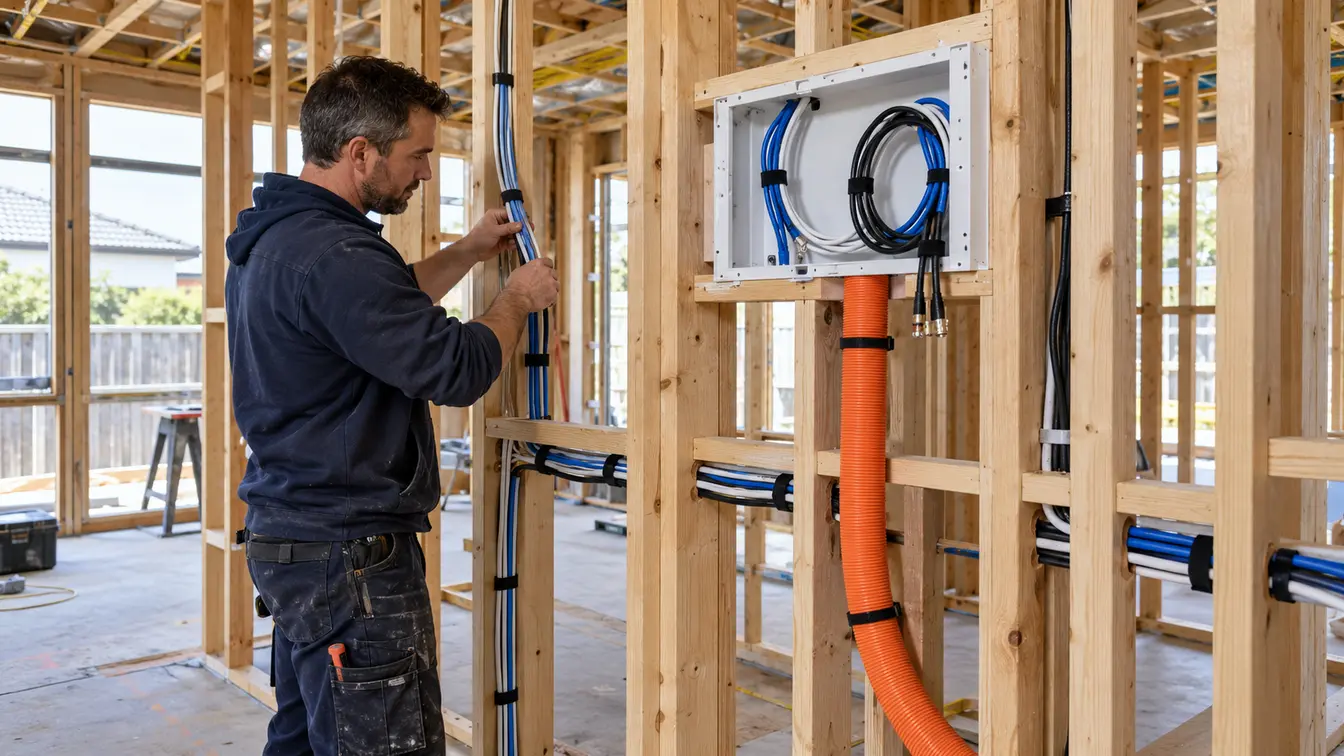
Building or renovating: mount, and run the cabling while the wall is open. That is the cheapest it will ever be, as we cover in our guide to hiding TV cables when wall mounting.
Frequently asked questions
Is wall mounting a TV expensive?
Less than most people assume, and the bracket is usually the smaller part of it. What moves the price is the wall type, whether cables are being concealed, and whether an electrician is needed for a new outlet behind the screen. We quote on site because guessing at a wall over the phone helps nobody.
Does mounting damage the wall?
It leaves fixing holes, which patch and paint out easily. On plasterboard that is a small job. Where a bracket has been fitted badly into plasterboard with anchors instead of studs, the repair is larger, which is another argument for getting the fixings right the first time.
Can I mount a TV and still use my existing unit?
Yes, and it is a common setup. The screen goes on the wall at the right height and the unit stays underneath for gear and storage, often shifted to a lower or floating one so it does not crowd the screen.
Is a stand safe if I use the anti-tip strap that came with the TV?
Safer, though only half the job. That strap secures the TV to the furniture; the furniture also needs securing to the wall, or the pair can still come over together.
What about above the fireplace?
It looks good in photographs and is usually too high to watch comfortably, so we talk most people out of it. Heat coming up the chimney breast is the second consideration, and it varies a lot between fireplaces, worth checking before committing.
We wall-mount TVs across Melbourne and the Mornington Peninsula and we will tell you when a stand is the better answer for your room, because sometimes it is. Have a look at what is involved on our TV wall mounting page, or book a free onsite quote and we will work it out at your place.